Showing posts with label cafe. Show all posts

Wednesday, April 4, 2018

CAMONDO RESIDENCE

Galata, Beyoğlu - İstanbul - Turkey

GPS : 41°01'26.8"N 28°58'27.3"E / 41.024121, 28.974251


PHOTOGRAPHS ALBUM

Since Galata has the privilege of being a harbour, is quarter as old as the history of Istanbul. Being a junction between east and the west, it has always been a  vital  point  of economic movements throughout all history. Kamondo family was among the most distinguished bankers, those who centered in the economic structure of Galata.

Felek Han is one of the investments of Kamondo Family whose richness, in their times, was compatible with European bankers such as Rotschild's or Hirsch's. Magnificent "Kamondo Stairs" of Kamondo's who had a great emphasis on the social life of the Ottoman Empire's last period, is well known by everyone. Kamondo stairs which is one of the roads to Galata Residence Apart Hotel's, was built in order to facilitate Family's life, after the birth of Mois de Kamondo, the fifth generation of the family.

Felek Han which is altered to blocks from wood in 1882, was designed and structured by Gabriel Tedesch, an architect of the period. By the end of the century, the building was rented by "Aliens Izraelit Universel" to be used as a school. Later under the name of "Galata Residence Apart Hotel"

GALATA RESIDENCE APART HOTEL

Galata Residence Camondo Apart is a 2-star property featuring a baggage storage, a safe deposit box and an elevator. This hotel was opened in 1997 and renovated in 2003.

You will live in the mystery of the past and the comfort of our days in the new colour of Galata;Galata Residence floors,ceiling and the doors which,are restored in accordance with the attractive architecture of the building are fully original.

The hotel offers 15 well-appointed and traditionally decorated apartments; they are equipped with the latest technologies including air conditioning, flat-screen television with digital channels, in–room safe and Wi-Fi access. The rooms also have kitchenettes with fridge, tea and coffee facilities and microwave on request. Private bathrooms have hairdryer, bathrobes, amenities and rainfall shower.

Rooms

The atmosphere of 1800's, with it's special decoration, is designed as a place where you can find various privileges and comfort all together. Galata Residence consists of 16 Aparts. Flats are with two rooms and a salon, and they all have fridges, ovens, TV, satellite channels, direct telephone, three radio channels, air conditioner, coffee machine, hair dryer and private safes.

Restaurant
Le Felek Restaurant

Guests can relax and unwind in the hotel’s rooftop restaurant offering stunning city views and traditional Turkish dining. You will never forget that poerless impression, of where Marmara sea and the Golden Horn penetrates into each other in the Bosphorus, and taste of dlioios plates, made on you. In your all kinds of feasts, cocktail parties, meeting with or without meal, and special offerings, you will feel the difference of Le Felek Restaurant in it's distinguished atmosphere, it's 200 people capacity with a superior understanding of service.

After four years of restoration work, the building has become a first class apart hotel with 16 apartments, a restaurant with a magnificent view of the Bosphorus and Golden Horn serving Turkish and international cuisine.

Cafe Mahzen
The Cafe Mahzen which, has been used as a cavern, is a very special place where you can approach the footprints of the past. You will feel the chill of different breezes of the past time in every part of Cafe Mahzen. The café is set in the hotel’s basement, once used as a store room in the 1800s by Genoese. The cafe set in an vaulted underground storeroom where exposed bricks lend a medieval feel. Restoration was carried out in line with the original structure of the building.

LOCATION SATELLITE MAP


WEB SITE : Galata Residence Camondo Apart

MORE INFO & CONTACT
E-Mail : info@galataresidence.com
Phone : +90 212 249 9174
Fax : +90212 244 2323

These scripts and photographs are registered under © Copyright 2018, respected writers and photographers from the internet. All Rights Reserved.

Tuesday, April 3, 2018

HAS HAN

Karaköy, Beyoğlu - İstanbul - Turkey

GPS : 41°01'26.0"N 28°58'25.7"E / 41.023889, 28.973806


PHOTOGRAPHS ALBUM

The hotel is housed in a historical building from the end of the 19th century. Located in the historic Galata quarter (present-day Karaköy) within the district of Beyoğlu (historic Pera), Has Han Galata is just in walking distance to the Istiklal Avenue and to the Galata Tower.

HAS HAN HOTEL

The building, a former post office during the Ottoman Era, is now tastefully divided into 9 rooms. The grand Has Han Galata Hotel provides guests with 9 classic rooms as well as a car park and a luggage storage.

Has Han Galata is a small luxury boutique hotel, located in the heart of Galata, on the Bankalar Avenue just next to the famous Kamondo Stairs. rooAll rooms are individually decorated and have a contemporary classic design with a lot of personal touch. The hotel is run by its owner of Turkish-German origin, who is an experienced professional in tourism.

While staying at Has Han Galata Hotel guests can make use of a mini bar, a private safe, flat-screen television, a personal computer and a work desk provided in the rooms. Bathrooms feature a shower, a hairdryer and complimentary toiletries. Guests can avail of 24-hour room service, concierge service and ironing service. Self parking and babysitting are offered for a fee.

The Kamondo Steps, a landmark pedestrian stairway designed with a mix of the Neo-Baroque and early Art-Nouveau styles, and finished in 1880 by the renowned Ottoman Jewish banker Abraham Salomon Kamondo, is just next our hotel.

ROOMS
Six classic deluxe rooms and three deluxe suites. Has Han Galata has nine non-smoking rooms.
Classic deluxe rooms facilities
Deluxe suites facilities

BREAKFAST

Breakfast is offered in the restaurant every morning. Galata House and Zelda Zonk serve Russian, Turkish and contemporary dishes and lie a 5-minute walk from Has Han Galata Hotel.

Our café-bar Hasan faces to the Bankalar Avenue, which had been the financial center of the empire during the late Ottoman period.

CONCIERGE

LOCATION SATELLITE MAP


WEB SITE : Has Han Galata Hotel

MORE INFO & CONTACT
E-Mail : info@hashan.com.tr
Phone : +90 212 251 4218

These scripts and photographs are registered under © Copyright 2018, respected writers and photographers from the internet. All Rights Reserved.

BANKER HAN

Karaköy, Beyoğlu - İstanbul - Turkey

GPS : 41°01'26.2"N 28°58'26.6"E / 41.023934, 28.974050


PHOTOGRAPHS ALBUM

The building was once used as a "han" - an inn that hosted trade and meetings between bankers and merchants in the area - and its original brick walls, concrete columns, wooden floors and stone surfaces were retained during the restoration.

Banker Han perfectly located in the up-and-coming neighbourhood of Karaköy, off Bankalar Caddesi is housed in the recently renovated historic Banker Han once used by the merchants as an Inn.

BANKER HAN HOTEL

Housed in the renovated historic Banker Han, the hotel offers 36 stylish yet playful guest rooms including 3 Urban Lofts, roof top rooms with private terraces with 270 degrees Istanbul panorama. Cafe Banker inside the hotel showcases seasonal fresh menu prepared with organic ingredient from all over Turkey.

Recognizing the value of its historical and cultural heritage, the building is renovated projecting an urban style with exposed brick walls, concrete columns, natural stone and wooden floors, rooms have large windows letting in lots of day light, ultra high ceilings in all guestrooms and architectural features throughout. The hotel is an urban cool, comfortable, artistic and luxurious place to stay in Istanbul.

ROOMS

Urban singles : simple and cosy, approximately 12 sq m with high ceilings, single bed, ideal for single traveller
Comfy doubles : compact and quircky, approximately 15 sq m , high ceilings, double bed
Fun twin and triple rooms : space and comfort, approximate room size 17 sq m, two beds sized 100 cm by 200 cm, triple rooms can have an extra bed for the 3rd person
Studio doubles : split levelled rooms, with a Japanese style bed, approximately 17 sq m , high ceilings, double bed
Fun Kings with sea views : Splendid views - approximately 15sq m, bed size 160 cm by 200 cm
Urban Lofts :  Top floor rooms, with Skylight to watch the clouds fly by, bed size 160 cm by 200 cm and two beds sized 100 cm by 200 cm
Urban Suite : Top floor room, with private roof terrace, two beds sized 100 cm by 200 cm. What makes this room unique is the private roof terrace (10 sq m) and the simply stunning panoramic views from the terrace and the room.

FOOD AND DRINK

We offer our Cafe and Lounge for free to local artists, if you would like to organise an event or showcase your art. Follow our facebook page, instagram and events calendar for upcoming events at Banker Han. The building was once abandoned and used as an underground street-art exhibition center, following this tradition, Bankerhan is  granting local artists the chance to present their pieces in the Café and Lounge.

LOCATION SATELLITE MAP


WEB SITE : Banker Han Hotel

MORE INFO & CONTACT
E-Mail : info@bankerhanhotel.com
Phone : +90 212 243 5617

These scripts and photographs are registered under © Copyright 2018, respected writers and photographers from the internet. All Rights Reserved.

Tuesday, March 27, 2018

DOĞAN APARTMENT

Galata, Beyoğlu - İstanbul - Turkey

GPS : 41°01'39.0"N 28°58'33.5"E / 41.027505, 28.975971


PHOTOGRAPHS ALBUM

The building constructed in Serdar-ı Ekrem St. which was Istanbul’s pioneer location for first apartment style living, in 1890s. The building is right in front of as todays knowing “Doğan Apartment” constructed by Belgian Banker Albert Helbig between dates 1892-1894. The second half of the 19th century saw a steady growth of the Ottoman Galata and Pera with the construction of European style multi-storey apartments.

Serdar-ı Ekrem Street (called “Yazıcı Street” at that time) had a pioneering role in the urban development. Along the street, one may today see a lot of apartments of historic importance, (namely Kamondo, Yusuf İzzettin, Hacı Said, Salomon Asseo, Levi, Elias Braunstein, M. Dikeos, Louis Agostini, Carlo Amancich and Zellich apartments, etc.) virtually all of them being erected at the end of the 19th century. So, the Mansion Yazıcı was the first apartment experience of some middle class members of the Ottoman society.

MERODDI GALATA MANSION

With name of “Nar Galata” its being managed as boutique hotel and cafe, with 18 rooms and 654 sq.m gross area. Serdar-ı Ekrem St. is one of two streets in Galata Region where tall and large properties located in.

ROOMS
Deluxe King, Deluxe Double Room, Economic Double Room, Deluxe Triple Room

BREAKFAST AT LATTAS CAFE
With the undeniable charm of Turkish breakfast culture, why not begin your day with the indulging delights of sumptuous breakfast at the hotel! Located at the ground flour, Meroddi Galata Mansion Restaurant serves breakfast Monday through Friday 08:00 am until 10:30 am and Saturday and Sunday 08:00 am until 11:00 am. Featuring a variety of local delights, our breakfast buffet will whet your appetite.

LOCATION SATELLITE MAP


WEB SITE : Meroddi Galata Mansion

MORE INFO & CONTACT
E-Mail : galata@meroddi.com
Phone : +90 212 914 0607

These scripts and photographs are registered under © Copyright 2018, respected writers and photographers from the internet. All Rights Reserved.

Wednesday, March 14, 2018

NILE APARTMANTS

Beyoğlu - İstanbul - Turkey

GPS : 41°02'02.0"N 28°58'44.6"E / 41.033889, 28.979056


PHOTOGRAPHS ALBUM

The construction of the building completed in three years between 1898 - 1901. According to the researches; the building was in use of the Serbian Consulate. Designed by prolific Ottoman-Armenian architect Hovsep Aznavur in 1901, the recently restored building has now been classified a historical monument.

In reference to the tax rolls obtained from the General Directorate of State Archives, the name of the building was "the Nile Apartments". The building was designed by the famous architect Hosvep Aznavur. When we check into the other works of the family, we find out that architect Aznavur also designed Abbas Halim Paşa Mansion (today’s Mısır Apartments), Abbas Halim Paşa Chalet in Heybeliada, the seaside residence of Princess Rukiye in Kanlıca and Helvan Palace belonging to Abbas Halim Paşa in Egypt.

OCCIDENTAL PUBLIC HOTEL

The Public Hotel which is one of the rare historic buildings of Beyoglu, offers you 52 high-ceiled guestrooms of which 21 were decorated in neoclassic and art nouveau styles and a spacey courtyard. The Public Hotel is located in the very heart of Istanbul’s most popular and dynamical boulevard, Istiklal Avenue where inholds matchless cultural richnesses, an ever-vibrant nightlife, colorful and numerous alternatives of recreation and entertainment.

The Public Hotel is the typical example of the late 19th century Istanbul architecture. The restoration of the building which is a first-degree historical monument, was carried out under the supervision of an advisory committee consisting of experts in their subject and academicians especially leagued together for this project in conjunction with the Cultural and Natural Heritage Preservation Board by showing regard to some significant points such as structural reinforcement, load-bearing system security, scientific preservation and restitution, fire safety, architectural history and geotechnical evaluations.

In the course of restoration works, the insertions and fittings of poor quality such as plaster, paint etc. which did not exist in the original architecture of The Public Hotel, were all cleared away and the building was rehabilitated back into its initial form which reflects the authentic architecture of its period. The opening glass roof upon the courtyard at the top of the building was another important constituent of the renovation works. This system enables the lobby floor and some of the guest rooms to receive sunlight directly. The aforementioned courtyard was specially designed considering the today’s hotel guest portfolio.

ROOMS
King Suite, Senior Suite, Junior Suite, Terrace Suite Sea View, Deluxe King Sea View, Deluxe King Room, Deluxe Twin Room, Luxury Room

Guestroom floors are covered with natural solid wood parquets. Heating and cooling in the rooms is provided via the ventilation system (VRV). Especially for the guests who are uncomfortable with dry air, there are nostalgic radiators in the rooms in addition to the heating system. Furthermore, there is floor heating system in the bathrooms.

As you can see the characteristics of the 19th Century architechture in all of our high-ceiled guestrooms, the historical structure was brought into comformity with today’s technology by using all the hi-tech appliances and equipments to make life easier and answer the needs of our guests.

COURTYARD
The Public has a specially landscaped courtyard where you can relax or enjoy reading while sipping your drinks with the pleasure of the hotel’s splendid custom-production fragrance in the midst of embellishing live plants under the ravishing sky and the bright lights of the sun at all hours of the day.

The courtyard, landscaped with live plants and appealing to the guests who yearn for the nature and naturality in the urban life, is a place that will make you forget your physical and mental fatigue. This area is completely decorated with natural plants. The courtyard, up to our mission, was designed with wall coverings and sitting groups, considering the seasonal changes and flowering of plants, their growing behaviours, characteristics and combinations in the sense of Xeriscape landscape which minimizes the water consumption.

1901 CAFE & BISTRO
The Public has a specially landscaped courtyard and a lobby bar where you can enjoy a beautiful ambience while sipping a drink you would choose from our bar menu enriched with alcoholic and non-alcoholic drinks, numerious cocktail options and world class coffee flavours, under the ravishing sky and the bright lights of the sun or the hanging chandeliers.

LOBBY LOUNGE
The Lobby Lounge where you can find a rich variety of Turkish and the World cuisine, numerous alternatives of alcoholic and nonalcoholic cocktails as well as a broad array of coffee made with freshly-grinded beans together with an exclusive notion of service, is not only a place for the hotel guests but also a high-class venue favoured by walk-in visitors. The Lobby Lounge ensures pleasant time for our valued guests by favour of the glamorous atmosphere composed by the historical texture of the structure.

LOCATION SATELLITE MAP


WEB SITE : Occidental The Public Hotel

MORE INFO & CONTACT
E-Mail : info@hotelthepublic.com
Phone : +90 444 33 34
Fax : +90 212 252 0303

These scripts and photographs are registered under © Copyright 2018, respected writers and photographers from the internet. All Rights Reserved.

Saturday, March 10, 2018

MAISON MADELENY

Galata, Beyoğlu - İstanbul - Turkey

GPS : 41°01'37.2"N 28°58'26.0"E / 41.027000, 28.973889


PHOTOGRAPHS ALBUM

Our main building (Maison Madeleny, Şahkulu Street, No. 24) was built between 1881 and 1883. The first owner of the building was an Ottoman tradesman called Moise Matalon. On the insurance maps of 1891, the owner was recorded as “Mr. Andre Madeleny, who had a pharmacy at Grande Rue de Pera and sold orthopedic materials too. This is why we name after the main building “Maison Madeleny,” today.

The updated records after 1895 show the last owner of the house in the 19th century as Theodore Yannissopoulos, an Ottoman Greek citizen, who had other properties in the neighborhood of Galata.

MERODDI PERA HOTEL

Meroddi Pera Hotel serves as a boutique hotel since 2013, its 61 rooms in 7 historic buildings are located next to each other in the Şahkulu neighbourhood in Galata.
 
Today Hotel Meroddi Pera is the first and only hotel of its kind in the whole of Istanbul, working under the concept of “distributed hospitality.” Just a couple of minutes of walk from Şişhane underground station, the “distributed hospitality” concept we applied in Şahkulu Street helps the revitalisation of a whole 19th century street of Galata. Packed thoroughly with historic apartments, the street makes our guests feel like they are taking a step back in history.

Now, let’s have a look at the network of buildings of Hotel Meroddi Pera in the Şahkulu Street (and the adjacent Tımarcı Street).

The buildings in Şahkulu Street
Meroddi Pera Hotel – No:8 (7 rooms), Meroddi Pera Hotel – No:11 (1 flat), Meroddi Pera Hotel – No:12 (8 rooms), Meroddi Pera Hotel – No:13 (Main building) (10 rooms), Meroddi Pera Hotel – No:15 (3 flats), Meroddi Pera Hotel – No:16 -  (9 rooms), Meroddi Pera Hotel – No:18 (6 flats), Meroddi Pera Hotel – No:20 - (8 flats)

The buildings in Tımarcı Street
Meroddi Pera Hotel – No:3 (1 flat), No 3A is the Hezarfen Lokantası, where we offer mainly traditional Turkish cuisine, No 5A is the Galata Kahvehanesi, where we offer rich and varied selection of coffee and homemade cakes, Meroddi Pera Hotel – No:6 (1 flat)

ROOMS AND SUITES
Comfort Double Room, Deluxe Double Room, Superior Double Room, Deluxe King Room, Deluxe Twin Room, Deluxe Triple Room, Superior Triple Room, Grand Deluxe Room, Deluxe King Suite with Balcony, Standard Studio, Studio with Balcony, Economy Apartment, Deluxe Two Bedroom Apartment, Deluxe Two Bedroom Apartment with Sea View

BREAKFAST
Breakfast at Scalatta Restaurant with the undeniable charm of Turkish breakfast culture.

LOCATION SATELLITE MAP


WEB SITE : Meroddi Pera Hotel

MORE INFO & CONTACT
E-Mail : info@meroddi.com
Phone : +90 212 245 2521

These scripts and photographs are registered under © Copyright 2018, respected writers and photographers from the internet. All Rights Reserved.

Thursday, March 8, 2018

FUAT PASHA MANSION

Büyükdere, Sarıyer - İstanbul - Turkey

GPS : 41°09'40.9"N 29°02'43.8"E / 41.161366, 29.045506


PHOTOGRAPHS ALBUM

Fuat Pasha Mansion was thought to be built in late 18th century by a pasha. Then, it passed in title and was used as house by Keçecizade Fuat Pasha, Sultan Abdülaziz’s grand vizier, for a long time. After Keçecizade Fuat Pasha, yali was continued to be used as house for some more time. It was restored in republican era and started to be used as hotel and guesthouse in 1930s.

Keçecizade Fuat Pasha Yalısı one of the most beautiful waterfront houses in Bosphorus, has been serving since 1991 with the name of Fuat Pasha Hotel. After having been a quiet witness of Istanbul ’s history for two centuries, Keçecizade Fuat Pasha Yalısı is now combining Ottoman architecture and modern hotel management, to put this combination into service of tourism.

Keçecizade Fuat Pasha Yalısı (Seaside Residence) is right, on the bay of Büyükdere where the sea looks like a lake with its guite and calm waters, It is one of the few historical mansions, starting form the village of Büyükdere stopping few kilometers short of Sarıyer. It is Supposed to have been builth by another pasha towards the end of 18 th Centrury.

Later the structure changed hands and during the reing of Sultan Abdülaziz, his prime minister Keçecizade Fuat Pasha used the building as his private residence by making some changes and additions. After the Fuat Pasha era it changed hands among some other people and was used for their purposes. During the Republican era, towards the late 1930's years other additions and it was used as a hotel and boarding house to the present day.

FUAT PASHA YALISI HOTEL

ACCOMMODATION
56 room (5 Şehzade suit - 1 sultan suit) - 115 beds
Standard, Deluxe room with sea view no balcony, Deluxe room with sea view with balcony, Prince suite, Suite, Sultan suite, Triple Occupancy

RESTAURANTS
Pasha Restaurant, Café Busende

BAR
Yalı Bar

MEETING AND SEMINARS
Pasha Hall, Bosphorus 1, Bosphorus 2

HOTEL FACILITIES
In House Dining, In House Bar, Air Conditioning, Mini Bar In Room, Room Service, Hair Dryer, TV In Room, Airport transportation (surcharge), Area shuttle (surcharge), Bar/lounge, Complimentary breakfast, Dry cleaning/laundry service, Free guest parking only during stay, Parking (free), Parking nearby, Parking nearby (surcharge), Room service (24 hours), Swimming pool - outdoor, Swimming pool - outdoor seasonal, Valet parking, Valet parking (free), 24-hour front desk, Air-Conditioned public areas, Babysitting or child care, Concierge services, Express check-in, Luggage storage, Porter/bellhop, Banquet facilities, Coffee in lobby, Coffee shop or café, Currency exchange, Elevator/lift, Garden, One meeting/conference room, Safe-deposit box at front desk, Shopping center shuttle (surcharge), Suitable for children, Audio-visual equipment, Designated smoking areas, Event catering, Express check-out, Floor butler, Laundry facilities, Wedding services, Fireplace in lobby, Multilingual staff

LOCATION SATELLITE MAP


WEB SITE : Fuat Paşa Yalısı Hotel

MORE INFO & CONTACT
Phone : +90 212 242 9860
Fax : +90 212 242 9589

These scripts and photographs are registered under © Copyright 2018, respected writers and photographers from the internet. All Rights Reserved.

Sunday, February 18, 2018

SUMAHAN HOTEL 5*

Çengelköy, Üsküdar - İstanbul - Turkey

GPS : 41°03'11.3"N 29°03'07.6"E / 41.053130, 29.052119


PHOTOGRAPHS ALBUM

OTTOMAN DISTILLERY

 Nineteenth century Ottoman distillery, where the high proof ingredient was produced for Rakı, the famous Ottoman tipple. Suma is the word for unadulterated spirit and Han was the word for inn in Ottoman times.

It was built in the mid-nineteenth century to produce “suma” the unadulterated spirit used to make raki, the Ottomans’ favourite tipple. Where today a motorised launch ferries hotel guests to and from downtown, barges laden with figs would arrive to keep the stills of the Sumahan busy.

SUMAHAN HOTEL 5*

Sumahan Hotel sits on the very edge of the Bosphorus Straits which separate Europe from Asia and link the cold waters of the Black Sea to the warm waters of the Sea of Marmara and the Aegean beyond. The Bosphorus feeds the heart and spirit of the city.

It is a rare Bosphorus-front property that has remained in the hands of the original family. Turkish-American owner-architects Nedret and Mark Butler have transformed an unlikely family heirloom - a derelict late Ottoman alcohol factory, into special retreat for visitors to the modern city. Its aim is to provide the highest degree of service to the independent traveller in the intimacy of a family-owned hotel.

Status in Istanbul has long been determined not by the horsepower of your car but the magnificence of your living room view. Every bedroom in the hotel offers an ever-changing seascape of fisherman and ferryboats and ships gliding through the night. It’s a view of myth and of history. Odysseus, Jason and his Argonauts all passed in front of the Sumahan as did Soviet submarines.

In a list that includes Topkapı Palace and the Maiden’s Tower, the Guardian newspaper cites Sumahan as the only hotel among Istanbul’s five best waterside views. The busy city of Istanbul is there on display - on a clear day, close enough to touch - but guests of the Sumahan enjoy this panorama from the quiet privacy of a secluded waterfront.

Sumahan is just outside Çengelköy, a part of the city that still preserves its air of an authentic Bosphorus neighorhood. It is a village of wooden houses, fish restaurants and seaside promenades. The Bosphorus-front mansions nearby are among the stately homes of Turkey, and include the residence of Abdullah Paşa, the son of a Çengelköy boatman who went on to become the Grand Vezir. Çengelköy is famous for its fruit orchards and market gardens and had the royal palace where the last Ottoman Sultan was raised.

Sumahan on the Water is among the city’s best hotels and most enduring design phenomena, a small luxury hotel that integrates high quality design with a respectful presence within its historical setting. In essence the Sumahan experience is about modern comfort in an ancient and spectacular context with a friendly and personal service. It is a contemporary architectural treasure, a heaven for escape and a gateway to Turkish culture. Welcome to Sumahan on the Water.

ACCOMMODATION

The properties of light and water, different at every time of day and in every season provide the instant attraction of staying here. There is a choice of suites and bedrooms, each with its own personality, most with fire places, but all with magnificent views. The twin level suites have their own Bosphorus-side garden.

In the purity of its conception, the choice of wood and marble, steel and brick, fabrics and linens, Sumahan sets a standard in restoration architecture and interior design. The furnishings are contemporary. The large bathrooms are well-appointed with thick Turkish towels and a choice of traditional colognes and special toiletries including rich natural soaps. Many of the rooms have their own Turkish-style bath or hamam.

ROOMS
3 small deluxe, 8 deluxe, 3 junior suites, 4 loft suite, 3 family loft suites, 3 executive suites

EAT AND DRINK
Waterfront Terrace Restaurant with sea side terrace serving lunch, dinner and beverages and Waterfront Cafe serving breakfast.

MEETINGS
Sumahan provides businesses privacy in the heart of Istanbul.

WELLNESS
The Sumahan Wellness strategy is to make you feel that much better when you leave us than before you arrived.

LOCATION SATELLITE MAP


WEB SITE : Sumahan Hotel

MORE INFO & CONTACT
E-Mail : info@sumahan.com 
Phone : +90 216 422 8000 
Fax : +90 216 422 8008

These scripts and photographs are registered under © Copyright 2018, respected writers and photographers from the internet. All Rights Reserved.

Friday, May 12, 2017

KILIÇ ALİ PAŞA HAMAM since 1583

Tophane, Beyoğlu - İstanbul - Turkey

GPS : 41°01'34.2"N 28°58'49.6"E / 41.026167, 28.980444

 photo kilicali_hamam102.jpg

PHOTOGRAPHS ALBUM

According to the history books he was originally from Italian Origin, once a slave on board a ship over which he eventually became Captain assuring his rise to fame and fortune. He was one of the 16th century’s Greatest Admirals who played a Key Role in The Ottoman Fleet’s Mediterranean Victories due to his keen intelligence and navigational skills.

Mimar Sinan the legendary Architect of that period was commissioned by “Kılıç Ali Paşa” to build the Hamam to withstand the ravages of the sea and time. The large light, Magnificient Dome above the Camegah (relaxation area) is 14 metres across and 17 metres high one of the largest single domes built by Sinan in 1583.

The sympathetic and painstaking restoration over 7 years retained many of the original features including the 2 doors leading from the reception and relaxation area into the warm areas.

The features of the Külhan (Chimney/exhaust), the leaded domes and the glass elephant eyes along with brick by brick repointing, original Kurnas and some carved stone and marble slabs found during excavation have been retained and used within the premises adding to its extreme historical beauty and interest.

The Hamam Ritual

Kese
"Scrub" without soap is performed by a man/woman called a Tellak/Natır. A technique that requires experience so that no ‘skin scrapes’ arise. Many of these families pass this tradition from father to son, and can trace their origins in this profession a long way.

The job is one performed with the attitude of honour and dignity, hence the great pride they have for doing the job exceptionally well and receiving a tip that demonstrates your approval and pleasure. Tellak/Natır will then rinse off with warm water and start the Köpük (bubbly soap wash). No massage is done so no joints are put under strain of any kind.

Camegah
Relaxation and changing area. Large sofa’s tables and chairs allow Hamam guests to relax after their treatment in the serenity and splendour of this high domed area that receives and directs guests to their changing rooms and Hamam treatments.

The Hamam is used to restore energy and vitality to the body by reducing the toxins, and allowing the skin to breathe again. For some time after the treatment the body will continue to detox. It is the Cemagah area that allows you to sit, relax and enjoy the serenity of this building, drink, have a light snack before getting dressed and continuing your daily routine.

To compliment and complete our Hamam Complex, we have a Massage area where experienced professionals can give you a fabulous signature massage to leave you feeling well balanced and energetic.

The Cafe & Retail Shop
Offer local Turkish drinks and fresh daily snacks of the season, to restore your vitality before you continue your journey or visit our Hamam for a traditional treatment. We keep a limited range of items, many exclusive to us as they were made for our use in the Hamam. Interesting and useful, we hope to keep interest high with our minimalist approach allowing you to browse at leisure.

LOCATION SATELLITE MAP


WEB SITE : Kılıç Ali Paşa Hamamı

MORE INFO & CONTACT
E-Mail : info@kilicalipasahamami.com
Phone : +90 212 393 8010
Fax : +90 212 393 8001

These scripts and photographs are registered under © Copyright 2017, respected writers and photographers from the internet. All Rights Reserved.

Monday, May 1, 2017

KIZ KULESİ LIGHTHOUSE

Kızkulesi Island, Üsküdar - Istanbul - Turkey

GPS : 41°01'16.8"N 29°00'14.8"E / 41.021324, 29.004108

Kiz Kulesi Lighthouse & Restaurant / Uskudar - Istanbul photo maidentower_restaurant117.jpg

PHOTOGRAPHS ALBUM

Location : On small island at the end of the Bosphorus. Located on a an islet 200 m (220 yd) off the Asiatic shore at the southern entrance to the Bosphorus. The Maiden's Tower is a tower located on a stone pile, at the intersection point of Asia and Europe. It is one of the unique structures throughout the world, between two continents.

Construction Date : 01.01.1857. It was restored most recently in 2000.

Focal Plane : 11 m ( 36 ft )
Tower Height : 23 m ( 75 ft )

Building : Octagonal cylindrical concrete tower with 8 ribs, a domed copula, lantern, and gallery, topped by a tall flagstaff. Entire lighthouse is white. Flash every 3 second, red or white depending on direction mounted on a 9 m ( 30 ft ) square pyramidal concrete tower painted white with a narrow red horizontal band.

Character : W. R. FI. 3.0 Second.
Flashing Character : 0.3 + 0.7 ()
Visibility Range : W: 14 R: 11 nautical miles

Illuminate Type : AGA 375 mm
Lighthouse System : Flash
Flasher Type : AGA
Electric Lamp : 500 W
Bulb Type : 220 V
Energy : Electric

Current Use
This tower, remembered with stories throughout centuries, opened its doors to public 2500 years later, after the restoration carried out. Several poems have been written, several works of art have been painted, and thousands of photographs taken for this tower which is a symbol of loneliness, love, remoteness, and several other things. Come and take a look at those small windows to meet the enchanting atmosphere of the Maiden's Tower, which is 2500 years old, yet, young at any age, and to listen to its real story.

It is now open as a museum, restaurant and cafe. Boat transportation is available from Salacak and Kabataş to Kızkulesi. A cafeteria will serve at the Maiden's Tower between 12:00 - 19:00 and it will be open for local and foreign tourists excluding Mondays. Daily menus and the cafe menus will be available.

The Maiden's Tower serves with its special menu to the people of Istanbul, domestic and foreign tourists with reservation. On Wednesday, Friday, and Saturday evenings, a Group formed especially for the Maiden's Tower adds colour to the evenings of the Maiden's Tower, with unique and quality music ranging from the Roman, Byzantium, and Ottoman eras, to the Republican period and to the present times. On Tuesday, Thursday, and Sunday evenings, you can have your dinner listening to the fun songs selected by our DJ. In the bar at the Panorama Floor, you can watch a 360° view of Istanbul, and have your drink listening to romantic music.

History
This building has a long and complicated history. The first structure known to have been built here was a fortress built by the Athenian general Alcibiades in 408 BC. Another fortress was built by the Byzantine emperor Alexius Comnenus in 1110 AD. However, the present form of the tower results from a reconstruction by the Ottoman emperor Sultan Mustafa III in 1763. The tower was used as a lighthouse for many centuries under all its owners. It has been the subject of several romantic legends, leading to its name as the Maiden's Tower (Kız Kulesi in Turkish). The oldest legend is the classic Greek tale of Leander and Hero, who supposedly met at this spot.

The architectural structure of the Maiden's Tower (Kız Kulesi) dates back to 341 BC. This cape, which was an extension of the Bosphorus straits at the time (there are rumors that it was a peninsula before) used to be called "vus". At this date, after being a mausoleum built on marble columns for the wife of Commander Chares, a chain was pulled from its location at Sarayburnu to the island where the tower was located, in 410 BC, to make it a customs area controlling the entries and exits of the Bosphorus strait.

At 1110 AD, the first apparent structure (tower) was built by the Emperor Manuel Comnenos. This structure, which was built as a defence tower, was named Arcla, meaning "Small Tower". Although there is no clear information about this structure, it is believed to be close to its current dimensions. The tower, which was used for defence purposes during the conquest of Istanbul, was used for very different purposes after 1453.

During the Ottoman period, it was used rather as a show platform, than a defence team and the Mehteran team cited the nevbet (a national anthem) accompanied by the canons placed on the island. The structure, which was damaged during the earthquake of 1509, was rebuilt later. Furthermore, it acted as a lighthouse with the lights that were added. The structure that was built then included a tower and a castle, and a cistern was built in it.

The tower that burnt down with the fire from the light, in 1719, was repaired again in 1725 by the Head Architect of the city, Nevşehirli Damat İbrahim Paşa. The tower section was changed a little, and a glass chalet was added to the top, and a lead dome was placed on it, and the building was built with wood. It was converted into a quarantine hospital in order for the cholera epidemic not to spread to the city in 1830.

It was started to be used as a defence castle again with the decline of the Ottoman Empire, and it is equipped with canons. The epigraph bearing the signature of Sultan Mahmut the Second was placed on the marble above the gate, with the handwriting of the famous calligrapher Rakım. In 1857, a light is added again, and in 1920, an automatic system is introduced as the light of the lighthouse. It is thought of transferring this building to private sector as of 1992.

Legends
As the Maiden's Tower was remote and inaccessible, people did not have much information about what was lived in it, and they sufficed with telling interesting stories about the inside, and imagining. The first story about the Maiden's Tower was a love story told by Ovidius. This story, relating to the sad love of Hero and Leandros, begins with Hero leaving the tower. Hero is one of the holy women of Aphrodite, and love is banned for her.

She leaves the tower years later to attend a ceremony to be held at the Aphrodite temple, and there she meets Leandros. These two youngsters in love with each other, bless their love with Leandros visiting the tower at nights. The Maiden's Tower witnesses the devotion and the forbidden love of these two young people every night.

On a stormy night when Leandros was swimming to the tower, the love light that Hero burnt was put out. Leandros losing his way in the darkens is buried in the waters of the Bosphorus. Hero, seeing that her lover dies, lets herself in the arms of the waters as well. Other than this story on lovers that cannot meet, there is a snake story, similar to the Cleopatra's end. According to a prophecy, a king is to lose her beloved daughter at the age of eighteen, with a snakebite.

Therefore, the king has this tower in the middle of the sea repaired, and places his daughter here. Proving that the fate cannot be escaped, a snake emerging from a grape basket sent to the tower, empties its poison to the princess. The king has an iron vault prepared for his daughter and places it above the gate of Hagia Sophia.

The last story is from the Ottoman times. It is the story about Battal Gazi raiding the Maiden Tower with his soldiers and taking away the hidden treasures and the daughter of Üsküdar Tekfur (Governor). Battal Gazi took the daughter of the Tekfur and the treasury, and rode away from Üsküdar, on his horse. The expression "Atı alan Üsküdar'ı geçti" (He who took the horse is already past Üsküdar) is a reflection of this story.

Another aspect of this story coming to the present is about the name of this tower. In reference also to the princesses in other legends, Turks named this tower Kız Kulesi (the maiden's tower). The tower, which was called as Arkla (small castle) in the Antiquity and Damialis (calf), was also famous with the name Tour Leandros. Currently it is "Kızkulesi" (the Maiden's Tower), and known with this name.

DAYTIME SERVICES

CAFETERIA MENU
Served Between 08:00 - 12:00, Assorted Breakfast
Served Between 12:30 - 17:30, Salads, Sandwich, Pastas, Main Cources, Desserts, Drinks

GROUPS
Day Time Banquet Menu, Day Time Banquet Soft And Alcoholic Drinks

EVENING SERVICES
Dinner, Kulebar, Special Packages, Ala Carte Menu, Hot Starters, Side Salads, Main Courses, Dessert, Drinks, Fix Menu

LOCATION SATELLITE MAP


WEB SITE : Maiden's Tower Restaurant

MORE INFO & CONTACT
E-Mail : reservation@kizkulesi.com.tr
Phone : +90 216 342 4747
Fax : +90 216 495 2885

These scripts and photographs are registered under © Copyright 2017, respected writers and photographers from the internet. All Rights Reserved.

GALATA TOWER

Kuledibi, Beyoğlu - Istanbul - Turkey

GPS : 41°01'32.5"N 28°58'27.0"E / 41.025694, 28.974167

Galata Tower & Restaurant / Beyoglu - Istanbul photo galatatower_restaurant111.jpg

PHOTOGRAPHS ALBUM

The galata tower was built in 1384, it was the highpoint in the city walls of the Genoese colony called Galata. During the first centuries of Ottoman era the Galata tower was occupied by a detachment of Janissaries, the elite corps of the Turkish Army. In the 16th century the tower was used to house prisoners of war, who were usualy consigned as galley slaves in the ottoman arsenal at Kasımpaşa on the golden horn. It took its present shape during the Genoese period.

The Tower was heavily damaged during an earthquake in 1509, and it was renewed by the architect, Hayrettin, who was very famous during that period. During the reign of Sultan Süleyman the Magnificent (1520-66), it was used as a jail for prisoners who were sentenced to work at the Kasımpaşa Naval Dockyard. The head astrologer, Takıyeddin Efendi, established an observatory on the top of the tower at the end of the 16th century and functioned as an observatory for a particular period of time.

Later, it was closed and again turned into a prison by Sultan Murat III (1546-1595). During the reign of Sultan Selim II (1566-1574) the Galata Tower was used as an observation point by the renowed Turkish astronomer Takiuddin, who had his main observatory in Pera. In the following century, during the reign of Sultan Mustafa II (1695 - 1703) the Şeyhülislam Feyzulah Efendi tried to set up an astronomical observatory in the tower with with the aid of a Jesuit priest, but the effort was cut short when he was killed in 1703.

The Galata Tower was reconstructed on a number of occasions in the Ottoman period, most notably, after a great fire that destroyed much of Galata in 1794 (during the reign of Sultan Selim III) and by Sultan Mahmut II in 1832. the tower's conical cap was blown off during a storm in 1875, and it was not replaced in the subsequent restoration.

The tower was used as a fire-control station until 1964, when it was closed for restoratiom before being opened in 1967 as a tourist attraction. The conical cap was replaced in this restoration, giving the tower much the same appearance as it had in Genoese times, though retaining the changes in fenestration and other structual aspects done in the Ottoman period.

The nine-story tower is 66.90 meters tall (62.59 m without the ornament on top, 51.65 m at the observation deck), and was the city's tallest structure when it was built. The elevation at ground level is 35 meters above sea-level. The tower has an external diameter of 16.45 meters at the base, an 8.95 meters diameter inside, and walls that are 3.75 meters thick.

There is a restaurant and cafe on its upper floors which command a magnificent view of Istanbul and the Bosphorus. Also located on the upper floors is a night club which hosts a Turkish show. There are two operating elevators that carry visitors from the lower level to the upper levels.

Albumen print of the Galata Tower, taken by J. Pascal Sébah between 1875-1895. Here the tower has the cupola that was built after the storm of 1875. The present-day conical top is a reconstruction of a previous one, and was built during restoration works between 1965 and 1967. The tower was built as Christea Turris (Tower of Christ) in 1348 during an expansion of the Genoese colony in Constantinople. The Galata Tower was the tallest building in Istanbul at 219 1/2 feet (66.9 m) when it was built in 1348.

It was the apex of the fortifications surrounding the Genoese citadel of Galata. The current tower should not be confused with the old Tower of Galata, an original Byzantine tower named Megalos Pyrgos (English: Great Tower) which controlled the northern end of the massive sea chain that closed the entrance to the Golden Horn. That tower was on a different site and was largely destroyed in 1203, during the Fourth Crusade of 1202-1204.

The upper section of the tower with the conical cap was slightly modified in several restorations during the Ottoman period when it was used as an observation tower for spotting fires.

According to the Seyahatname of Ottoman historian and traveller Evliya Çelebi, in circa 1630-1632, Hezarfen Ahmet Çelebi flew as an early intercontinental aviator using artificial wings for gliding from this tower over the Bosphorus to the slopes of Üsküdar on the Anatolian side, nearly six kilometres away during the reign of Sultan Murad V. Evliyâ Çelebi also tells of Hezarfen's brother, Lagari Hasan Çelebi, performing the first flight with a rocket in a conical cage filled with gunpowder in 1633.

Starting from 1717 the Ottomans began to use the tower for spotting fires in the city. In 1794, during the reign of Sultan Selim III, the roof of the tower made of lead and wood, and the stairs were severely damaged by a fire. Another fire damaged the building in 1831, upon which a new restoration work took place.
In 1875, during a storm, the conic roof on the top of the building was destroyed.

The tower remained without this conic roof for the rest of the Ottoman period. Many years later, in 1965-1967, during the Turkish Republic, the original conical cap was restored. During this final restoration in the 1960s, the wooden interior of the tower was replaced by a concrete structure and it was commercialized and opened to the public.

Towards the 17th century, it was used  by the Mehter Band, the janissary band of musicians. After 1717, it was used as a fire-observatory tower, butthe tower itself was unfortunately destroyed in a fire in 1794. After it was repaired, a cumba, a little room made of wood, was added to the tower during the reign of Sultan Selim III (1761-1808). After another fire in 1831, Sultan Mahmut added two more floors to the Tower and covered the top of the tower with a famous cloth in the shape of a conical hat.

An inscription written by Pertev Paşa concerning the tower’s repair works was affixedduring that time. After a strong storm in 1875,  the framework of the roofwas damaged and was late repaired in 1960.

GALATA TOWER RESTAURANT

Today, the Galata Tower operates solely as a touristic attraction by a private company. The elevator only goes to the 7th floor, and the last two floors of the tower must be climbed by stairs. After passing though the restaurant on the top floor, there is a balcony that encircles the tower. The restaurant’s view showcases a scene of Istanbul and the Bosphorus.

There are 9 floors above the lofty entrance hall, and the uppermost floor is ringed by an observation deck, open daily from 9:00 to 19:00. The windows in the lover floors are few in number and merely slits, increasing appreciably in size on the sixth and seventh floors. The eight floor has huge round-arched windows while the ninth floor, which now houses a restaurant and nightclub, has smaller windows with give arches.

Menu
Appetizers, Grills, Salads, Desserts, Drinks

Entertainment Program
20:00 - 21:00 : Diner Service, 21:00 - 21:30 : Band begins to play, 21:30 - 21:45 : Folk Dances, 21:50 - 22:20 : Harem Show, 22:20 - 22:35 : Folk Dances, 22:35 - 22:50 : Belly dancer, 22:50 - 23:50 : Showmen Chanteure, 23:50 : Dance Music

LOCATION SATELLITE MAP


These scripts and photographs are registered under © Copyright 2017, respected writers and photographers from the internet. All Rights Reserved.

Thursday, April 20, 2017

CEVRİ KALFA SIBYAN MEKTEBİ

Sultanahmet, Fatih - İstanbul - Turkey

GPS : 41°00'29.0"N 28°58'35.8"E / 41.008056, 28.976611

 photo cevrikalfa_mektebi107.jpg

PHOTOGRAPHS ALBUM

Cevri Kalfa, a slave girl who saved Sultan Mahmud II's life and was awarded for her bravery and loyalty and appointed hazinedar usta, the chief treasurer of the imperial Harem, which was the second most important position in the hierarchy. The building is one of the earliest modern school buildings in Istanbul. It was built by Sultan Mahmud II in the imperial style, in honour of the concubine Cevri Kalfa, who had rescued and carried him to safety during the events known as Alemdar Incident.

Protestors who stormed the Ottoman palace in 1808 and killed Sultan Selim III also wanted to kill Sultan Mahmut II. The prince was saved from the hands of the protestors by one of the women of the palace, Georgian Cevri Kalfa. She first hid him in her room, and then used her own body to shield him from the shooting protestors. She used ashes from a fire to try and distance the angry protestors from her room.

At that point two other palace officials, Anber and Isa Ağa, came to her assistance, rescuing the prince from the palace. Sultan Mahmut II received a knife wound to his arm, but at least he lived. When Mahmud II becomes sultan, he appointed Georgian Cevri Kalf as “hazinedarbaşı” (an office on par with that of being a vizier), and she stayed on for good.

When Cevri Hanım died, in 1819, Mahmud II had her buried alongside the grave of his mother and ordered a fountain and a primary school built in her name. The school in Sultanahmet was built by Sultan Mahmud II in 1839 as a gift of thanks to Cevri Kalfa, a slave girl from his Harem, who saved his life during an uprising of the Janissaries before he was a sultan.

Cevri Kalfa Sibyan Mektebi (Ottoman elementary school) was build in 1819 by Sultan Mahmut II in the loving memory of Cevri Kalfa Cevri Kalfa is the person that saved Sultan Mahmut’s live in 1808, when rebelstried to enter the harem after a death firman (imperial order) ruled by the Bab-ı Ali jurisdiction. Build with an empirical stylethis ottoman elementary school is the biggest one in Istanbul.

It has been used as an elementary school, art school for girls, vocational school specialized inprinting, courthouse and as a modern primary school. It was the largest primary school of its time in Istanbul and became a girl’s only school in 1858, a printing school in 1930 and reinstated as a primary school in 1945.

TURKISH LITERATURE FOUNDATION - EDEBİYAT KIRAATHANESİ

In 1985 it was donated to the Turkish Literature Foundation (Türk Edebiyat Vakfı) and in 2009 underwent full restoration. There is an attractive fountain built into the outside wall that forms an essential part of the main building.

Turkish people love deserts, coffee and tea. Yes, there’re lot of cafes offering this perfect trilogy but only a few are as historical as Edebiyat Kıraathanesi. This cafe used to be a school, Cevri Kalfa Sıbyan Mektebi, back in Ottoman Era. It was reborn four years ago when Ahmet Kabaklı, the founder of Turkish Literature Foundation, decided to open a cafe where writers, literature critics and book worms can come together and exchange their ideas while sipping their coffee or tea enjoy delicious desserts.

At the cafe, there’s a small souvenir corner. Also, there are two libraries. Today it houses The Turkish Literature Foundation and an inviting branch of the Hafız Mustafa pastry shop that has been in business since 1864.

LOCATION SATELLITE MAP


WEB SITE : Türk Edebiyatı Vakfı

MORE INFO & CONTACT
E-Mail : tedev30@gmail.com
Phone : +90 212 526 1615 / +90 212 527 5032
Fax : +90 212 513 7749

These scripts and photographs are registered under © Copyright 2017, respected writers and photographers from the internet. All Rights Reserved. 

Tuesday, April 11, 2017

BÜYÜK ÇAMLICA HILL PARK AND RESTAURANT

Üsküdar - İstanbul - Turkey

GPS : 41°01'39.9"N 29°04'09.5"E / 41.027743, 29.069296

Buyuk Camlica Hill Park & Restaurant / Uskudar - Istanbul photo bcamlica_park123.jpg

PHOTOGRAPHS ALBUM

Çamlıca Hill (Turkish: Çamlıca Tepesi), aka Big Çamlıca Hill (Turkish: Büyük Çamlıca Tepesi) to differentiate from the nearby Little Çamlıca Hill (Turkish: Küçük Çamlıca Tepesi), is a hill in Üsküdar district of Istanbul, Turkey. Situated on the Asian part of the city at 268 m (879 ft) above sea level, Çamlıca Hill has a panoramic view of the southern part of Bosphorus and the mouth of Golden Horn.

The hill is a popular visitor attraction. There is historical-designed teahouses, cafes and a restaurant inside a public park with monumental trees, flower gardens and fountains, run by the Metropolitan Municipality. In many poems and works of literature, Istanbul is known for its seven hills, Çamlıca is the tallest of the seven. Çamlıca Hill, which is also mentioned in many songs, is located in Üsküdar. The most beautiful sunsets in the entire city can be viewed from this hill.

In addition to the hill’s famous views, it is also home to many cafes, where you can get your fill of the unique pleasure that narghile offers. Often, newly-married couples make trips to Çamlıca Hill after their ceremony, further adding to the lively atmosphere on the hill.

Çamlıca got its name from the pine trees in the area (Çam means Pine in Turkish). First settlers turned the entire region into a pine forest, which survived not only the Roman period but also the Byzantines. In ancient times both Camlica hills were covered with pine trees so thick that no sunlight could shine through them. There were also wildflowers in all colors and poppies.

Ottoman Sultans had a high interest on Çamlıca. Sultan Murat IV ordered to build the first Summer residence here. Sultan Mehmet IV, who was given the nickname "Hunter", built a hunting lodge. The area of the spring water in Büyük Çamlıca was also upgraded during his reign. During the reign of Sultan Selim III, Çamlıca became a recreational place, together with the enjoyments in the Bosphorus and Kagithane.

During the Ottoman period, Çamlıca Hill and some other hills in Istanbul were also used for training birds of prey, such as hawk, falcon and peregrine. Ivaz Fakih, whose grave is in Çamlıca, was a religious person and a peregrine breeder during that time and the hill was handed to him as Peregrine Grooming Place for the first time, and later to Doğancıbaşı's and Şahincibaşı's, heads of falcon and hawk breeders.

The German emperor Wilhelm II has strolled and admired Çamlıca during his visit to Istanbul by the end of 1800's. He asked Çamlıca Hill from Ottoman Sultan Abdulhamit II for raising a monument here, but Sultan Abdulhamit kindly refused him telling as an excuse the existence of the tomb of Ivaz Fakih, who is admired by the Turks. After this refusal, Keiser Wilhelm II has ordered to build the German Fountain in the Sultanahmet Square as a gift to the sultan.

Çamlıca has also an important place in Turkish literature. Many poets and authors of the Administrative Reforms (Tanzimat) age, and also other literature figures who lived in later years have mentioned Çamlıca in their works.

Located in Çamlıca, one of the most important recreation areas facing across the Bosphorus and Marmara Sea, the Çamlıca Social Facility can accommodate 1,470 people in total with its outdoor space of 3,000 m2 and restaurant section of 400 m2.

Today, With its traditional snack "Gozleme", ice cream and corn on the cob, with its kiosks, fountains, tea and coffee shops and restaurants operated by the Metropolitan Municipality of Istanbul, surrounded by historic trees, great flora, colorful flowers and tulips, and with a cool breeze, Çamlıca attracts many local and foreign visitors enjoying the magnificent panorama of the Bosphorus and the city.

The hill is also one of the best locations in Istanbul where the migrating birds can be observed. Bird-watchers from all around the world come here especially in September and October or in the Spring time to watch the birds.

LOCATION SATELLITE MAP


WEB SITE : Büyük Çamlıca Restaurants

MORE INFO & CONTACT
E-Mail : dugun@beltur.com.tr
Phone : +90 216 444 6644 / +90 216 428 4696
Fax : +90 216 413 9699

These scripts and photographs are registered under © Copyright 2017, respected writers and photographers from the internet. All Rights Reserved.

Thursday, March 23, 2017

MASLAK PAVILION

Maslak, Sarıyer - Istanbul - Turkey

GPS : 41°07'10.1"N 29°01'33.7"E / 41.119472, 29.026028

Malta Pavilion / Yildiz, Besiktas - Istanbul photo malta_pavilion173.jpg

PHOTOGRAPHS ALBUM

Facilities
Cafe (Located in the garden of the Palace), Toilettes (Located at the garden of the Palaces), Parking (Located at the entrance of the Palace)

The Maslak Pavilion is located on Büyükdere Street, at the intersection of Istinye and Tarabya. The hilltop site of these royal lodges overlooking the Bosphorus is between the districts of Levent and Ayazağa on the European shore. The Maslak Pavilion was used for hunting and as a resting place by Sultan Abdülhamid II who learned how to become the new Sultan of the Ottoman Empire in this pavilion.

HISTORY
Sultan Mahmud II (1808-1839) first had a pavilion constructed here, and Sultan Abdülhamid II (1876-1909) lived in the later pavilion as a young man. Exactly when the royal lodges were constructed and by whom is unknown, but most can be roughly dated to the reign of Sultan Abdülaziz (1861-1876).

ARCHITECTURE AND INTERIOR DESING

Set in a wooded park with an area of 170,000 square meters, the Maslak Royal Lodges consist of the main Kasr-ı Hümayün (imperial kiosk), the Mabeyn-i Hümayün (imperial court) with its adjoining Conservatory, the Çadır Köşk and Paşalar Dairesi. Commanding a magnificent view over the Bosphorus strait and set amongst green woodland, the kasırs are outstanding examples of late 19th century Ottoman architecture.

Compared to other pavilions of the Ottomans, it has a simple structure in that only the sultan's signature has been is used to decorate the different sections of the pavilion. Sultan Abdülhamid II had his study and bedroom in the Kasr-ı Hümayün, and it was here that he was informed of his accession to the Ottoman throne.

Kasr-i Hümayun
The Kasr-i Hümayun (imperial kiosk) contains the bedroom and working room of Sultan Abdülhamit II. It is a two story structure that has a basement and and attic with a view of the sea. On both sides of the entry, there are columns on which the balcony is placed. The ceilings of all the rooms and the walls of the hall are decorated with engraved pictures.

Mabeyn-i Hümayun
The Mabeyn-i Hümayun (imperial court) was the private flat of the sultan, and consists of a single storey made of stone. There are invaluable plants, camellias, ferns, and banana trees in the lemon mansion. There is also a beautiful greenhouse located in the middle of the lemon mansion.

Çadır Kiosk
The Çadır Kiosk is a fancy two story structure in the shape of an octagon. It has wide valances on the roof, a balcony ringing the kiosk, and is built out of wood.

Paşalar Dairesi
Paşalar Dairesi (General's room): It is a beautiful structure made of stone with a single storey and has a Turkish bath in the building.

MUSEUM

Today, Kasr-ı Hümayun has been restored in the light of the documents, memoirs and old photographs and opened to the visits as a museum-palace in 1986. Mabeyn-i Hümayun and its annexes Limonluk and Çadır Kiosk and its garden have similarly been handled and restored and transformed into cafeterias where visitors may take a rest.

The camellias in the Limonluk, which especially bloom during the winter months, are the oldest examples of their kinds in the city. The gardens of the Maslak Pavilions can be allocated to national or international receptions.

Maslak Royal Lodges Cafe give the chance to rest within historic environments with cold-hot drinks, snack food and breakfast services in Maslak Pavilion.

LOCATION SATELLITE MAP


WEB SITE : Department of National Palaces / Maslak Pavillion

MORE INFO & CONTACT
E-Mail : millisaraylar@tbmm.gov.tr
Phone : +90 212 236 9000
Fax : +90 212 259 3292

These scripts and photographs are registered under © Copyright 2017, respected writers and photographers from the internet. All Rights Reserved.

Saturday, February 11, 2017

TOPKAPI PALACE KARAKOL RESTAURANT

Topkapı Palace, Fatih - İstanbul - Turkey

GPS : 41°00'34.9"N 28°58'45.2"E / 41.009684, 28.979236

Topkapi Palace Karakol Restaurant / Fatih - Istanbul photo karakol_topkapi149.jpg

PHOTOGRAPHS ALBUM

EXTERIOR GUARD POST BUILDING

Karakol Restaurant, which serves as an A La carte Restaurant and Cafe in two halls, one being for the summer and another one being for winter, is to organize and host business meetings, dinner receptions and private receptions. Karakol Restaurant, which offers cafe - bar and restaurant services at any time of the day, hosts its distinguished guests in a peaceful and tranquil atmosphere and entertains its guests with special tastes at one of the most favorite venues of Istanbul.

The "Exterior Guard Post" building located in the 1st Yard of Topkapı Palace and the Imperial Walls, which were had built by Sultan Mehmed II, the Conqueror, in the 15th century, is situated between Saint Irene and the Imperial Walls. The front yard of the premises faces the 1st Yard of the Palace. The backyard of the guard post embraces the ruins of Saint Samson Hospital and old people's home, which had been built during the Byzantine era, and the excavation works of which started in 1947.

Even though people had lived in shanty housing structures of suspended ceilings and partitions built in the premises and even inside the building as well as the yard, where the archaeological ruins from the Byzantine were located, for a long time; the Minister of Culture and Tourism, immediately intervened the situation, which was definitely not suitable especially on a path way visible by thousands of visitors of Topkapı Palace Museum, and decided the "Exterior Guard Post" and the surrounding structures to be restored, arranged and made available for public service.

The restoration project of the "Exterior Guard Post" premises were operated as a high quality restaurant and café, conducted researches for competent restaurant and café management and operation companies, which could meet the high quality management expectations, and eventually awarded the contract to Feriye Restaurant amongst a list of other select companies.

Topkapı Palace, the 1st Yard, Exterior Guard Post
Saint Irene, which is located within the 1st Yard of Topkapı Palace, was had built by Emperor Justinian in 548 and is the only surviving church with an atrium from the Byzantine era. Since it was included inside the Imperial Walls and used as an armory and a warehouse of possessions, it was named "Cebehane".

In 1846, Ahmet Fethi Pasha founded the very first Ottoman museum with the collected artifacts, which were arranged in two lines as "Mecma-i Esliha-i Atika" (the Collection of Antique Weapons) and "Mecma-i Asar-i Atika" (the Collection of Antique Artifacts), and the museum was named the Imperial Museum. The ancient church, which was used an armory, was then used as the Military Museum for a while in 1908.

The structure, which left unattended thereafter, was repaired and made a part of and brought under the control of the Directorate of Hagia Sophia Museum. On the southwest of the Monument of Saint Irene are some ruins from Samson Xenodochion. The said part, which is located between Hagia Sopiha and Saint Irene is not at all mentioned during the recess period of Byzantine.

The structure is located on the southwest of Saint Irene, between the ancient church and the walls inside the yard, which is accessible through the Imperial Gate inside Topkapı Palace. On the northwest of the structure are some ruins, which are located between the ancient church and the walls and under the ground level, and which are dated to the Byzantine era and are believed to belong to Sampson Xenodochion and the cisterns extending toward the southeast direction. The structure, which was initially used as the exterior guard post for Topkapı, has been used as as accommodation facility for the staff in the near past.

During the early years of the Ottoman domination, the ruins were covered. The date of the process is, however, not known. Nonetheless, the field is shown as the wood yard on a miniature painting of the Hunername of 1585. Evliya Celebi describes it as follows; "The woods of the seniors are delivered from this field. This huge wood yard is located on the interior side of the Imperial Gate and inside the walls and has the capacity to embrace five hundred ships of woods".

According to the travel book of Evliya Celebi; the field was used as the Wood Yard Guild and as the Caners' Guild and Aslan Hane in the early times of Ottoman rule. In the 19th century, a guard post of stone was built on the field, which was then being used as the Water Carriers' Guild.

Saint Irene, the First Church of Byzantine
Saint Irene is the greatest church of Byzantine. The ancient sources suggest that Saint Irene was built during the reign of Constantinus I (324 - 337) in the early 4th century on the ruins of the Roman temples of Artemis, Aphrodite and Apollo. Saint Irene, which is located within the same yard as Hagia Sophia, was burned along with Sempson Zenon, which was located adjacent thereto, during Nika Riots of 532. In the aftermath, Emperor Justinian had Saint Irene as well as Hagia Sopia rebuilt. Even though the construction was started in 532, the date of completion is not known definitely.

The strong earthquakes, which occurred in the 8th and the 9th centuries, caused considerable damages on the church. Saint Irene, which was referred to as the Patriarchate's Chapel by the Byzantine, became a part of the domain inside the Imperial Walls, which surrounded Topkapi Palace, after the conquest of Istanbul. Thus, since it was not converted into a mosque, it did not undergo any significant architectural modification. It was used initially as the internal armory and subsequently as the arsenal of the Ministry of War.

Constantinus, while he was reconstituting the city, had a forum, a palace and a hippodrome built for his name and he also had the Church of Saint Irene built on the Roman temples in 330s. Hagia Eirene, the original name of the church, means "Holy Peace" and was named after a female saint, who lived in the same era. The original name of the saint was Penelope.

Penelope devoted her life to spread the doctrines of Christianity. She was thrown down to a well full of snakes by the pagans, but she survived. She was then stoned, and tied to horses and dragged, but she survived. Subsequently, the pagans converted into Christianity after witnessing her miracles, and Penelope was named Irene. Thus, Emperor Constantinus named the first temple of the monotheistic religion after her as Saint Irene or Hagia Eirene.

Saint Irene is the only church with an atrium from the Byzantine. Atrium is what a cloister, which used to be characteristically located in the center of ancient Roman temples, was called. Saint Irene still maintains the characteristics of the ancient Roman temple, which used to be its predecessor in location. However, the Saint Irene, which currently stands on the same spot, is not the original one.

The original Saint Irene, which was a wooden structure, burned in 532. The people, who rose in riot when Emperor Justinian prohibited polytheistic beliefs, burned both Hagia Sophia and Saint Irene on behalf of Zeus. Even though Justinian had Hagia Sophia and Saint Irene rebuilt, Saint Irene burned once again in 564, and was repaired. The church underwent the third repair when it was damaged by the earthquakes.

When the Sultan Mehmed II, the Ottoman Sultan, conquered Istanbul, a new era began. The exterior walls of Topkapı Palace, the construction of which was started upon the Sultan's entrance to the city, was planned to pass between Hagia Sopia and Saint Irene. In time, Saint Irene started to be used as the internal armory, where the weapons were maintained and repaired.

Saint Irene was the first museum of Ottoman Empire. The first museum of the Empire was opened in Saint Irene in the 19th century when the weapons kept in the armory became antiques. The double-leaf stairs, which enable the access to the galleries, were constructed when the structure was turned into a museum. The Ottomans added the inscription, dated 1726, and the said stairs to the ancient church.

Since icons were prohibited in Byzantine for religious concerns, during the repairs after the earthquakes, which damaged Saint Irene, no embellishments were worked on the walls. Currently, no motifs have survived other than the cross, symbolizing Jesus, on the abscissa, which used to be covered by the Ottomans through the use of a flag, and a several-step pulpit, symbolizing the Golgotha, where Jesus was crucified, located thereunder.

The structure has not undergone any significant modifications since it was not transformed into a mosque after the conquest of Istanbul in 1453, and was used as the armory and the warehouse of possessions for a long time. Ahmet Fethi Pasha ensured the artifacts, which constituted the very foundation of Turkish museology, to be exhibited in Saint Irene in 1846.

The Church was, then, named as Müze-i Hümayun (the Imperial Museum) in 1869. Nevertheless, the artifacts were moved to Çinili Kiosk in 1875 due to space concerns when the space of Saint Irene remained insufficient. Saint Irene was used as the Military Museum for a while after 1908. The structure, which was thereafter left unattended, was then made a part of and brought under the supervision of the Directorate of Hagia Sopiha Museum.

Ahmet Fethi Pasha ensured the artifacts, which constituted the very foundation of Turkish museology, to be exhibited in Saint Irene in 1846. The Church was, then, named as Müze-I Hümayun (the Imperial Museum) in 1869. Nevertheless, the artifacts were moved to Çinili Kiosk in 1875 due to space concerns when the space of Saint Irene remained insufficient. Saint Irene was used as the Military Museum for a while after 1908. The structure, which was thereafter left unattended, was then made a part of and brought under the supervision of the Directorate of Hagia Sopiha Museum.

KARAKOL RESTAURANT

The Concept of Karakol Restaurant
Karakol Restaurant, which serves as an A La carte Restaurant and Café in two halls, one being for the summer and another one being for winter, is to organize and host business meetings, dinner receptions and private receptions. Karakol Restaurant, which offers café - bar and restaurant services at any time of the day, hosts its distinguished guests in a peaceful and tranquil atmosphere and entertains its guests with special tastes at one of the most favorite venues of Istanbul.

Fields of Activity
- Restaurant and Café
- Event Management
- Outdoor and Indoor Catering
- Gastronomic Training
- Ottoman Cuisine Researches and Practices
- International Publicity Event Organization
- Congress and Event Organization

LOCATION SATELLITE MAP


WEB SITE : Karakol Restaurant

MORE INFO & CONTACT
E-Mail : info@karakolrestaurant.com
Phone : +90 212 514 9494

These scripts and photographs are registered under © Copyright 2017, respected writers and photographers from the internet. All Rights Reserved.

Wednesday, February 8, 2017

KADIKÖY OLD PIER RESTAURANT

Caferağa, Kadıköy - İstanbul - Turkey

GPS : 40°59'30.1"N 29°01'16.9"E / 40.991694, 29.021361

Old Pier Restaurant / Caferaga, Kadikoy - Istanbul photo kadikoy_pierrestaurant203.jpg

PHOTOGRAPHS ALBUM

Kadıköy Old Pier (Eski Iskele), built in 1926, Kadıköy Pier is one of the most beautiful old masonry piers in İstanbul. Ottoman Maritime Administration, Fevaid-i Osmaniye, began ferry and passenger services from this pier in 1846. After years of service, it underwent restorations in 1959 and in 1986. The Kütahya tiles on the second floor dates back to the first half of the 20th century. It is noteworthy that the old pier of Kadıköy is influenced by the so-called "Ottoman Neoclassicism" and presents a perfect picture of the exotic Orient.

This isn’t a place full of archaeological or historical sites. Few tourists come here, however the locals frequent this place to ramble through the cozy streets and parks, see a beautiful embankment, which offers great views of the Sea of Marmara. Those who are looking for good quality antiquities will stumble upon many decent stores and shops. Others will seize the great shopping opportunities.

Numerous bars, cafes and restaurants, many of which occupy the upper floors of music stores and second-hand bookshops, offer good cuisine and drinks. Nightlife, due to the demands of the locals, doesn’t last for long here, so be prepared to grab a taxi to the European part of the city.

LOCATION SATELLITE MAP


WEB SITE : İstanbul Şehir Hatları

MORE INFO & CONTACT
E-Mail : info@sehirhatlari.com.tr
Phone : +90 212 313 8000
Fax : +90 212 253 9475

These scripts and photographs are registered under © Copyright 2017, respected writers and photographers from the internet. All Rights Reserved.

MODA PIER RESTAURANT

Moda, Kadıköy - İstanbul - Turkey

GPS : 40°58'44.4"N 29°01'30.4"E / 40.979000, 29.025111

Moda Pier Restaurant / Kadikoy - Istanbul photo modapier_restaurant161.jpg

PHOTOGRAPHS ALBUM

Just down the road the old Moda ferry terminal built in 1917 by the architect Vedat Tek. Thia pier has become one of the symbols of the Moda district. A cute little building approached via a causeway like a British pier, it was badly damaged by a storm in 1937 and later demolished.

In 2000, the Maritime Administration and the Turkish Maritime Trade Chamber undertook an extensive renovation of the structure, which is currently operated by Beltur Inc., a subsidiary of the İstanbul Metropolitan Municipality. Today it serves as the Tarihi Moda İskelesi cafe-restaurant with magnificent views but no alcohol.

Definitely, the most noteworthy breakfast experience to be had is at the Tarihi Moda İskelesi Restaurant, situated on Moda's historical pier. Enjoy their weekend breakfast buffet as you dine surrounded on all sides by water. For a more upscale experience, Moda Teras has a commanding view of the Marmara Sea and offers a Sunday brunch, in addition to a fullmenu of contemporary fare.

LOCATION SATELLITE MAP


WEB SITE : Beltur İskele Restaurant

MORE INFO & CONTACT
E-Mail : info@beltur.com.tr
Phone : +90 216 449 9262
Fax : +90 216 413 9474

These scripts and photographs are registered under © Copyright 2017, respected writers and photographers from the internet. All Rights Reserved.

Sunday, February 5, 2017

PIERRE LOTI CAFE

Eyüp - Istanbul Turkey

GPS : 41°03'13.8"N 28°55'58.9"E / 41.053833, 28.933028
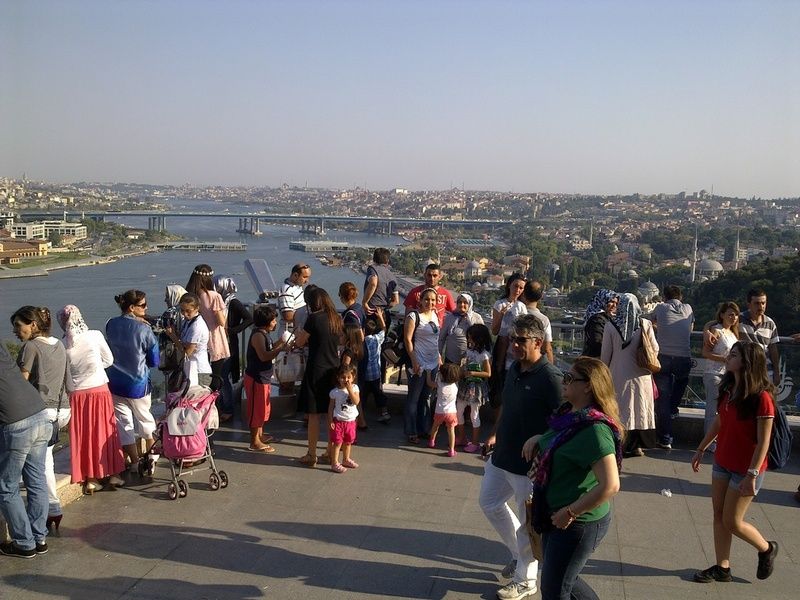
Pierre Loti Cafe / Eyup - Istanbul photo piyerloticafe_eyup126.jpg

PHOTOGRAPHS ALBUM

This delightful cafe is named after the French novelist and naval officer, Julien Viaud (1850 - 1923), who took the pen name Pierre Loti. Loti spent some time in Istanbul and developed a deep attachment to the city. As a lovely memorial to him, the Cafe is built on the spot where Loti is rumoured to have stood gazing out at the Golden Horn. In keeping with the historical theme, the decor and waiters keep to 19th century style. There is also a hotel, restaurants and a souvenir shop nearby.

There is a cable car which runs from near the Eyup Mosque to the Cafe. Otherwise, set off by foot to truly enjoy the surroundings. This short but relatively steep climb takes you from the Mosque through the beautiful Cemetery of the great Eyüp Sultan which is worth a visit in itself. The Cemetery, with its stone walkways and mass of green shrubbery, houses such guests as Avni Lifij, a well known Turkish artist, as well as several grand viziers from Ottoman times. Its view over the water is spectacular.

PIER LOTI
Louis Marie Julien Viaud (1850 - 1923)

In 1879,on having published his first novel Aziyade, showing sections of Ottoman, he put forth Pecheur d’Islande’la (Icelandic Fisherman) in 1886.Loti became a writer and made himself approved by literary environment. In the following years,he published a book everyyear and they were read by a large mass of people. The writer,put into French Academy, got Legion d’Honneur(legion of honour). Loti,who was an impressionist writer, had a plain language. His impressionistic style in literature also impressed his personality.In addition to love,the sense of death took part in his works of art that put in to words a deep desperateness.

Besides this desperateness, he reflected his compassion and humane sentiment, he felt inside for the human beings, in his books. Pierre Loti, who visited Istanbul many times, had come here first in 1876 on a French ship as an officer in charge. Loti was impressed by Ottoman life style, so he reflected this impact in most of his books. He met Aziyade, the woman whose name was given to one of Loti’s books, here. When he was in Istanbul, he used to live in Eyüp. Loti, who admired Istanbul, always defined himself as a turcophile.

When Loti, criticizing the western policies in his book La Turquie Agonisante (Agonizing Turkey) in 1913, came to Turkey in the same year as an official quest. He was welcomed with the accompaniment of a big ceremony in Tophane Quay and hosted in the palace by Sultan Reşat. In the Balkan Wars and during the invasion of Anatolia in the period of post-world war I, he always defended Turkey against Europe. He also gained the sympathy of Turkish people due to his support to the resistance in Anatolia in the course of national struggle and criticizing his country French, the occupant force.

So,Turkish Grand National Assembly sent a letter to Loti in October 4,1921 expressing their gratitudes to him. By this way, in 1920, Loti was accepted as “honorary citizen of Istanbul" and a community having his name was established. Later on, a street in Divanyolu in İstanbul was named as “Pierre Loti Street” and a cafe in Eyüp was entitled as “Pierre Loti Cafe". In today’s concept the hill where the mentioned cafe takes place is also called “Pierre Loti Hill”.

Pierre Loti, or rather Louis Marie Julien Viaud (1850-1923), was French. Viaud, an officer of the French navy, found himself in Istanbul following an incident known as “the event of Salonica.” The ship he was stationed on, a part of the French Mediterranean squadron, arrived in Salonica on May 16, 1876. On that same day, Loti, the main character in the book “Aziyade”, witnesses six dead bodies, “writhing in the horrible contortions of hanging” in the main square of Salonica.

This punishment, prescribed by the sultan was in response to the murder of French and German consuls sent to intervene in the fiasco emerging after a Bulgarian girl, recently converted to Islam, was prevented from entering the office of the mufti of Salonica. Days after the execution, in a city quieted by the dramatic events, the air thick with hostility, Loti ventures into the old and little-visited Muslim quarter.

Here his eyes meet with a pair of great green eyes through thick iron bars. He sees more of the woman and writes: “A white veil was arranged with care over her head, revealing only her forehead and her enormous eyes. The irises were of a vivid emerald, that sea-green hue celebrated by the Eastern poets of old.”

The subtitle to “Aziyade” states, “Extract of notes and letter of a lieutenant of the English navy entered in the service of Turkey on May 10th, 1876 killed at the walls of Kars on October 27th, 1877.” All but the ending of the book closely resembles Viaud’s life and has come to be known as a part fictional, part autobiographical account of his time in Turkey. The book resulted from his own diaries and the story published after friends urged him to do so. Pierre Loti was in fact Viaud’s pen name and was considered to be one of France’s most original and finest writers of the time.

The Encyclopaedia Britannica, Eleventh Edition, notes: “At his best Pierre Loti was unquestionably the finest descriptive writer of the day. In the delicate exactitude with which he reproduced the impression given to his own alert nerves by unfamiliar forms, colors, sounds and perfumes, he was without a rival. But he was not satisfied with this exterior charm; he desired to blend with it a moral sensibility of the extremest refinement, at once sensual and ethereal.”

The same review goes on to say that his earlier books were his best. “His greatest successes were gained in the species of confession, half-way between fact and fiction, which he essayed in his earlier books.” “Aziyade” was Loti’s first “novel.”

Viaud traveled the world extensively and managed to combine the life of a sailor with that of a writer. He attained the rank of lieutenant in 1881, received his first command in 1898 then stepped down and went on to the reserve list in 1910. He wrote wherever he went, often about the experiences of a soldier or naval officer, journeys either personal or professional, many with a similar semi-autobiographical travelogue style. In 1887 he published a book on Japanese manners, “Madame Chrysanthème” said to be an inspiration for “Madame Butterfly” and “Miss Saigon.”

Viaud did not fall in love with Istanbul the minute he set foot on its shores. It was something that developed slowly, yet once the city had its hooks into him, he became quite the Turk. Loti, in “Aziyade,” dressed like a local in a fez and caftan, moved himself from the safety of Pera to the environs of Eyüp and took on the name Arif Efendi.

Writing of Eyüp he notes his comfort in his surroundings and life, so different from his earlier life. “…here I have become one of the people, a plain citizen of Eyüp. I have adopted the homely way of life of the boatmen and fisherfolk, and I take a true delight in their society and their simple pleasures. I feel perfectly at home in this surroundings, which have lost all trace of strangeness.”

It was in Eyüp that he waited for his lover from Salonica to arrive. The youngest of an elderly businessman’s four wives, Aziyade eventually came to him months after their separation. They carried on quite a scandalous affair thanks to the complicity of those around them. At the conclusion of the book “Aziyade,” Loti is killed in the last battle of Kars in 1877 after enlisting in the Turkish army as Arif-Ussam. Viaud returned to France to see his ageing mother.

His writing career took off in earnest following his departure from Turkey and the publication of his first “novel” “Aziyade.” He published other books with a Turkish theme. Firstly a short orientalist’s perspective of Constantinople in 1890, written after his third visit to the city. Then in 1913, “La Turquie agonisante,” which was translated into English as “Turkey in Agony” the same year. “La Mort de notre chère France en Orient,” published in 1920, again demonstrated Viaud’s affection and concerns for Turkey in post World War I.

Viaud spent almost a year in Istanbul between August 1876 and May 1877, residing mostly in Eyüp. In his short travel journal of his trip in 1890 he wrote, “...in the depths of this gulf (the Golden Horn) enclosed by a city, in its profound depths, under the cypress and plane-trees the holy district of Eyüp, the heart of Islam in Europe, surrounded by tombs, will fall asleep in terrifying silence, only interrupted from time to time by some psalmody coming from a mosque.” And whilst this dark and contemplative place made a very obvious mark on Viaud, Loti made an equally lasting impression on Eyüp.

It would be easy to see Viaud’s time in Constantinople as a part of a role he decided to play, a character he took on in the pursuit of forbidden fruits. There are some who believe that Loti’s mistress was a man, others an odalisque, but whether she was a he or not, their passion was perhaps the seed from which grew one of the most prolific and influential writers of the end of the 19th and dawn of the 20th centuries.

The name of the world-famous cafe, Pierre Loti, came under threat earlier this year when the mayor of the Eyüp Council proposed that it be changed to Eyüp Sultan. For the moment, however, it seems safe for locals and travelers alike to come to the place in the middle of one of Islam’s most sacred places that was named after and made famous by a French sailor and author.

PIER LOTI HILL

The famous cafe entitled with the name of Pierre Loti, a famous French writer, is reached on getting to this ridge on which the perfect view of Golden Horn can be watched. The real name of Pierre Loti, who lived in Istanbul for long years and was a real Istanbul lover, was Julien Viaud.The historical cafe is the most ideal place to watch this mentioned view.

It is said that, in those years Pierre Loti used to come this cafe often, named as “Rabia Kadın Kahvesi” in those years, and write his novel “Aziyade” overlooking Golden Horn.Today, this district, still kept as an original Turkish settlement by being restorated, consists of many spaces serving as a tourist facility.The district is also mentioned in Evliya Çelebi’s Seyahatname ( travel book) as “Idris Köşkü Mesiresi”.

İdris-i Bitlisi Sıbyan Mektebi
This masterwork,belonging to the period predates Mimar Sinan, is the first educational institution established in all cities and towns of Ottoman Empire. As in many foundations in Ottoman Empire, these schools, which correspond to “nursery schools” in today’s context, were constructed in the form of charitable foundations thanks to some benefacters. This building was constructed on the purpose of charity by an important Ottoman historian İdris-i Bitlisi, who took charge in East Anatolia and Arabia as kazasker (military judge), (in the period of Yavuz Sultan Selim).

Drinking Fount Of Rayet Keşan Kalfa
The drinking tap, made of ashlar, is in the form of Turkish fount architecture.It’s known that, there was a tap of İdris-i Bitlisi on the location of this one, but later on it lied in ruins.The masterwork is called with this name as Rayet Keşan Kalfa,one of the bondwomen of Sultan Abdülaziz,had it restored in 1858.

The Sepulcher Mevlevi İskender Dede
Once upon a time in this garden, full of great sycamores and cypreases, there was also a zaviye (small dervish lodge) called with the name of Iskender Dede, who dided in 1589 ( 997 moslom calendar). The grave of a whirling dervish called “Iskender Dede” takes place in Pierre Loti Tourist Facility located forefront Sıbyan Mektebi that was built by Ottoman history writer İdris-i Bitlisi. One of the two water wells infront of Iskender Dede is the famous “Dilek Kuyusu” (a water well for wishes) Evliya Çelebi writes about this water well in his Seyahatname and says: the people who look in to the well, can see their own wishes they keep in their hearts. There is also a drinking fountain next to the frontage of Sıbyan Mektebi. In addition, a cistern, supposed to be built in Byzantine period, survives in the middle of the garden area in the tourist facility.

The Wishing Well
The fame of this well, known as wishing well; has survived until today .In Evliya Çelebi’s Seyahatname ( a travel book) the well is mentioned in details. It is known that there is a “musalla” (a place to pray to perform salah) nearby the well. Rumour has it that, if a person ,who lost something or somebody, had performed salah there and talked to the well, the well used to answer and tell where the lost thing was.

The Tomb Of Çolak Şeyh Hasan Dede
This tomb, the oldest masterwork of the neighbourhood, is made of ashler and composed of two units. On the right side of the tomb, out in the open, there is a sepulcher of a müderris (Islamic professor of his age) whose occupation can be elicited from the gravestone. Inside the building, on the left hand, there is a small prayer room also can be called "çilehane" (çilehane is a place in which a dervish undergoes and suffers to strength his patience) and on the right side there is a grave estimated to be Çolak Hasan Dede’s grave but there’s no confirmation for it. It is ascertained with the written records, Çolak Hasan Dede also had a small mosque built somewhere in the region of Sultan Ahmet Küçükayasofya, where in he was a soldier.

There are Tarihi Kahve, Aziyade Reataurant, Yeşil Kafe, Nargile Evi and the Turquhouse Hotel, consists of 7 ancient Istanbul mansions, 67 rooms and 115 beds in the tourist facility. In addition the facility serves a Golden Horn viewed outdoor garden area, that can be used by 1400 people at the same time.

FACILITIES

HISTORICAL PIER LOTI KAHVEHANESİ
The cafe still retains some of the 19th century ambiance that Pierre Loti perhaps lost himself in. A must see place in the summer months, Tarihi Kahve entertains up to 5000 guests on the weekends influencing the future generations to keep this tradition alive. Guests of all ages and nationalities have been coming to Tarihi Kahve to taste our special menus making it an Istanbul Classic.

With the fascinating atmosphere of its scenery and its decoration resembling the original ancient-Istanbul mansion. Tarihi Kahve is a two story building with a large terrace. The ground floor holds a modern cafe ambience and the top floor has been decorated with Turkish and Ottoman motifs. It can host up to 130 people on the inside and 500 people in the open air areas. Our service starts at 08:00 with breakfast and goes on until midnight.

NARGİLE EVİ
All the details have been considered to provide you with the utmost comfort at Nargilevi. You will relieve the day’s stress and feel at home in our unique decoration which is a perfect combination of our traditional culture and modern life philosophy. Lodge-like booths have been added to Nargilevi’s interior design for you to have a great time along with friends and family.

CAFE YEŞİL
You will lose track of time and leave the stress of the day behind when you are enjoying yourself with your friends at Cafe Yeşil looking at the unique view of The Golden Horn and its colorful lights. You can enjoy our open buffet Sunday breakfast - brunch and continue with a rich menu of appetizers and beverages.

TERAS CAFE
Sometimes the view of The Golden Horn adds pleasure to the time you spend with your friends. Years later, Pierre Loti will remind you the bitter taste of the tea and the conversations you had with you had with your loved ones. It is a beautiful sound that has been subject to many poems, novels and paintings.
It is a must-see place for foreign guests and those visiting Eyüp Sultan.

With the large garden of it overviewing the Golden Horn and Istanbul, in which 1400 guests can be hosted at the same time, you can relax and taste a great serenity in a very different ambiance. If you still haven’t come and felt the sweet breeze, we can’t describe it to you. You can only understand Pierre Loti as you live it.

AZİYADE RESTAURANT
The service begins with an open buffet breakfast and continues with lunch and dinner. Aziyade also hosts special events and organizations. Ayizade also hosts special events and organizations such as engagement and wedding ceremonies, meetings, and Ramadan dinners with specially selected menus for you and your elite guests.

TURQUHOUSE BOUTIQUE HOTEL
Turquhouse Boutique Hotel, a true historic value passed onto the present day, consists of 7 ancient Istanbul mansions, 67 rooms and 115 beds. The mansions have been restored and re-interpreted to reflect the original 18th century Ottoman architecture and are named after the towns that are situated on the coast of The Golden Horn. (Eyüp, Ayvansaray, Balat, Fener, Cibali, Hasköy ve Sütlüce).

Distant from conventional understanding of hotel service, our mission is to make our guests feel at home in the most elegant way possible and provide them with an ambience in which they will enjoy every moment peacefully in a historic architecture. Along with excellent quality of service and the magnificent view of Istanbul and The Golden Horn, Turquhouse Hotel offers our guests an unforgettable experience that will remain in their best memories.

Our hotel is located within a ten minute walk to the historic Eyüp Sultan Mosque and is also the only hotel that can be reached with the teleferic in Istanbul. Other forms of transportation to our hotel include the local bus lines, the metrobus, and local sea transportation boats. Turquhouse Hotel has been proudly serving our invaluable clients since 2002.

SERVICES

Food And Beverages
Our facilities hold a rich menu including; pastry and appetizer varieties, freshly squeezed fruit juices, ice cream, mantı (Turkish ravioli), gözleme (Turkish calzone), and fast food varieties such as burgers, toasts and sandwiches along with all the beverages all for your pleasure. Besides, you can’t find the irreplaceable taste of tea and Turkish coffee in Pierre Loti, in which you can also arrange organizations such as engagement and wedding ceremonies, somewhere else.

Accommodation
Distant from conventional understanding of hotel service, our mission is to make our guests feel at home in the most elegant way possible and provide them with an ambience in which they will enjoy every moment peacefully in a historic architecture. Along with excellent quality of service and the magnificent view of Istanbul and The Golden Horn, the Turquhouse Hotel offers our guests an unforgettable experience that will remain in their best memories. Our hotel is located within a ten minute walk to the historic Eyüp Sultan Mosque and is also the only hotel that can be reached with the teleferic in Istanbul. Other forms of transportation to our hotel include the local bus lines, the metrobus, and local sea transportation boats.

Organizations
It is required to make pre-reservations for your organizations such as weddings, engagement ceremonies, seminars and conferences that can be held in indoor and outdoor areas. It is possible to arrange these organizations with meal or in a cocktail form. The service of accessorizing the tables and chairs is also available.

LOCATION SATELLITE MAP


WEB SITE : Pier Loti Hill

MORE INFO & CONTACT
E-Mail : info@atalargroup.com
Phone : +90 212 497 1313
Fax : +90 212 497 1616

These scripts and photographs are registered under © Copyright 2017, respected writers and photographers from the internet. All Rights Reserved.