Ataköy Marina, Bakırköy - İstanbul - Turkey
GPS : 40°58'17.0"N 28°52'27.9"E / 40.971379, 28.874428
PHOTOGRAPHS ALBUM
M E Z E
HOT APPETIZERS
Ezo Gelin,
Domates Çorbası,
Lahmacun,
Beşçay Lahmacun,
Fındık Lahmacun,
Antep Lahmacun,
Beşçay Antep Lahmacun,
Fındık Antep Lahmacun,
Tavuk Lahmacun,
İçli Köfte Kızartma,
İçli Köfte Haşlama,
Pilav,
Patates Kızartma,
Tulum Tereyağ,
Közde Morani,
Çiğ Köfte
WITH OLIVE OIL
Pastırmalı Humus (Sıcak),
Enginar (Mevsimlik),
İmam Bayıldı, ava,
Çalı Fasulye,
Köy Güzeli Fasulye,
Bom Fasulye Piyaz,
Çerkez Tavuğu,
Yaprak Sarma,
Lahana Sarma,
Biber Dolma,
Kurutma Dolmalar,
Patlıcan Salata,
Şakşuka,
Patlıcan Soslu,
Mantar,
Cacık,
Haydari,
Kabak Nurani,
Kızartmalar
KEBABS
Döner,
İskender,
Karışık İskender,
Bonfile İskender,
Yoğurtlu Kebap (Urfandan, Dönerden),
Namlı Kebap,
Domatesli Kebap,
Ezmeli Kebap (Acılı, Urfa),
Beyti (Acılı, Acısız),
Beyti Sarma Yoğurtlu,
Soslu (Acılı, Acısız),
Beğendili (Şişten, Kebaptan),
Patlıcanlı Kebap,
Acılı Urfa Kebap,
Urfa Kebap,
Alinazik,
Haşhaş Kebap,
Açma Kebap (Acılı, Acısız),
Tavuk Kebap,
Tavuk Beyti (Acılı, Acısız),
Elazığ Sarrum Kebabı (Tavuktan),
Bolu Abant Yayla Kebabı,
Fıstıklı Kebap,
Ezmeli Kebap (Şişten)
GRILLS
Bonfile,
Biftek,
Karışık Et Özel,
Karışık Izgara,
Külbastı,
Dana Pirzola,
Kuzu Pirzola,
Kuzu Çöp Şiş,
Kuzu Şiş,
Piliç Şiş,
Izgara Köfte,
Kaburga, Küşleme,
Bonfile Dolma Mantarlı,
Tavuk Dolma Mantarlı,
Tavuk Izgara,
Tavuk Kanat,
Tavuk Pirzola,
Çoban Kavurma (Etli),
Çoban Kavurma (Tavuk Etli),
Et Sote
DESSERTS
Sıcak Dondurma,
Sıcak Şokola Soslu Dondurma Tabağı,
Kadayıf (Fıstıklı),
Künefe,
Fırın Sütlaç,
Domates Tatlısı,
Trileçe,
Krem Kramel,
Kabak Tatlısı (Mevsimik),
Ayva Tatlısı (Mevsimlik),
Mevsim Meyveleri,
Dondurmalı İrmik,
Dondurma,
Ekmek Kadayıf,
Sufle
STEAKHOUSE
STARTERS
Füme Et Tabağı : İste kurutulmuş Dana ve kuzu etleridir. Antrikot, Kontrofile, Nuardan yapılıyor.,
Dana Carpaccio : Roka, Permasan, Çapari İle Servis yapılır.,
Peynir Tabağı : Rokfor peyniri, Füme Guada peyniri, Örgü peyniri, Permasan peyniri, Edan peyniri
HOT APPETIZERS
Namlı Izgara Sosis : 100% Dana etinden yapılmış Sosistir.,
Namlı Izgara Sucuk : 100% Dana etinden yapılır, içine antep fıstığı ve hellim peyniri bırakılır.,
Namlı Fried Basket : Cajun Fingers, Jalepano, Soğan halkaları, Patates kızartması.
SALADS
Kırmızı Soğanlı Roka Salatası : Roka, Soğan halkaları, cherry domates, yaprak permasan, zeytinyağı, limon sos üzerine balsamik sirkesi,
Keçi Peynirli Akdeniz Salatası : Akdeniz yeşillikleri, cherry domates, peynir, mısır, pancar, baharatlı sos ile,
Tulum Peynirli Şefin Salatası : Akdeniz yeşillikleri, cherry domates, tulum peyniri, zeytinyağı, limon, nar ekşisi, ceviz ve mısır ile,
Kapris Salata : Akdeniz yeşillikleri üzerine mozarella peyniri ve fesleğen sos ile,
Izgara Biftek Salata : Akdeniz yeşillikleri üzerine Bonfile dilimleri, cherry domates, mısır, zeytinyağı, limon ve ceviz ile,
Bahçe Salata : Akdeniz yeşillikleri, cherry domates, mısır, tatlandırılmış salatalık, yağ ve limon sos ile
MEATBALLS
Kaşarlı Köfte : 200 gr. %100 dana etinden yapılmış 3 ad. kaşarlı köfte, mevsim yeşillikleri, patates kızartması ve acı sos ile,
Cızbız Köfte : 200 gr. %100 dana etinden yapılmış köfteler, mevsim yeşillikleri, patates kızartması ve acı sos ile
BURGERS
Namlı Klasik Burger : 180 gr. %100 dana etinden yapılmış burger köftesi, marul, domates, turşu, soğan halkası ve patates tava ile servis yapılır.,
Cheese Burger : 180 gr. %100 dana etinden yapılmış burger köftesi, marul, domates, turşu, eheddar peyniri, soğan halkası ve patates tava ile servis yapılır.,
Kuzu Füme Rokfor Peynirli Burger : 180 gr. Burger köftesi, marul, domates, turşu, soğan halkası, füme et, rokfor peyniri ve patates tava ile servis yapılır.,
Sucuk Burger : 160 gr. Marul, turşu, domates, soğan ve patates tava ile servis yapılır.
BONFILE
Dana Bonfile : 220-250 gr. takoz bonfiledir.,
Taze Baharatlı Dana Bonfile : 220-250 gr. taze baharatlarla dinlendirilmiş bonfiledir. 52,5 gr. protein, %7 yağ oranı, Pişirme uygunluğu (orta, orta-iyi),
Cafe de Paris Bonfile : 220-250 gr. ızgara yapılmış, dövülmemiş bonfile. Cafe de Paris sos dökülüp yanında parmak patates ile servis yapılır.,
Lokum : 200-220 gr. Bonfile Dilimleri,
Şato Biryan
Şaşlık, Şişte yaprak bonfile dilimleri,
Kuzu Pirzola : 4 Kalem Kuzu Pirzola,
Kuzu Küşneme : 200 gr. Izgara yapılmış Küşneme,
Kuzu Kafes : 12 Kalemlik kafestir.,
Kuzu Sırtı
DRY AGED
Newyork Steak : 350-400 gr. dry aged biftek 75 gr. protein, %13 yağ oranı, Pişirme uygunluğu (az, az-orta),
Delmonika Steak : 400-450 gr. dry aged biftek,
Dana Pirzola
Dana Fajita,
Dallas Steak : 500-550 gr. dry aged biftek 75 gr. protein, %13 yağ oranı, Pişirme uygunluğu (az-orta, orta-iyi),
T -Bone Steak : 400-450 gr. dry aged biftek 900 kalori, 78,3 gr. protein, %11 yağ oranı, Pişirme uygunluğu (az, az-orta, orta),
Porterhouse Steak : 600-650 gr. dry aged biftek 110 gr. protein, %8 yağ oranı, Pişirme uygunluğu (az, az-orta),
Ossabuka : 450 gr. 12 çeşit sebze ile 4 saat fırınlanmış dana incik,
Taze Baharatlı Antrikot Steak : 400-450 gr. 12 çeşit taze baharatlarla süslenmiş semi dry aged biftek. 52,5 gr. protein, %7 yağ oranı (orta, orta-iyi)
LOCATION SATELLITE MAP
WEB SITE : Namlı Kebap & Steak Restaurant
MORE INFO & CONTACT
E-Mail : info@namlikebapsteakhouse.com
Phone : +90 212 560 2227
Fax : +90 212 560 2256
These scripts and photographs are registered under © Copyright 2019, respected writers and photographers from the internet. All Rights Reserved.
Istanbul is Turkey's most populous city, and its cultural and financial center. It is located on the Bosphorus Strait, and encompasses the natural harbor known as the Golden Horn, in the northwest of the country. It extends both on the European (Thrace) and on the Asian (Anatolia) side of the Bosphorus, and is thereby the only metropolis in the world which is situated on two continents.
Showing posts with label bakirkoy. Show all posts
Thursday, October 3, 2019
Monday, July 31, 2017
HİLMİ NAKİPOGLU CAMERA MUSEUM
Bakırköy - Istanbul - Turkey
GPS : 40°59'38.2"N 28°52'45.8"E / 40.993951, 28.879385

PHOTOGRAPHS ALBUM
The museum was founded by Hilmi Nakipoğlu, a businessman with a passion to photography from his highschool days in the 1960's. Mr. Hilmi started collectng old, vintage cameras and old photographs in the 1970's. In 1997 he opened the museum inside the school building he had founded in Bakırköy. The Nefus Nakipoğlu Zihinsel Engelliler Okulu - Nefus Nakipoğlu School for Children with Intelectual Disability.
Businessman Hilmi Nakipoğlu's camera collection has been turned into the only museum of its kind in Turkey. The museum, on the top floor of the Nefus Nakipoglu Mentally Handicapped School in Bakırköy, includes more than 1000 cameras as old as 1896, from different manufacturers and characteristics.
Nakipoğlu said that he first took up photography as a hobby when he was a little boy, developing photos in his mother's trousseau chest. He set up a darkroom at school in his secondary and high school years, sharpening his skills with the school's cameras and equipment.
He later began developing coloured photographs in a darkroom at home. Nakipoğlu, who has been purchasing new and used cameras since his childhood, pointed out that in many European countries, there is no equal to this museum.
According to famous Turkish photographer Ara Guler, "This museum is unique." Nakipoglu stated that all of the cameras in the museum were operational and that while visiting the museum, students had the chance to learn about photography and film development. Students can even watch while black-white photographs are being bathed.
According to Nakipoglu, all the museum's cameras were bought in Turkey - in Beyazit Çınaraltı, Sahaflar, Sirkeci and especially in the antique shops of Kadıköy. He stated that the cameras were expensive, but that they were even more valuable in spiritual terms.
Nakipoğlu was a self-taught photographer as well as a camera collector who had a keen eye for rare and old cameras. He collected cameras of all shapes and sizes for over 30 years. The museum also displays a collection of photos and camera accessories. These cameras include portable and non-portable studio cameras, spy cameras, mini cameras, cameras that use Leica films, Polaroid cameras and many more.
LOCATION SATELLITE MAP
WEB SITE : Hilmi Nakipoğlu Camera Museum
MORE INFO & CONTACT
E-Mail : info@cameramuseum.com.tr
Phone : +90 212 543 0920
Fax : +90 212 570 0861
These scripts and photographs are registered under © Copyright 2017, respected writers and photographers from the internet. All Rights Reserved.
GPS : 40°59'38.2"N 28°52'45.8"E / 40.993951, 28.879385

PHOTOGRAPHS ALBUM
The museum was founded by Hilmi Nakipoğlu, a businessman with a passion to photography from his highschool days in the 1960's. Mr. Hilmi started collectng old, vintage cameras and old photographs in the 1970's. In 1997 he opened the museum inside the school building he had founded in Bakırköy. The Nefus Nakipoğlu Zihinsel Engelliler Okulu - Nefus Nakipoğlu School for Children with Intelectual Disability.
Businessman Hilmi Nakipoğlu's camera collection has been turned into the only museum of its kind in Turkey. The museum, on the top floor of the Nefus Nakipoglu Mentally Handicapped School in Bakırköy, includes more than 1000 cameras as old as 1896, from different manufacturers and characteristics.
Nakipoğlu said that he first took up photography as a hobby when he was a little boy, developing photos in his mother's trousseau chest. He set up a darkroom at school in his secondary and high school years, sharpening his skills with the school's cameras and equipment.
He later began developing coloured photographs in a darkroom at home. Nakipoğlu, who has been purchasing new and used cameras since his childhood, pointed out that in many European countries, there is no equal to this museum.
According to famous Turkish photographer Ara Guler, "This museum is unique." Nakipoglu stated that all of the cameras in the museum were operational and that while visiting the museum, students had the chance to learn about photography and film development. Students can even watch while black-white photographs are being bathed.
According to Nakipoglu, all the museum's cameras were bought in Turkey - in Beyazit Çınaraltı, Sahaflar, Sirkeci and especially in the antique shops of Kadıköy. He stated that the cameras were expensive, but that they were even more valuable in spiritual terms.
Nakipoğlu was a self-taught photographer as well as a camera collector who had a keen eye for rare and old cameras. He collected cameras of all shapes and sizes for over 30 years. The museum also displays a collection of photos and camera accessories. These cameras include portable and non-portable studio cameras, spy cameras, mini cameras, cameras that use Leica films, Polaroid cameras and many more.
LOCATION SATELLITE MAP
WEB SITE : Hilmi Nakipoğlu Camera Museum
MORE INFO & CONTACT
E-Mail : info@cameramuseum.com.tr
Phone : +90 212 543 0920
Fax : +90 212 570 0861
These scripts and photographs are registered under © Copyright 2017, respected writers and photographers from the internet. All Rights Reserved.
ISTANBUL AVIATION MUSEUM
Yeşilköy, Bakırköy - Istanbul - Turkey
GPS : 40°57'47.1"N 28°49'35.5"E / 40.963090, 28.826524

PHOTOGRAPHS ALBUM
The Aviation Museum in Yeşilköy traces the development of flight in Turkey. The Aviation Museum, originally called “the Air Museum” was first built in Izmir in 1971. However, due to lack of interest,it was moved to its present location in Yeşilköy, Istanbul in 1979.In 1985 it reopened to the public under the name “the Aviation Museum.”
The museum has an area of 15,000 square meters in total. Of this area, 12,000 square meters are open and 3,000 square meters are covered. The Museum also features movie theater, conference room and a cafeteria.
The museum stands within the Air Command Headquarters of Istanbul and has both indoor and outdoor exhibition sections. Many planes used in Turkish Air Force history are exhibited in the open area, including wartime jets, other war and cargo planes, helicopters, jet-motor and hovercrafts, some aviation arms, pictures, emblems, medallions and belongings of Turkish air pilots, anti-aircraft artillery, missiles and radar. Many precious objects from Turkish Air Force history are displayed in the covered area.
The museum not only presents various warplanes, helicopters and weapons used by Turkish Air Force, but also civilian air transport and many samples of Turkish aeronautics history, starting from Ottoman era.
In addition to the display of emblems belonging to the Turkish Air Force, there is an aeronautical video playing for visitors at the museum’s entrance. In the Commander Busts Hall, there are some oil paintings of commanders who have left a positive mark on aviation history. Bronze busts of the several commanders, especially those in command positition, are showcased along with a short biography.
In the uniform section of the museum, collections of historical value, such as the uniforms belonging to the first aviation commanders during the Ottoman Empire are on display. Medals and the uniform worn by the first aviation martyr of the Ottoman Empire, Fethi Bey, attracts the attention of the museum’s visitors.
In the arms section, rockets, weapons used by warplanes, and many historical materials are on display for visitors who hold an interest in military aviation.
LOCATION SATELLITE MAP
WEB SITE : İstanbul Aviation Museum
MORE INFO & CONTACT
E-Mail : havacilikmuzesi@hho.edu.tr
Phone : +90 212 663 2490
These scripts and photographs are registered under © Copyright 2017, respected writers and photographers from the internet. All Rights Reserved.
GPS : 40°57'47.1"N 28°49'35.5"E / 40.963090, 28.826524

PHOTOGRAPHS ALBUM
The Aviation Museum in Yeşilköy traces the development of flight in Turkey. The Aviation Museum, originally called “the Air Museum” was first built in Izmir in 1971. However, due to lack of interest,it was moved to its present location in Yeşilköy, Istanbul in 1979.In 1985 it reopened to the public under the name “the Aviation Museum.”
The museum has an area of 15,000 square meters in total. Of this area, 12,000 square meters are open and 3,000 square meters are covered. The Museum also features movie theater, conference room and a cafeteria.
The museum stands within the Air Command Headquarters of Istanbul and has both indoor and outdoor exhibition sections. Many planes used in Turkish Air Force history are exhibited in the open area, including wartime jets, other war and cargo planes, helicopters, jet-motor and hovercrafts, some aviation arms, pictures, emblems, medallions and belongings of Turkish air pilots, anti-aircraft artillery, missiles and radar. Many precious objects from Turkish Air Force history are displayed in the covered area.
The museum not only presents various warplanes, helicopters and weapons used by Turkish Air Force, but also civilian air transport and many samples of Turkish aeronautics history, starting from Ottoman era.
In addition to the display of emblems belonging to the Turkish Air Force, there is an aeronautical video playing for visitors at the museum’s entrance. In the Commander Busts Hall, there are some oil paintings of commanders who have left a positive mark on aviation history. Bronze busts of the several commanders, especially those in command positition, are showcased along with a short biography.
In the uniform section of the museum, collections of historical value, such as the uniforms belonging to the first aviation commanders during the Ottoman Empire are on display. Medals and the uniform worn by the first aviation martyr of the Ottoman Empire, Fethi Bey, attracts the attention of the museum’s visitors.
In the arms section, rockets, weapons used by warplanes, and many historical materials are on display for visitors who hold an interest in military aviation.
LOCATION SATELLITE MAP
WEB SITE : İstanbul Aviation Museum
MORE INFO & CONTACT
E-Mail : havacilikmuzesi@hho.edu.tr
Phone : +90 212 663 2490
These scripts and photographs are registered under © Copyright 2017, respected writers and photographers from the internet. All Rights Reserved.
Labels:
aviation,
bakirkoy,
cargo aircrafts,
helicopters,
istanbul,
museum,
turkey,
war planes,
weapons,
yesilkoy
Saturday, March 25, 2017
FLORYA ATATÜRK MARINE MANSION
Florya, Bakırköy - Istanbul - Turkey
GPS : 0°58'23.0"N 28°46'58.0"E / 40.973056, 28.782778

PHOTOGRAPHS ALBUM
A settlement on the coast of the Marmara Sea between Yeşilköy and Küçükçekmece, Florya is known to be a resort for hunters in the 19. Century. Florya, which gained importance with Atatürk’s interest, has transformed gradually to a summer resting centre.
According to historical documents, Florya coast was full of nice villages in 17th century within its border to Yeşilköy, known as Ayastefanos at the time. Kalatarya district with its oftenly visited church and holy spring and also Imperial Filurya Garden was close to the area. It’s understood from the phrase seen in 18th century documents as "Filoriye garden with its fresh water and Sultan’s palace inside..." there was an Otoman settlement in the area.
Florya and its environs were mostly fishing areas in 19th century and previously. In the late Ottoman Empire urban development began there along with the construction of railway lines and it gained extra importance with the interest of Atatürk in the early Republican period. An area of 230 hectares were afforested and Florya became a summer resort in time. İstanbul Municipality organized a competition for a mansion project in 1935 which planned to have been built in Florya coast where Atatürk used to go for resting. It’s thought to be helpful for his recovery to stay there.
The awarded project designed by architect Seyfi Arkan was in Bauhaus style that was common in European architecture of the period. The building complex designed as a relaxing place consists of Atatürk Mansion, General Secretariat Building and Aides’ Building. There was also the White, Blue and Red pavilions then, but they don’t exist now. The construction was finished in August 14, 1935. The mansion was constructed over the columns stuck to the sea base and was connected to the land with a bridge.
In the mansion opened to visitors on August 14, 1935, Atatürk lived for a long period over the June and July in 1936, used the mansion for political and scientific meetings and hosted certain guests like Edward VIII, the king of Great Britain and Madame Simpson. Atatürk didn’t use the mansion just for resting but occasionally managed the affairs of state while he was in İstanbul, held political and scientific conferences and hosted many important guests there among whom were King Edward III of England and Mrs. Simpson. He stayed there for the last time in May 28, 1938.
During the period he stayed at Dolmabahçe Palace, Atatürk came to the mansion by boat and enjoyed swimming surrounded by local people. He used the mansion for the last three years of his life as a summer office as well as for recreation. In 1936, he stayed from June 6 until July 28 at the mansion. His last stay was on May 28, 1938, about six months before his death.
After his death it was used as a Presidential summer residence by İsmet İnönü, Celal Bayar, Cemal Gürsel, Cevdet Sunay, Fahri Korutürk and Kenan Evren.
This group of structures was transferred to the Department of National Palaces under the Turkish Grand National Assembly (TGNA) by the Presidency of the Republic on September 16, 1988. After the completion of its restoration, decorated with the furniture of that period suiting the style of the mansion which was designed with a modern understanding in its period the mansion was made an Atatürk Museum and a permanent photograph exhibition named "Atatürk is in Istanbul" was formed in it.
Some of the buildings of Yaverlik and General Secretariat constructed behind the Atatürk mansion could not survive till today and the rest were restored to become TGNA social facilities. In the empty place between these buildings a structure serving as a cafe and a restaurant was annexed.
The Presidency assigned its management to TBMM, Head Department of National Palaces in September 16, 1988 and it was opened to public as "Atatürk Museum" at 1993 after being restored. It was erected on steel piles driven into the sea bottom and linked to the mainland by a bridge of 90 meters in length. The one-storeyed building has a modest facade design and seems like a floating boat.
ARCHITECTURE AND INTERIOR DESING
The tower situated on the north entrance facade is in the geometrical and aesthetic form of modern architecture. The perpendicular part to the shore consists of service and staff rooms, bathrooms and toilets. Atatürk’s study room, bathroom and bedroom are on its east side. The walnut and bird’s eye veneered bookcase, tape player in Artdeco style, furnitures like the armchair with spring balance function and lighting fittings are compatible with mansion’s modest, modern and original architectural design.
Designed in the Bauhaus style by architect Seyfi Arkan, who was given the commission in 1935 by the municipality of Istanbul, the mansion was completed on August 14 the same year, and was gifted to Atatürk.
The building is constructed on steel piles driven into the seabed and is connected to the sandy beach about 70 m (230 ft) away with a wooden pier. The L-shaped, one-floor mansion consists of a reception hall, a reading room, bedrooms and bathroom. There are also service and staff rooms at the complex. The total area covered by the mansion including the pier is 602 m2 (6,480 sq ft).
It was erected on steel piles driven into the sea bottom and linked to the mainland by a bridge of 90 meters in length. The one-storeyed building has a modest facade design and seems like a floating boat. The tower situated on the north entrance facade is in the geometrical and aesthetic form of modern architecture.
The perpendicular part to the shore consists of service and staff rooms, bathrooms and toilets. Atatürk’s study room, bathroom and bedroom are on its east side. The walnut and bird’s eye veneered bookcase, tape player in Artdeco style, furnitures like the armchair with spring balance function and lighting fittings are compatible with mansion’s modest, modern and original architectural design.
A grove was created in the yard of the ruined Agios Stefanos Monastery as the garden for the mansion on Atatürk's taking possession. This grove is called "Florya Atatürk Grove" (Turkish: Florya Atatürk Korusu) and is today a public park. The mansion is considered an example of the "Turkish Early Republican architecture".
Museum
Due to the encroaching urban development and the consequent pollution of the sea at the site, the mansion fell into disuse as an official residence. On September 6, 1988, the building was handed over to the National Palaces Department of the Turkish Grand National Assembly. It was then renovated and opened in 1993 to the public as a museum.
A section of the mansion is reserved as a social facility for members of parliament. The museum exhibits furniture, tableware, personal belongings including swimwear, as well as a collection of Atatürk's photographs taken at the site.
LOCATION SATELLITE MAP
WEB SITE : Department of National Palaces / Florya Atatürk Marine Mansion
MORE INFO & CONTACT
E-Mail : millisaraylar@tbmm.gov.tr
Phone : +90 212 236 9000
Fax : +90 212 259 3292
These scripts and photographs are registered under © Copyright 2017, respected writers and photographers from the internet. All Rights Reserved.
GPS : 0°58'23.0"N 28°46'58.0"E / 40.973056, 28.782778

PHOTOGRAPHS ALBUM
A settlement on the coast of the Marmara Sea between Yeşilköy and Küçükçekmece, Florya is known to be a resort for hunters in the 19. Century. Florya, which gained importance with Atatürk’s interest, has transformed gradually to a summer resting centre.
According to historical documents, Florya coast was full of nice villages in 17th century within its border to Yeşilköy, known as Ayastefanos at the time. Kalatarya district with its oftenly visited church and holy spring and also Imperial Filurya Garden was close to the area. It’s understood from the phrase seen in 18th century documents as "Filoriye garden with its fresh water and Sultan’s palace inside..." there was an Otoman settlement in the area.
Florya and its environs were mostly fishing areas in 19th century and previously. In the late Ottoman Empire urban development began there along with the construction of railway lines and it gained extra importance with the interest of Atatürk in the early Republican period. An area of 230 hectares were afforested and Florya became a summer resort in time. İstanbul Municipality organized a competition for a mansion project in 1935 which planned to have been built in Florya coast where Atatürk used to go for resting. It’s thought to be helpful for his recovery to stay there.
The awarded project designed by architect Seyfi Arkan was in Bauhaus style that was common in European architecture of the period. The building complex designed as a relaxing place consists of Atatürk Mansion, General Secretariat Building and Aides’ Building. There was also the White, Blue and Red pavilions then, but they don’t exist now. The construction was finished in August 14, 1935. The mansion was constructed over the columns stuck to the sea base and was connected to the land with a bridge.
In the mansion opened to visitors on August 14, 1935, Atatürk lived for a long period over the June and July in 1936, used the mansion for political and scientific meetings and hosted certain guests like Edward VIII, the king of Great Britain and Madame Simpson. Atatürk didn’t use the mansion just for resting but occasionally managed the affairs of state while he was in İstanbul, held political and scientific conferences and hosted many important guests there among whom were King Edward III of England and Mrs. Simpson. He stayed there for the last time in May 28, 1938.
During the period he stayed at Dolmabahçe Palace, Atatürk came to the mansion by boat and enjoyed swimming surrounded by local people. He used the mansion for the last three years of his life as a summer office as well as for recreation. In 1936, he stayed from June 6 until July 28 at the mansion. His last stay was on May 28, 1938, about six months before his death.
After his death it was used as a Presidential summer residence by İsmet İnönü, Celal Bayar, Cemal Gürsel, Cevdet Sunay, Fahri Korutürk and Kenan Evren.
This group of structures was transferred to the Department of National Palaces under the Turkish Grand National Assembly (TGNA) by the Presidency of the Republic on September 16, 1988. After the completion of its restoration, decorated with the furniture of that period suiting the style of the mansion which was designed with a modern understanding in its period the mansion was made an Atatürk Museum and a permanent photograph exhibition named "Atatürk is in Istanbul" was formed in it.
Some of the buildings of Yaverlik and General Secretariat constructed behind the Atatürk mansion could not survive till today and the rest were restored to become TGNA social facilities. In the empty place between these buildings a structure serving as a cafe and a restaurant was annexed.
The Presidency assigned its management to TBMM, Head Department of National Palaces in September 16, 1988 and it was opened to public as "Atatürk Museum" at 1993 after being restored. It was erected on steel piles driven into the sea bottom and linked to the mainland by a bridge of 90 meters in length. The one-storeyed building has a modest facade design and seems like a floating boat.
ARCHITECTURE AND INTERIOR DESING
The tower situated on the north entrance facade is in the geometrical and aesthetic form of modern architecture. The perpendicular part to the shore consists of service and staff rooms, bathrooms and toilets. Atatürk’s study room, bathroom and bedroom are on its east side. The walnut and bird’s eye veneered bookcase, tape player in Artdeco style, furnitures like the armchair with spring balance function and lighting fittings are compatible with mansion’s modest, modern and original architectural design.
Designed in the Bauhaus style by architect Seyfi Arkan, who was given the commission in 1935 by the municipality of Istanbul, the mansion was completed on August 14 the same year, and was gifted to Atatürk.
The building is constructed on steel piles driven into the seabed and is connected to the sandy beach about 70 m (230 ft) away with a wooden pier. The L-shaped, one-floor mansion consists of a reception hall, a reading room, bedrooms and bathroom. There are also service and staff rooms at the complex. The total area covered by the mansion including the pier is 602 m2 (6,480 sq ft).
It was erected on steel piles driven into the sea bottom and linked to the mainland by a bridge of 90 meters in length. The one-storeyed building has a modest facade design and seems like a floating boat. The tower situated on the north entrance facade is in the geometrical and aesthetic form of modern architecture.
The perpendicular part to the shore consists of service and staff rooms, bathrooms and toilets. Atatürk’s study room, bathroom and bedroom are on its east side. The walnut and bird’s eye veneered bookcase, tape player in Artdeco style, furnitures like the armchair with spring balance function and lighting fittings are compatible with mansion’s modest, modern and original architectural design.
A grove was created in the yard of the ruined Agios Stefanos Monastery as the garden for the mansion on Atatürk's taking possession. This grove is called "Florya Atatürk Grove" (Turkish: Florya Atatürk Korusu) and is today a public park. The mansion is considered an example of the "Turkish Early Republican architecture".
Museum
Due to the encroaching urban development and the consequent pollution of the sea at the site, the mansion fell into disuse as an official residence. On September 6, 1988, the building was handed over to the National Palaces Department of the Turkish Grand National Assembly. It was then renovated and opened in 1993 to the public as a museum.
A section of the mansion is reserved as a social facility for members of parliament. The museum exhibits furniture, tableware, personal belongings including swimwear, as well as a collection of Atatürk's photographs taken at the site.
LOCATION SATELLITE MAP
WEB SITE : Department of National Palaces / Florya Atatürk Marine Mansion
MORE INFO & CONTACT
E-Mail : millisaraylar@tbmm.gov.tr
Phone : +90 212 236 9000
Fax : +90 212 259 3292
These scripts and photographs are registered under © Copyright 2017, respected writers and photographers from the internet. All Rights Reserved.
Friday, February 3, 2017
WOW İSTANBUL CONVENTION CENTER
Yeşilköy, Bakırköy - İstanbul - Turkey
GPS : 40°59'16.7"N 28°49'49.0"E / 40.987972, 28.830278
PHOTOGRAPHS ALBUM
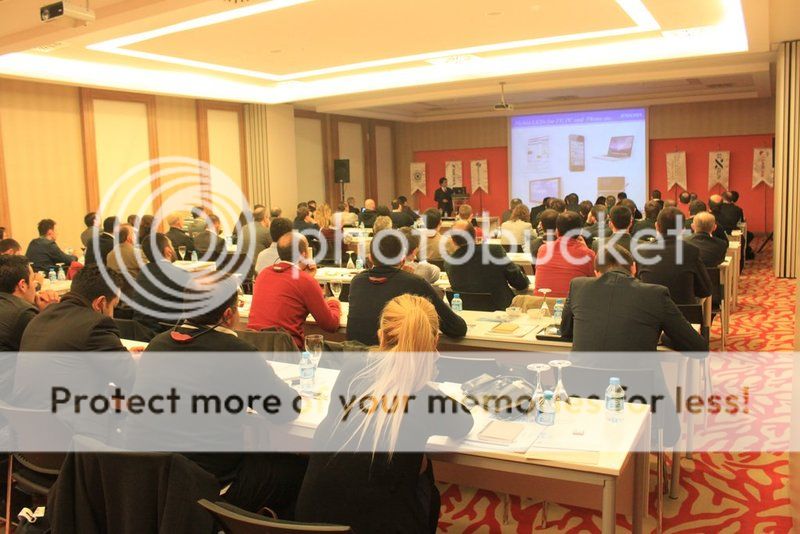
With a 6500-seat capacity, the WOW Convention Center is Istanbul's largest congress center with accommodations. There are a total of 34 halls in the WOW Convention Center, which is comprised of two blocks and which can handle all types of organizations such as international and national congresses, meetings, fairs and weddings.
Situated in the WOW Convention Center’s A Block, the 3108 m2 Saffire Hall is the largest hall in Istanbul. There are another six meeting rooms in the same block handle anywhere from 20 to 235 persons.
Situated in the WOW Convention Center’s B Block, the Ruby Hall encompasses a total area of 1200 m2. Possessing a telescopic grandstand system that opens and closes, this hall can handle up to 1000 persons. The other halls situated in B Block vary in size from 70 m2 up to 225 m2. The block also includes a VIP lounge with a relaxation area as well as business and meeting rooms.
With a total 1250-bed capacity, technical infrastructure, airport proximity, meticulous service, custom-made rich menu varieties and complimentary internet connection, as well as a professional and dynamic crew, the WOW Airport Hotel, WOW Istanbul Hotel and WOW Convention Center are where the heart of meeting and congress tourism beats in Istanbul.
WOW Convention Center is an across Atatürk International Airport, which is the most important airport of Istanbul, and is walking distance to Istanbul World Trade Center, Istanbul Fair Center and Expo Center where important exhibitions, fair and events are held. The metro station having connection with the city center is located at the garden of the hotel.
Congress
Integrated with 4- and 5-star hotels, the WOW Convention Center serves its guests with 34 meeting halls, an 8500 m2 meeting space and a total 6,500-seat capacity halls in holding their national and international congresses. Situated in the WOW Convention Center A Block, the Saffire Hall is at your service, covering a spacious non-pillar area of 3108 m2, making it the largest hall in Istanbul. It features all types of décor with a technical infrastructure and a successfully applied architecture.
Adjacent to the main hall, which has a 1260 m2 foyer and can be split into three in 11 different manners, the Onyx, Zircon and Oltu are found in 1-2-3-4 halls. With a telescopic grandstand system, the Ruby multi-purpose meeting hall meets the auditorium requirements in the WOW Convention Center B Block. The sizes of the other halls situated in the block range from 27.5 m2 to 1,200 m2.
Expanding further with a new project, the WOW Istanbul Hotels & Convention Center continues to be the first address for national and international congresses with its technical and architectural features as well as its close proximity to the airport and transportation convenience.
Meeting
For your meetings of various concepts such as dealer meetings, product launchings, press conferences and art events, the WOW Convention Center offers services as the most ideal meeting venue. Ranging in size from 20 m2 to 3108 m2, its halls are ideal to handle all sorts of large or small meetings. Our halls, from which you can hold meetings of different themes, from major vehicle launches to catwalk organizations, are outfitted with all types of technical equipment.
Fair
Situated in the WOW Convention Center A Blok, the Yakut Hall is at your service, covering a spacious non-pillar area of 3108 m2 and a 1260 m2 foyer for your thematic fairs and exhibits.
Wedding
Realize the Finest Moment of Your Life as You Have Envisioned. From the decor to the menu, let our Professional Wedding Consultants plan out all your wedding organization details. You can have the wedding organization of your dreams, especially for you. While we envisage an impeccable wedding event, you can benefit from our hairdresser for your wedding hair and makeup arrangements as well as various therapeutic and massage services in the WOW Health Club in order to prepare yourself for that splendid day. After the wedding, you can bask in the tantalizing delights of champagne and wedding cake we’ll send to your specially decked out suite chamber and enjoy breakfast in bed the following morning.
Services we offer in our wedding packages;
Wedding banquets, Matrimony podium and dance floor, Table numbering machines, Honeymoon suite accommodations, Use of the wellness center, Two daily utilization rooms
MEETING HALLS
BLOCK A
Ground Floor
Sapphire
A+B+C : 3108 m2, Heigh 8,6 m, Width 42 m, Length 74 m, Theatre 4.000, Classroom 1.980, Banquet 2.000, Cocktail 3.000
A : 809 m2, Heigh 8,6 m, Width 42 m, Length 19,26 m, Theatre 810, Classroom 395, Banquet 500, Cocktail 650
A+ : 1150 m2, Heigh 8,6 m, Width 42 m, Length 27,38 m, Theatre 1315, Classroom 660, Banquet 800, Cocktail 1000
A+B : 1958 m2, Heigh 8,6 m, Width 42 m, Length 46,61 m, Theatre 2380, Classroom 1090, Banquet 1400, Cocktail 1600
A+B+ : 2298 m2, Heigh 8,6 m, Width 42 m, Length 54,71 m, Theatre 2920, Classroom 1385, Banquet 1420, Cocktail 2000
B : 808 m2, Heigh 8,6 m, Width 42 m, Length 19,23 m, Theatre 780, Classroom 395, Banquet 450, Cocktail 650
B+ : 1149 m2, Heigh 8,6 m, Width 42 m, Length 27,35 m, Theatre 1285, Classroom 590, Banquet 720, Cocktail 900
B++ : 1491 m2, Heigh 8,6 m, Width 42 m, Length 35,5 m, Theatre 1705, Classroom 790, Banquet 930, Cocktail 1100
B+C : 1916 m2, Heigh 8,6 m, Width 42 m, Length 45,61 m, Theatre 2380, Classroom 1090, Banquet 1400, Cocktail 1600
C : 809 m2, Heigh 8,6 m, Width 42 m, Length 19,26 m, Theatre 810, Classroom 395, Banquet 500, Cocktail 650
C+ : 1150 m2, Heigh 8,6 m, Width 42 m, Length 27,38 m, Theatre 1315, Classroom 660, Banquet 800, Cocktail 900
C+B+ : 2299 m2, Heigh 8,6 m, Width 42 m, Length 54,73 m, Theatre 2920, Classroom 1385, Banquet 1420, Cocktail 2000
Zircon
A+B+C : 225 m2, Heigh 4 m, Width 10 m, Length 22,5 m, Theatre 235, Classroom 155, U-Shape 65, Banquet 140, Cocktail 150
A : 72 m2, Heigh 4 m, Width 10 m, Length 7,2 m, Theatre 70, Classroom 30, U-Shape 25, Banquet 30
B : 81 m2, Heigh 4 m, Width 10 m, Length 8,1 m, Theatre 85, Classroom 45, U-Shape 30, Banquet 40
C : 72 m2, Heigh 4 m, Width 10 m, Length 7,2 m, Theatre 70, Classroom 30, U-Shape 25, Banquet 30
AB : 153 m2, Heigh 4 m, Width 10 m, Length 15,3 m, Theatre 160, Classroom 105, U-Shape 40, Banquet 90
BC : 153 m2, Heigh 4 m, Width 10 m, Length 15,3 m, Theatre 160, Classroom 105, U-Shape 40, Banquet 90
Onyx
A+B+C : 180 m2, Heigh 4 m, Width 9,6 m, Length 18,7 m, Theatre 195, U-Shape 120 55 110, Cocktail 100
A : 56 m2, Heigh 4 m, Width 9,6 m, Length 5,82 m, Theatre 60, Classroom 30, Banquet 20
B : 56 m2, Heigh 4 m, Width 9,6 m, Length 5,82 m, Theatre 60, Classroom 30, Banquet 20
C : 68 m2, Heigh 4 m, Width 9,6 m, Length 7,06 m, Theatre 70, Classroom 30, U-Shape 25, Banquet 30
AB : 112 m2, Heigh 4 m, Width 9,6 m, Length 11,64 m, Theatre 115, Classroom 70, U-Shape 30, Banquet 60
Mezzanine Floor
Oltu
Oltu 1 : 52 m2, Heigh 2,4 m, Width 5,6 m, Length 9,4 m, Theatre 50, Classroom 30, U-Shape 25, Banquet 22
Oltu 2 : 52 m2, Heigh 2,4 m, Width 5,6 m, Length 9,4 m, Theatre 50, Classroom 30, U-Shape 25, Banquet 22
Oltu 3 : 20 m2, Heigh 2,4 m, Width 3,6 m, Length 5,5 m, Theatre 15, Banquet 8
Oltu 4 : 20 m2, Heigh 2,4 m, Width 3,6 m, Length 5,5 m, Theatre 15, Banquet 10
BLOCK B
Ground Floor
Ruby
A+B+C : 1177 m2, Heigh 6,7 m, Width 42,5 m, Length 27,8 m, Theatre 1200, Classroom 756, U-Shape 165, Banquet 750, Cocktail 1000, Cocktail Prolonge 800
A : 391 m2, Heigh 6,7 m, Width 14,1 m, Length 27,8 m, Theatre 320, Classroom 198, U-Shape 100, Banquet 240, Cocktail 350, Cocktail Prolonge 250
B : 395 m2, Heigh 6,7 m, Width 14,25 m, Length 27,8 m, Theatre 320, Classroom 198, U-Shape 100, Banquet 240, Cocktail 350, Cocktail Prolonge 250
C : 391 m2, Heigh 6,7 m, Width 14,1 m, Length 27,8 m, Theatre 320, Classroom 198, U-Shape 100, Banquet 240, Cocktail 350, Cocktail Prolonge 250
AB : 786 m2, Heigh 6,7 m, Width 28,35 m, Length 27,8 m, Theatre 640, Classroom 309, U-Shape 120, Banquet 470, Cocktail 700, Cocktail Prolonge 500
BC : 786 m2, Heigh 6,7 m, Width 28,35 m, Length 27,8 m, Theatre 640, Classroom 309, U-Shape 120, Banquet 470, Cocktail 700, Cocktail Prolonge 500
Foyer : 385 m2, Heigh 3,8 m, Width 7,75 m, Length 49,45, Cocktail 330, Cocktail Prolonge 250
Opal
A+B : 144 m2, Heigh 3,6 m, Width 11,4 m, Length 12,8 m, Theatre 132, Classroom 72, U-Shape 36, Banquet 90
A : 72 m2, Heigh 3,6 m, Width 11,4 m, Length 6,4 m, Theatre 72, Classroom 48, U-Shape 27, Banquet 50
B : 72 m2, Heigh 3,6 m, Width 11,4 m, Length 6,4 m, Theatre 72, Classroom 48, U-Shape 27, Banquet 50
Amber
A+B : 144 m2, Heigh 3,6 m, Width 11,4 m, Length 12,8 m, Theatre 132, Classroom 72, U-Shape 36, Banquet 90
A : 72 m2, Heigh 3,6 m, Width 11,4 m, Length 6,4 m, Theatre 72, Classroom 48, U-Shape 27, Banquet 50
B : 72 m2, Heigh 3,6 m, Width 11,4 m, Length 6,4 m, Theatre 72, Classroom 48, U-Shape 27, Banquet 50
Topaz
A+B : 88 m2, Heigh 3,6 m, Width 8 m, Length 11 m, Theatre 80, Classroom 45, U-Shape 30, Banquet 60
A : 43 m2, Heigh 3,6 m, Width 8 m, Length 5,4 m, Theatre 40, Classroom 24, U-Shape 21
B : 44 m2, Heigh 3,6 m, Width 8, Length 5,5 m, Theatre 40, Classroom 24, U-Shape 21
Akik : 27,5 m2, Heigh 3,6, U-Shape 10
Foyer : 168 m2, Heigh 3,8 m, Width 7,05 m, Length 23,8, Cocktail 180, Cocktail Prolonge 150
Corridor : 165 m2, Heigh 3,8 m, Width 4 m, Length 41,25 m
VIP Workroom : 58,5 m2, U-Shape 20
VIP Resting Room : 40 m2
VIP Office : 22,5 m2
1. Floor
Square M2 Heigh Width Length Theatre Classroom U-Shape Banquet Cocktail Cocktail Prolonge
Coral
A+B+C : 228 m2, Heigh 3,7 m, Width 11,4 m, Length 20 m, Theatre 252, Classroom 108, U-Shape 69, Banquet 120 180 150
A : 71,8 m2, Heigh 3,7 m, Width 11,4 m, Length 6,3 m, Theatre 80, Classroom 54, U-Shape 36, Banquet 50
AB : 164,3 m2, Heigh 3,7 m, Width 11,4 m, Length 14,4 m, Theatre 180, Classroom 105, U-Shape 51, Banquet 90
B : 92,5 m2, Heigh 3,7 m, Width 11,4 m, Length 8,1 m, Theatre 112, Classroom 72, U-Shape 39, Banquet 50
BC : 154 m2, Heigh 3,7 m, Width 11,4 m, Length 13,5 m, Theatre 162, Classroom 90, U-Shape 48, Banquet 90
C : 61,5 m2, Heigh 3,7 m, Width 11,4 m, Length 5,4 m, Theatre 64, Classroom 36, U-Shape 37, Banquet 40
Lapis
A+B : 105 m2, Heigh 3,7 m, Width 8,9 m, Length 11,8 m, Theatre 112, Classroom 72, U-Shape 45
A : 49 m2, Heigh 3,7 m, Width 8,9 m, Length 5,5 m, Theatre 48, Classroom 24, U-Shape 22
B : 56 m2, Heigh 3,7 m, Width 8,9 m, Length 6,3 m, Theatre 54, Classroom 24, U-Shape 25
Aquamarine : 71,5 m2, Heigh 3,7 m, Width 11,4 m, Length 6,3 m, Theatre 56, Classroom 30, U-Shape 28
Turquoise : 71,5 m2, Heigh 3,7 m, Width 11,4 m, Length 6,3 m, Theatre 56, Classroom 30, U-Shape 28
Quartz : 71 m2, Heigh 3,7 m, Width 11,4 m, Length 6,3 m, Theatre 56, Classroom 30, U-Shape 28
Amethyst : 70 m2, Heigh 3,7 m, Width 6,3 m, Length 11,1 m, Theatre 56, Classroom 30, U-Shape 28
Calsedon : 47 m2, Heigh 3,7 m, Width 8,9 m, Length 5,3 m, Theatre 35, Classroom 24, U-Shape 20
Foyer : 196 m2, Heigh 3,8 m, Width 12,9 m, Length 15,2, Cocktail 180, Cocktail Prolonge 150
Corridor : 163,5 m2, Heigh 3,8 m, Width 3,9 m, Length 41,9
Technical Information
You can acquire all the technical infrastructure possibilities to utilize advanced technology at all your large and small meetings.
A fully capable 5 MB-speed wi-fi internet connection, An audio system that broadcasts announcements and music in the halls and foyers, Infrastructure support required for audio and visual presentations, LCD monitor TV support in the foyers, 220V single-phase electrical current, 380 V triple-phase electrical current.
SERVICES
Food & Beverage
5-Star Gourmet Flavors at the WOW Convention Center. The WOW Convention Center has offered congress tourism the highest-quality service with delicious food & beverage services and incomparable presentation since the day it opened. Along with our innovative menus, our professional cuisine team combines a myriad of flavors exhibited in samples of fusion cuisine, adding flair to your organizations with distinctive presentations. Our catering team finds solutions to all your food and beverage related needs, whereas you can obtain all types of support in dealing with the preparation of special menus for your organizations.
Outside Catering
Our professional team is ready to serve you to help organize all your outdoor parties, weddings, store openings, business meals and receptions for up to 3000 guests. Your event will be the talk of the town for a long time to come with our 5-star menus accompanied by our award-winning, gourmet chefs. When it comes to your outdoor functions, you can leave your flavor- and quality-related problems behind forever with our WOW Outside Catering Services.
Business Center
Accompanied by our Business Center assistant, WOW Business Center is ready to serve you to organize all your printed materials (fax-photocopy-internet) with equipment designed to meet your needs.
LOCATION SATELLITE MAP
WEB SITE : WOW İstanbul Convention Center
MORE INFO & CONTACT
E-Mail : info@wowconventionistanbul.com
Phone : +90 212 468 5000 / +90 212 444 0 969
Fax : +90 212 465 0655
These scripts and photographs are registered under © Copyright 2017, respected writers and photographers from the internet. All Rights Reserved.
GPS : 40°59'16.7"N 28°49'49.0"E / 40.987972, 28.830278

PHOTOGRAPHS ALBUM
With a 6500-seat capacity, the WOW Convention Center is Istanbul's largest congress center with accommodations. There are a total of 34 halls in the WOW Convention Center, which is comprised of two blocks and which can handle all types of organizations such as international and national congresses, meetings, fairs and weddings.
Situated in the WOW Convention Center’s A Block, the 3108 m2 Saffire Hall is the largest hall in Istanbul. There are another six meeting rooms in the same block handle anywhere from 20 to 235 persons.
Situated in the WOW Convention Center’s B Block, the Ruby Hall encompasses a total area of 1200 m2. Possessing a telescopic grandstand system that opens and closes, this hall can handle up to 1000 persons. The other halls situated in B Block vary in size from 70 m2 up to 225 m2. The block also includes a VIP lounge with a relaxation area as well as business and meeting rooms.
With a total 1250-bed capacity, technical infrastructure, airport proximity, meticulous service, custom-made rich menu varieties and complimentary internet connection, as well as a professional and dynamic crew, the WOW Airport Hotel, WOW Istanbul Hotel and WOW Convention Center are where the heart of meeting and congress tourism beats in Istanbul.
WOW Convention Center is an across Atatürk International Airport, which is the most important airport of Istanbul, and is walking distance to Istanbul World Trade Center, Istanbul Fair Center and Expo Center where important exhibitions, fair and events are held. The metro station having connection with the city center is located at the garden of the hotel.
Congress
Integrated with 4- and 5-star hotels, the WOW Convention Center serves its guests with 34 meeting halls, an 8500 m2 meeting space and a total 6,500-seat capacity halls in holding their national and international congresses. Situated in the WOW Convention Center A Block, the Saffire Hall is at your service, covering a spacious non-pillar area of 3108 m2, making it the largest hall in Istanbul. It features all types of décor with a technical infrastructure and a successfully applied architecture.
Adjacent to the main hall, which has a 1260 m2 foyer and can be split into three in 11 different manners, the Onyx, Zircon and Oltu are found in 1-2-3-4 halls. With a telescopic grandstand system, the Ruby multi-purpose meeting hall meets the auditorium requirements in the WOW Convention Center B Block. The sizes of the other halls situated in the block range from 27.5 m2 to 1,200 m2.
Expanding further with a new project, the WOW Istanbul Hotels & Convention Center continues to be the first address for national and international congresses with its technical and architectural features as well as its close proximity to the airport and transportation convenience.
Meeting
For your meetings of various concepts such as dealer meetings, product launchings, press conferences and art events, the WOW Convention Center offers services as the most ideal meeting venue. Ranging in size from 20 m2 to 3108 m2, its halls are ideal to handle all sorts of large or small meetings. Our halls, from which you can hold meetings of different themes, from major vehicle launches to catwalk organizations, are outfitted with all types of technical equipment.
Fair
Situated in the WOW Convention Center A Blok, the Yakut Hall is at your service, covering a spacious non-pillar area of 3108 m2 and a 1260 m2 foyer for your thematic fairs and exhibits.
Wedding
Realize the Finest Moment of Your Life as You Have Envisioned. From the decor to the menu, let our Professional Wedding Consultants plan out all your wedding organization details. You can have the wedding organization of your dreams, especially for you. While we envisage an impeccable wedding event, you can benefit from our hairdresser for your wedding hair and makeup arrangements as well as various therapeutic and massage services in the WOW Health Club in order to prepare yourself for that splendid day. After the wedding, you can bask in the tantalizing delights of champagne and wedding cake we’ll send to your specially decked out suite chamber and enjoy breakfast in bed the following morning.
Services we offer in our wedding packages;
Wedding banquets, Matrimony podium and dance floor, Table numbering machines, Honeymoon suite accommodations, Use of the wellness center, Two daily utilization rooms
MEETING HALLS
BLOCK A
Ground Floor
Sapphire
A+B+C : 3108 m2, Heigh 8,6 m, Width 42 m, Length 74 m, Theatre 4.000, Classroom 1.980, Banquet 2.000, Cocktail 3.000
A : 809 m2, Heigh 8,6 m, Width 42 m, Length 19,26 m, Theatre 810, Classroom 395, Banquet 500, Cocktail 650
A+ : 1150 m2, Heigh 8,6 m, Width 42 m, Length 27,38 m, Theatre 1315, Classroom 660, Banquet 800, Cocktail 1000
A+B : 1958 m2, Heigh 8,6 m, Width 42 m, Length 46,61 m, Theatre 2380, Classroom 1090, Banquet 1400, Cocktail 1600
A+B+ : 2298 m2, Heigh 8,6 m, Width 42 m, Length 54,71 m, Theatre 2920, Classroom 1385, Banquet 1420, Cocktail 2000
B : 808 m2, Heigh 8,6 m, Width 42 m, Length 19,23 m, Theatre 780, Classroom 395, Banquet 450, Cocktail 650
B+ : 1149 m2, Heigh 8,6 m, Width 42 m, Length 27,35 m, Theatre 1285, Classroom 590, Banquet 720, Cocktail 900
B++ : 1491 m2, Heigh 8,6 m, Width 42 m, Length 35,5 m, Theatre 1705, Classroom 790, Banquet 930, Cocktail 1100
B+C : 1916 m2, Heigh 8,6 m, Width 42 m, Length 45,61 m, Theatre 2380, Classroom 1090, Banquet 1400, Cocktail 1600
C : 809 m2, Heigh 8,6 m, Width 42 m, Length 19,26 m, Theatre 810, Classroom 395, Banquet 500, Cocktail 650
C+ : 1150 m2, Heigh 8,6 m, Width 42 m, Length 27,38 m, Theatre 1315, Classroom 660, Banquet 800, Cocktail 900
C+B+ : 2299 m2, Heigh 8,6 m, Width 42 m, Length 54,73 m, Theatre 2920, Classroom 1385, Banquet 1420, Cocktail 2000
Zircon
A+B+C : 225 m2, Heigh 4 m, Width 10 m, Length 22,5 m, Theatre 235, Classroom 155, U-Shape 65, Banquet 140, Cocktail 150
A : 72 m2, Heigh 4 m, Width 10 m, Length 7,2 m, Theatre 70, Classroom 30, U-Shape 25, Banquet 30
B : 81 m2, Heigh 4 m, Width 10 m, Length 8,1 m, Theatre 85, Classroom 45, U-Shape 30, Banquet 40
C : 72 m2, Heigh 4 m, Width 10 m, Length 7,2 m, Theatre 70, Classroom 30, U-Shape 25, Banquet 30
AB : 153 m2, Heigh 4 m, Width 10 m, Length 15,3 m, Theatre 160, Classroom 105, U-Shape 40, Banquet 90
BC : 153 m2, Heigh 4 m, Width 10 m, Length 15,3 m, Theatre 160, Classroom 105, U-Shape 40, Banquet 90
Onyx
A+B+C : 180 m2, Heigh 4 m, Width 9,6 m, Length 18,7 m, Theatre 195, U-Shape 120 55 110, Cocktail 100
A : 56 m2, Heigh 4 m, Width 9,6 m, Length 5,82 m, Theatre 60, Classroom 30, Banquet 20
B : 56 m2, Heigh 4 m, Width 9,6 m, Length 5,82 m, Theatre 60, Classroom 30, Banquet 20
C : 68 m2, Heigh 4 m, Width 9,6 m, Length 7,06 m, Theatre 70, Classroom 30, U-Shape 25, Banquet 30
AB : 112 m2, Heigh 4 m, Width 9,6 m, Length 11,64 m, Theatre 115, Classroom 70, U-Shape 30, Banquet 60
Mezzanine Floor
Oltu
Oltu 1 : 52 m2, Heigh 2,4 m, Width 5,6 m, Length 9,4 m, Theatre 50, Classroom 30, U-Shape 25, Banquet 22
Oltu 2 : 52 m2, Heigh 2,4 m, Width 5,6 m, Length 9,4 m, Theatre 50, Classroom 30, U-Shape 25, Banquet 22
Oltu 3 : 20 m2, Heigh 2,4 m, Width 3,6 m, Length 5,5 m, Theatre 15, Banquet 8
Oltu 4 : 20 m2, Heigh 2,4 m, Width 3,6 m, Length 5,5 m, Theatre 15, Banquet 10
BLOCK B
Ground Floor
Ruby
A+B+C : 1177 m2, Heigh 6,7 m, Width 42,5 m, Length 27,8 m, Theatre 1200, Classroom 756, U-Shape 165, Banquet 750, Cocktail 1000, Cocktail Prolonge 800
A : 391 m2, Heigh 6,7 m, Width 14,1 m, Length 27,8 m, Theatre 320, Classroom 198, U-Shape 100, Banquet 240, Cocktail 350, Cocktail Prolonge 250
B : 395 m2, Heigh 6,7 m, Width 14,25 m, Length 27,8 m, Theatre 320, Classroom 198, U-Shape 100, Banquet 240, Cocktail 350, Cocktail Prolonge 250
C : 391 m2, Heigh 6,7 m, Width 14,1 m, Length 27,8 m, Theatre 320, Classroom 198, U-Shape 100, Banquet 240, Cocktail 350, Cocktail Prolonge 250
AB : 786 m2, Heigh 6,7 m, Width 28,35 m, Length 27,8 m, Theatre 640, Classroom 309, U-Shape 120, Banquet 470, Cocktail 700, Cocktail Prolonge 500
BC : 786 m2, Heigh 6,7 m, Width 28,35 m, Length 27,8 m, Theatre 640, Classroom 309, U-Shape 120, Banquet 470, Cocktail 700, Cocktail Prolonge 500
Foyer : 385 m2, Heigh 3,8 m, Width 7,75 m, Length 49,45, Cocktail 330, Cocktail Prolonge 250
Opal
A+B : 144 m2, Heigh 3,6 m, Width 11,4 m, Length 12,8 m, Theatre 132, Classroom 72, U-Shape 36, Banquet 90
A : 72 m2, Heigh 3,6 m, Width 11,4 m, Length 6,4 m, Theatre 72, Classroom 48, U-Shape 27, Banquet 50
B : 72 m2, Heigh 3,6 m, Width 11,4 m, Length 6,4 m, Theatre 72, Classroom 48, U-Shape 27, Banquet 50
Amber
A+B : 144 m2, Heigh 3,6 m, Width 11,4 m, Length 12,8 m, Theatre 132, Classroom 72, U-Shape 36, Banquet 90
A : 72 m2, Heigh 3,6 m, Width 11,4 m, Length 6,4 m, Theatre 72, Classroom 48, U-Shape 27, Banquet 50
B : 72 m2, Heigh 3,6 m, Width 11,4 m, Length 6,4 m, Theatre 72, Classroom 48, U-Shape 27, Banquet 50
Topaz
A+B : 88 m2, Heigh 3,6 m, Width 8 m, Length 11 m, Theatre 80, Classroom 45, U-Shape 30, Banquet 60
A : 43 m2, Heigh 3,6 m, Width 8 m, Length 5,4 m, Theatre 40, Classroom 24, U-Shape 21
B : 44 m2, Heigh 3,6 m, Width 8, Length 5,5 m, Theatre 40, Classroom 24, U-Shape 21
Akik : 27,5 m2, Heigh 3,6, U-Shape 10
Foyer : 168 m2, Heigh 3,8 m, Width 7,05 m, Length 23,8, Cocktail 180, Cocktail Prolonge 150
Corridor : 165 m2, Heigh 3,8 m, Width 4 m, Length 41,25 m
VIP Workroom : 58,5 m2, U-Shape 20
VIP Resting Room : 40 m2
VIP Office : 22,5 m2
1. Floor
Square M2 Heigh Width Length Theatre Classroom U-Shape Banquet Cocktail Cocktail Prolonge
Coral
A+B+C : 228 m2, Heigh 3,7 m, Width 11,4 m, Length 20 m, Theatre 252, Classroom 108, U-Shape 69, Banquet 120 180 150
A : 71,8 m2, Heigh 3,7 m, Width 11,4 m, Length 6,3 m, Theatre 80, Classroom 54, U-Shape 36, Banquet 50
AB : 164,3 m2, Heigh 3,7 m, Width 11,4 m, Length 14,4 m, Theatre 180, Classroom 105, U-Shape 51, Banquet 90
B : 92,5 m2, Heigh 3,7 m, Width 11,4 m, Length 8,1 m, Theatre 112, Classroom 72, U-Shape 39, Banquet 50
BC : 154 m2, Heigh 3,7 m, Width 11,4 m, Length 13,5 m, Theatre 162, Classroom 90, U-Shape 48, Banquet 90
C : 61,5 m2, Heigh 3,7 m, Width 11,4 m, Length 5,4 m, Theatre 64, Classroom 36, U-Shape 37, Banquet 40
Lapis
A+B : 105 m2, Heigh 3,7 m, Width 8,9 m, Length 11,8 m, Theatre 112, Classroom 72, U-Shape 45
A : 49 m2, Heigh 3,7 m, Width 8,9 m, Length 5,5 m, Theatre 48, Classroom 24, U-Shape 22
B : 56 m2, Heigh 3,7 m, Width 8,9 m, Length 6,3 m, Theatre 54, Classroom 24, U-Shape 25
Aquamarine : 71,5 m2, Heigh 3,7 m, Width 11,4 m, Length 6,3 m, Theatre 56, Classroom 30, U-Shape 28
Turquoise : 71,5 m2, Heigh 3,7 m, Width 11,4 m, Length 6,3 m, Theatre 56, Classroom 30, U-Shape 28
Quartz : 71 m2, Heigh 3,7 m, Width 11,4 m, Length 6,3 m, Theatre 56, Classroom 30, U-Shape 28
Amethyst : 70 m2, Heigh 3,7 m, Width 6,3 m, Length 11,1 m, Theatre 56, Classroom 30, U-Shape 28
Calsedon : 47 m2, Heigh 3,7 m, Width 8,9 m, Length 5,3 m, Theatre 35, Classroom 24, U-Shape 20
Foyer : 196 m2, Heigh 3,8 m, Width 12,9 m, Length 15,2, Cocktail 180, Cocktail Prolonge 150
Corridor : 163,5 m2, Heigh 3,8 m, Width 3,9 m, Length 41,9
Technical Information
You can acquire all the technical infrastructure possibilities to utilize advanced technology at all your large and small meetings.
A fully capable 5 MB-speed wi-fi internet connection, An audio system that broadcasts announcements and music in the halls and foyers, Infrastructure support required for audio and visual presentations, LCD monitor TV support in the foyers, 220V single-phase electrical current, 380 V triple-phase electrical current.
SERVICES
Food & Beverage
5-Star Gourmet Flavors at the WOW Convention Center. The WOW Convention Center has offered congress tourism the highest-quality service with delicious food & beverage services and incomparable presentation since the day it opened. Along with our innovative menus, our professional cuisine team combines a myriad of flavors exhibited in samples of fusion cuisine, adding flair to your organizations with distinctive presentations. Our catering team finds solutions to all your food and beverage related needs, whereas you can obtain all types of support in dealing with the preparation of special menus for your organizations.
Outside Catering
Our professional team is ready to serve you to help organize all your outdoor parties, weddings, store openings, business meals and receptions for up to 3000 guests. Your event will be the talk of the town for a long time to come with our 5-star menus accompanied by our award-winning, gourmet chefs. When it comes to your outdoor functions, you can leave your flavor- and quality-related problems behind forever with our WOW Outside Catering Services.
Business Center
Accompanied by our Business Center assistant, WOW Business Center is ready to serve you to organize all your printed materials (fax-photocopy-internet) with equipment designed to meet your needs.
LOCATION SATELLITE MAP
WEB SITE : WOW İstanbul Convention Center
MORE INFO & CONTACT
E-Mail : info@wowconventionistanbul.com
Phone : +90 212 468 5000 / +90 212 444 0 969
Fax : +90 212 465 0655
These scripts and photographs are registered under © Copyright 2017, respected writers and photographers from the internet. All Rights Reserved.
Labels:
bakirkoy,
congress center,
convention center,
fair,
istanbul,
meeting,
meeting halls,
turkey,
yesilkoy
Saturday, January 14, 2017
FILDAMI CISTERN
Osmaniye, Bakırköy - İstanbul - Turkey
GPS : 40°59'33.9"N 28°53'09.9"E / 40.992750, 28.886083

PHOTOGRAPHS ALBUM
The Cistern of the Hebdomon, known in Turkish as Fildamı Sarnıcı (recover of the Elephants), is a Byzantine open sky water reservoir built in the quarter of the Hebdomon (today's Bakırköy), an outskirt of Constantinople.
The cistern is located in Istanbul, in the district of Bakirköy, in the mahalle of Osmaniye, between Fildamı Arkası and Çoban Çeşme Sokak, to the northwest of the Veli Efendi horse race track. Topographically, it lies about 2 km west of the Golden Gate of the Walls of Constantinople, in the western part of a small valley - now completely built up - which runs southwards to the Marmara sea.
The date of construction of this cistern, which lay in the outskirts of the Hebdomon, "the Seventh", so called because of its location seven Roman miles from the Milion, the mile-marker monument of Constantinople), is uncertain, but can be placed from the fifth-sixth centuries to the eighth century. The size of the bricks suggests as a post quem date for its edification the end of Justinian I's reign (ruled 527-65), while the absence of brick stamps is typical of constructions erected after the end of the sixth century.
Its function was certainly to supply water to the quarter's two imperial palaces bearing the name of Magnaura, erected by Emperor Valens (r. 364-78), and of Jucundianae, (also named Secundianae) built by Justinian I. Both palaces lay near the Marmara seashore, where nowadays the Ataköy Marina lies. The cistern was also used to supply water to the troops of the Thracian army using the nearby Field of Mars, named Kampos tou Tribounaliou, in Latin Campus Tribunalis. The Campus, where several Emperors were elected through acclamation by the army, lay in the valley of Veli Efendi, where now Istanbul's horse race track is placed.
After the Fall of Constantinople in 1453, the empty reservoir was used by the Ottomans as a stable for the Sultan's elephants, whence its Turkish names Filhane or Fildamı, meaning house or repair of the elephants. Afterwards, it was used as vegetable garden, becoming one of Istanbul's four Çukurbostan (hollow garden) still extant, a use that ceased in 1996, when the cistern was acquired by the state and transformed into a concert arena for pop music with a capacity of 12,000 spectators.
By 2003, it had become clear that the vibrations of the music were damaging the walls and disturbing the horses in the nearby race track, and the concerts ceased. Since then, the structure - administered by the belediye of Bakırköy - has been sporadically used to host meetings.
The cistern has a rectangular plan with sides 127 metres (417 ft) long and 76 metres (249 ft) wide, and covers an area of about 9,600 square metres (103,000 sq ft). It is slightly larger than the Basilica Cistern, and is the smallest among the four open-air cistern of Constantinople. Its average depth is about 11 metres (36 ft) on the inner side, but much less on the outer side, since the cistern, built above ground like all the open-air reservoirs of Constantinople, "sank" in the earth with time, as the level of the soil rose.
The reservoir could contain about 0.105 million cubic metres (28 million US gallons) of water. Its walls, 4.10 metres (13.5 ft) thick in the northern and southern sides and 7 metres (22.97 ft) thick in the eastern and western sides, are still in place. They were built using the Roman construction technique opus listatum, by alternating courses of bricks and of stone in a ratio of five to two, except near the top, where it is five to four (or five). The same pattern was also used to build the cisterns of Aetius, of Aspar and of Mocius inside the walled city of Costantinople.
The outer western wall is buried in the hill, while the inner western wall and the outer eastern wall are reinforced with a series of nineteen semicircular projecting niches which create two buttresses, necessary to withstand the weight of the hill. Two stairways, today partially destroyed, and used to enter the mains, are built by the north and south side. Another interesting feature of the cistern is its water tower (Latin: Castellum aquae), built on the outer side of the south-western corner.
This is a water tank used to stabilize the hydraulic pressure of an aqueduct by releasing water when its level drops beyond a specific value. The tower has a double shell structure, with a spiral staircase in the centre, separated from the outside by a casing containing the water flowing from an inflow placed at the bottom of the tower. Several outflow channels distributed the reservoir water in different directions.
It is unknown whether the cistern, which lies at a low altitude, was supplied with water coming from the nearby springs, and whether this was sufficient to fill it, or whether the water came from an artificial channel from the Thracian hinterland. In the same small valley where the cistern lies, and to its west, there are three smaller elliptic open cisterns, aligned from north to south. The central one is destroyed, while the other two, still extant, are named Domuzdamı "Repair of the pigs", since they were used as stables for animals.
During the Byzantine times Bakırköy was a separate community outside Constantinople, a well-watered pleasant seaside retreat from the city, and was called Hebdomon, "the Seventh", i.e. seven Roman miles from the Milion, the mile-marker monument of Constntinople. Here - where nowadays the Ataköy Marina lies - Emperor Valens built one of the two imperial Palaces bearing the name of Magnaura, while Justinian erected another Palace named Jucundianae, also placed near the seaside.
Two churches, dedicated respectively to St. John Baptist the Evangelist and to St. John Baptist the Forerunner, the latter hosting the head of the Saint and burial place of the Emperor Basil II, were also erected here. Hebdomon was a place of exercise and concentration of the Thracian army. It had a large Field of Mars, the Kampos tou Tribounaliou in Latin Campus Tribunalis, where several Emperors were elected through acclamation by the army.
Among them were Valens, Arcadius, Honorius, Theodosius II, Phocas, Nikephoros II Phokas. The Campus lay in the valley of Veli Efendi, where now the horse race track is placed. The imperial court came often to the Hebdomon to attend military parades, to welcome the emperor coming back from campaign, and to pray in the large church of St. John Baptist the Forerunner.
Fildamı Cistern is one of the four biggest reservoirs of late antiquity in Byzantium, Constantinople. Different than most of the other cisterns and other open-air reservoirs in Constantinople, Fildamı Cistern is not situated in the historical peninsula which is covered by Land Walls constructed by Theodosius and at this concept Fildamı is an extraordinary monument, compared with other cisterns inside of city walls, which can survive until now.
Fildamı is an open-air reservoir which is situated in the west side of a valley running north wards from the Sea of Marmara. It is constructed next to the Magnaura and Jucundianae palaces and nowadays Veliefendi Hippodromme, in Bakırköy (the ancient Hebdomon), Osmaniye. Bakırköy called as Hebdomon in Greek or Septimus in Latin, being seventh roman miles of the Via Egnetia’s road which is started from the zero point of Constantinople, the Million, in antiquity.
It was a separate community outside Constantinople, a well watered pleasant seaside retreat from the city distorted to Hepdoman. It was also called as Makro Hori (long town) at the end of Roman Empire. The suburb served as an important parade and assembly ground for the army, and was the scene of imperial coronations in the 5th century. Emperor Valens built the imperial Palace of Magnaura and the church of St. John in Hebdomon was also built here. Fildamı Cistern is one of the most important monument in Hebdomon which can survive as mostly protected monument until present
The Roman city of Byzantium on the natural boundary between Europe and Asia was refounded as Constantinopolis in AD 330 by the emperor Constantine. The city became a focus for imperial patronage and display, quickly acquiring the grand urban structures expected of any classical metropolis; the fora, baths, colonnaded streets and hippodrome. The walls of the old city were expanded and within two decades the urban population began to grow exponentially and new living spaces, suburbs are started to be created outside the city walls, as Hebdomon.
At a time when many western cities stagnated or shrunk in size, late antique Constantinople expanded and flourished in both cultural and physical wealth, to provide a secure urban setting for the eastern empire into the later middle ages. To provide this expansion, city was needed new water supplies to distrubute into to the expanding city borders in healty way and it is builded lots of aquaducts, channels, cisterns and open air reservoirs to provide that amount of water to the city especially at end of the IV th, V th and VI th centuries as Fildamı Cistern Aquaduct of Vallens and etc. However based on historical sources the system maintained continuity until the end of the VII th century.
Fildamı as being one of the massive open-air reservoirs from the late antique city, build in Hebdomon, played a fundemental role in the provisioning of extanding metropolis. Three of these reservoirs, Aetius, Aspar and Mocius constructed in the 5th century lay on high ground within the Theodosian Land Walls. The Fildamı is unusual in that it laid outside the walls, to the north-east of the Hebdomon, its role perhaps then tied to the development of this palatial suburb, serving the troops and the animals that musterd before and after campaigns on the kampos.
Some of its water may have been piped to the nearby imperial palace at the Hebdomon. (the water supply of Constantinople After the late 12th century the long term system had been abandoned as a result of cumulative seismic damage and after the fall of the city to the Ottomans at 15th century (1453), a new system was constructed in the 16th century based entirely on the closer sources at Halkalı and in the Forest of Belgrade but Fildamı Cistern is one of the most permanent monument build to supply the water to the city, most of other water supplier channels, water bridges, cisterns and aquaducts which were disrupted by earthquakes or by Ottoman Empire.
Besides we do not know the exact date of the cistern; we guess that Fildamı cistern is constructed in V-VI centuries. This guess is made by Dr. Tulay Ergil based on the size of the bricks because the size of bricks is 330 mm square which help us to suggest a post Justinianic date and apparent absence of brick stamps in the structure suggests a date after the end of six century. However the scalloped form of external and internal buttressing was an established form of Roman construction and was recommended by Vitruvius and is thus unlikely to be a significant chronological guide. The walls are bonded from the bottom to the top with seven stones and seven bricks in a row.
It stands on the west side of a valley running north wards from the Sea of Marmara. Its west walla is buried within the valley side, and it was necessary to buttress the wall internally agains the weight of the hillside. This butressing was achieved, as is not uncommon in Roman and Byzantine cisterns and retaining walls, by buildind it on a scalloped with nineteen niches, creating a series of projecting butresses, bringing the thickness of the wall to 7 m.
Fildamı is an open-air reservoir of the early Byzantine Empire, 1500 m far away from the coast of Marmara Sea and the west side of Çırpıcı stream. The measure of the cistern is 127 x 76 m and the walls are visible to a height of about ten meter and its depth is measured as 11 m. Therefore it is estimating that its first shape is deeper than nowadays form. In total area it is somewhat smaller than the other open reservoirs within the Land Walls. It is only 1.000 m2 larger in area than the
We do not know how the Fildamı was supplied. It is situated at a relatively low elevation and a number of springs further up the valley which provide sufficient discharge. Alternatively, a channel might have been built, branching from the long distance supply line coming from Thrace.
One of the most interesting things of the reservoir is the piezometric tower on the exterior of the south-west corner. The piezometric tower is a giant water tank and is used to restabilish the nominal value of hydraulic pressure in an aqueduct by releasing water when the value of the pressure drop below a certain limit. The tower was a double-shell structure, with the outer casing of the tower separated from an internal spiral staircase by a space within which the water from the reservoir could flow.
From within the tower it was possible to see outflow channels leading away from the reservoir in different directions. The tower served to regulate the water level and control distribution from the multiple outflow channels, presumable each with a different destination. There was a single inflow channel from the reservoir into the tower, situated at a low level.
There is not a common knowledge where the name of “Fildamı” came as the name of the open air reservoir or cistern. However historicians think that elephants of the army and the palace of Ottoman Empire are kept in this field and that’s why the name of the cistern is putted as Fildamı. Therefore Fildamı Cistern is also known as Hebdomon Cistern in some sources as well.
Fildamı is not used for anything for long years until the 1998. Between the years 1998 to 2003, Fildamı was used as exhibition center in which lots of domestic and international famous groups like The Blue Brothers, Roger Glover, Dream Theater, and singers like Haluk Levent, Teoman and Ibrahim Tatlises display their perfomance. However in 2003 the concert programmes were cancelled because of the damage of high volume to the walls of the cistern and because of the disturbence to the horses in Veliefendi Hippodrrome.
Nowadays, Fildamı Cistern is used as recreational area for the native people of Bakirkoy under the control of Bakırköy Municapilaty. Lots of people without considering any age differences, realize their morning gym, running on to the tartan runway which builded in to the cistern even in some of my visit of Fildamı Cistern I saw Turkish Youth Athletics Team working in Fildamı Cistern. The green area inside of the cistern is used as football pitch.
Like other historical places Fildamı is also facing with some problemes like garbages and damages from some of the people who don’t have a historical consciousness, because of the indifference of the government and the other people. However there is no a desperate situation of Fildamı cistern comparing with other historical areas, because eventhough Fildamı is facing with some problemes, the community is conscious about the cistern. We can see this consciousness obviously from the effect of the cistern to its environment, most of the name coffees, buffets, and buildings are carrying the same name with the cistern.
LOCATION SATELLITE MAP
These scripts and photographs are registered under © Copyright 2017, respected writers and photographers from the internet. All Rights Reserved.
GPS : 40°59'33.9"N 28°53'09.9"E / 40.992750, 28.886083

PHOTOGRAPHS ALBUM
The Cistern of the Hebdomon, known in Turkish as Fildamı Sarnıcı (recover of the Elephants), is a Byzantine open sky water reservoir built in the quarter of the Hebdomon (today's Bakırköy), an outskirt of Constantinople.
The cistern is located in Istanbul, in the district of Bakirköy, in the mahalle of Osmaniye, between Fildamı Arkası and Çoban Çeşme Sokak, to the northwest of the Veli Efendi horse race track. Topographically, it lies about 2 km west of the Golden Gate of the Walls of Constantinople, in the western part of a small valley - now completely built up - which runs southwards to the Marmara sea.
The date of construction of this cistern, which lay in the outskirts of the Hebdomon, "the Seventh", so called because of its location seven Roman miles from the Milion, the mile-marker monument of Constantinople), is uncertain, but can be placed from the fifth-sixth centuries to the eighth century. The size of the bricks suggests as a post quem date for its edification the end of Justinian I's reign (ruled 527-65), while the absence of brick stamps is typical of constructions erected after the end of the sixth century.
Its function was certainly to supply water to the quarter's two imperial palaces bearing the name of Magnaura, erected by Emperor Valens (r. 364-78), and of Jucundianae, (also named Secundianae) built by Justinian I. Both palaces lay near the Marmara seashore, where nowadays the Ataköy Marina lies. The cistern was also used to supply water to the troops of the Thracian army using the nearby Field of Mars, named Kampos tou Tribounaliou, in Latin Campus Tribunalis. The Campus, where several Emperors were elected through acclamation by the army, lay in the valley of Veli Efendi, where now Istanbul's horse race track is placed.
After the Fall of Constantinople in 1453, the empty reservoir was used by the Ottomans as a stable for the Sultan's elephants, whence its Turkish names Filhane or Fildamı, meaning house or repair of the elephants. Afterwards, it was used as vegetable garden, becoming one of Istanbul's four Çukurbostan (hollow garden) still extant, a use that ceased in 1996, when the cistern was acquired by the state and transformed into a concert arena for pop music with a capacity of 12,000 spectators.
By 2003, it had become clear that the vibrations of the music were damaging the walls and disturbing the horses in the nearby race track, and the concerts ceased. Since then, the structure - administered by the belediye of Bakırköy - has been sporadically used to host meetings.
The cistern has a rectangular plan with sides 127 metres (417 ft) long and 76 metres (249 ft) wide, and covers an area of about 9,600 square metres (103,000 sq ft). It is slightly larger than the Basilica Cistern, and is the smallest among the four open-air cistern of Constantinople. Its average depth is about 11 metres (36 ft) on the inner side, but much less on the outer side, since the cistern, built above ground like all the open-air reservoirs of Constantinople, "sank" in the earth with time, as the level of the soil rose.
The reservoir could contain about 0.105 million cubic metres (28 million US gallons) of water. Its walls, 4.10 metres (13.5 ft) thick in the northern and southern sides and 7 metres (22.97 ft) thick in the eastern and western sides, are still in place. They were built using the Roman construction technique opus listatum, by alternating courses of bricks and of stone in a ratio of five to two, except near the top, where it is five to four (or five). The same pattern was also used to build the cisterns of Aetius, of Aspar and of Mocius inside the walled city of Costantinople.
The outer western wall is buried in the hill, while the inner western wall and the outer eastern wall are reinforced with a series of nineteen semicircular projecting niches which create two buttresses, necessary to withstand the weight of the hill. Two stairways, today partially destroyed, and used to enter the mains, are built by the north and south side. Another interesting feature of the cistern is its water tower (Latin: Castellum aquae), built on the outer side of the south-western corner.
This is a water tank used to stabilize the hydraulic pressure of an aqueduct by releasing water when its level drops beyond a specific value. The tower has a double shell structure, with a spiral staircase in the centre, separated from the outside by a casing containing the water flowing from an inflow placed at the bottom of the tower. Several outflow channels distributed the reservoir water in different directions.
It is unknown whether the cistern, which lies at a low altitude, was supplied with water coming from the nearby springs, and whether this was sufficient to fill it, or whether the water came from an artificial channel from the Thracian hinterland. In the same small valley where the cistern lies, and to its west, there are three smaller elliptic open cisterns, aligned from north to south. The central one is destroyed, while the other two, still extant, are named Domuzdamı "Repair of the pigs", since they were used as stables for animals.
During the Byzantine times Bakırköy was a separate community outside Constantinople, a well-watered pleasant seaside retreat from the city, and was called Hebdomon, "the Seventh", i.e. seven Roman miles from the Milion, the mile-marker monument of Constntinople. Here - where nowadays the Ataköy Marina lies - Emperor Valens built one of the two imperial Palaces bearing the name of Magnaura, while Justinian erected another Palace named Jucundianae, also placed near the seaside.
Two churches, dedicated respectively to St. John Baptist the Evangelist and to St. John Baptist the Forerunner, the latter hosting the head of the Saint and burial place of the Emperor Basil II, were also erected here. Hebdomon was a place of exercise and concentration of the Thracian army. It had a large Field of Mars, the Kampos tou Tribounaliou in Latin Campus Tribunalis, where several Emperors were elected through acclamation by the army.
Among them were Valens, Arcadius, Honorius, Theodosius II, Phocas, Nikephoros II Phokas. The Campus lay in the valley of Veli Efendi, where now the horse race track is placed. The imperial court came often to the Hebdomon to attend military parades, to welcome the emperor coming back from campaign, and to pray in the large church of St. John Baptist the Forerunner.
Fildamı Cistern is one of the four biggest reservoirs of late antiquity in Byzantium, Constantinople. Different than most of the other cisterns and other open-air reservoirs in Constantinople, Fildamı Cistern is not situated in the historical peninsula which is covered by Land Walls constructed by Theodosius and at this concept Fildamı is an extraordinary monument, compared with other cisterns inside of city walls, which can survive until now.
Fildamı is an open-air reservoir which is situated in the west side of a valley running north wards from the Sea of Marmara. It is constructed next to the Magnaura and Jucundianae palaces and nowadays Veliefendi Hippodromme, in Bakırköy (the ancient Hebdomon), Osmaniye. Bakırköy called as Hebdomon in Greek or Septimus in Latin, being seventh roman miles of the Via Egnetia’s road which is started from the zero point of Constantinople, the Million, in antiquity.
It was a separate community outside Constantinople, a well watered pleasant seaside retreat from the city distorted to Hepdoman. It was also called as Makro Hori (long town) at the end of Roman Empire. The suburb served as an important parade and assembly ground for the army, and was the scene of imperial coronations in the 5th century. Emperor Valens built the imperial Palace of Magnaura and the church of St. John in Hebdomon was also built here. Fildamı Cistern is one of the most important monument in Hebdomon which can survive as mostly protected monument until present
The Roman city of Byzantium on the natural boundary between Europe and Asia was refounded as Constantinopolis in AD 330 by the emperor Constantine. The city became a focus for imperial patronage and display, quickly acquiring the grand urban structures expected of any classical metropolis; the fora, baths, colonnaded streets and hippodrome. The walls of the old city were expanded and within two decades the urban population began to grow exponentially and new living spaces, suburbs are started to be created outside the city walls, as Hebdomon.
At a time when many western cities stagnated or shrunk in size, late antique Constantinople expanded and flourished in both cultural and physical wealth, to provide a secure urban setting for the eastern empire into the later middle ages. To provide this expansion, city was needed new water supplies to distrubute into to the expanding city borders in healty way and it is builded lots of aquaducts, channels, cisterns and open air reservoirs to provide that amount of water to the city especially at end of the IV th, V th and VI th centuries as Fildamı Cistern Aquaduct of Vallens and etc. However based on historical sources the system maintained continuity until the end of the VII th century.
Fildamı as being one of the massive open-air reservoirs from the late antique city, build in Hebdomon, played a fundemental role in the provisioning of extanding metropolis. Three of these reservoirs, Aetius, Aspar and Mocius constructed in the 5th century lay on high ground within the Theodosian Land Walls. The Fildamı is unusual in that it laid outside the walls, to the north-east of the Hebdomon, its role perhaps then tied to the development of this palatial suburb, serving the troops and the animals that musterd before and after campaigns on the kampos.
Some of its water may have been piped to the nearby imperial palace at the Hebdomon. (the water supply of Constantinople After the late 12th century the long term system had been abandoned as a result of cumulative seismic damage and after the fall of the city to the Ottomans at 15th century (1453), a new system was constructed in the 16th century based entirely on the closer sources at Halkalı and in the Forest of Belgrade but Fildamı Cistern is one of the most permanent monument build to supply the water to the city, most of other water supplier channels, water bridges, cisterns and aquaducts which were disrupted by earthquakes or by Ottoman Empire.
Besides we do not know the exact date of the cistern; we guess that Fildamı cistern is constructed in V-VI centuries. This guess is made by Dr. Tulay Ergil based on the size of the bricks because the size of bricks is 330 mm square which help us to suggest a post Justinianic date and apparent absence of brick stamps in the structure suggests a date after the end of six century. However the scalloped form of external and internal buttressing was an established form of Roman construction and was recommended by Vitruvius and is thus unlikely to be a significant chronological guide. The walls are bonded from the bottom to the top with seven stones and seven bricks in a row.
It stands on the west side of a valley running north wards from the Sea of Marmara. Its west walla is buried within the valley side, and it was necessary to buttress the wall internally agains the weight of the hillside. This butressing was achieved, as is not uncommon in Roman and Byzantine cisterns and retaining walls, by buildind it on a scalloped with nineteen niches, creating a series of projecting butresses, bringing the thickness of the wall to 7 m.
Fildamı is an open-air reservoir of the early Byzantine Empire, 1500 m far away from the coast of Marmara Sea and the west side of Çırpıcı stream. The measure of the cistern is 127 x 76 m and the walls are visible to a height of about ten meter and its depth is measured as 11 m. Therefore it is estimating that its first shape is deeper than nowadays form. In total area it is somewhat smaller than the other open reservoirs within the Land Walls. It is only 1.000 m2 larger in area than the
We do not know how the Fildamı was supplied. It is situated at a relatively low elevation and a number of springs further up the valley which provide sufficient discharge. Alternatively, a channel might have been built, branching from the long distance supply line coming from Thrace.
One of the most interesting things of the reservoir is the piezometric tower on the exterior of the south-west corner. The piezometric tower is a giant water tank and is used to restabilish the nominal value of hydraulic pressure in an aqueduct by releasing water when the value of the pressure drop below a certain limit. The tower was a double-shell structure, with the outer casing of the tower separated from an internal spiral staircase by a space within which the water from the reservoir could flow.
From within the tower it was possible to see outflow channels leading away from the reservoir in different directions. The tower served to regulate the water level and control distribution from the multiple outflow channels, presumable each with a different destination. There was a single inflow channel from the reservoir into the tower, situated at a low level.
There is not a common knowledge where the name of “Fildamı” came as the name of the open air reservoir or cistern. However historicians think that elephants of the army and the palace of Ottoman Empire are kept in this field and that’s why the name of the cistern is putted as Fildamı. Therefore Fildamı Cistern is also known as Hebdomon Cistern in some sources as well.
Fildamı is not used for anything for long years until the 1998. Between the years 1998 to 2003, Fildamı was used as exhibition center in which lots of domestic and international famous groups like The Blue Brothers, Roger Glover, Dream Theater, and singers like Haluk Levent, Teoman and Ibrahim Tatlises display their perfomance. However in 2003 the concert programmes were cancelled because of the damage of high volume to the walls of the cistern and because of the disturbence to the horses in Veliefendi Hippodrrome.
Nowadays, Fildamı Cistern is used as recreational area for the native people of Bakirkoy under the control of Bakırköy Municapilaty. Lots of people without considering any age differences, realize their morning gym, running on to the tartan runway which builded in to the cistern even in some of my visit of Fildamı Cistern I saw Turkish Youth Athletics Team working in Fildamı Cistern. The green area inside of the cistern is used as football pitch.
Like other historical places Fildamı is also facing with some problemes like garbages and damages from some of the people who don’t have a historical consciousness, because of the indifference of the government and the other people. However there is no a desperate situation of Fildamı cistern comparing with other historical areas, because eventhough Fildamı is facing with some problemes, the community is conscious about the cistern. We can see this consciousness obviously from the effect of the cistern to its environment, most of the name coffees, buffets, and buildings are carrying the same name with the cistern.
LOCATION SATELLITE MAP
These scripts and photographs are registered under © Copyright 2017, respected writers and photographers from the internet. All Rights Reserved.
Labels:
bakirkoy,
byzantine,
cistern,
constantinople,
fil dami,
ground cistern,
istanbul,
osmanye,
ottoman,
reservoir
Monday, January 9, 2017
İSTANBUL AQUARIUM
Florya, Bakırköy - İstanbul - Turkey
GPS : 40°57'53.4"N 28°47'55.6"E / 40.964833, 28.798778

PHOTOGRAPHS ALBUM
It is the Biggest Thematic Aquarium Of The World... In comparison to other aquariums of its class containing fish species living in the world’s seas, it is the newest with its travel route, thematization, interactivity, rainforest and cutting-edge technology…
Istanbul Akvaryum holds a leading position among worldwide aquariums thanks to its volume, variety of fish species, and the activities on travel routes. It is a project which makes “firsts” and “mosts” in its field. The visitors, by following a geographical route, travel on a route that hosts 16 themes and 1 rainforest going from the Black Sea towards the Pacific.
In thematization of the spaces, there appear cultural, geographical, historical and architectural properties of each space with suitable decorative elements, interactive games, movies, and visual graphics by which details about the region are provided. Sound and lighting systems of each space have been arranged in conformity with this thematization.
Istanbul Akvaryum In Figures
Water volume: 6.800 cubic meters; 64 tanks in total
A two-storey giant project with total area of 22.000 square meters on 100-decare land
Parking lot area of 32.000 square meters/1.200 vehicles belonging to Istanbul Akvaryum
Visitor area of 6.000 square meters
A special-themed 1,2 km long travel route originating in the Black Sea towards the Pacific, Approximately 1.500 species, 15.000 land and sea creatures in total, which are interesting from each other
15-person, 6-axle 5D movie houses, providing the option to watch 7 separate films, an extraordinary system that makes live some effects such as wind, fog and water.
A gift shop with an area of 470 square meters within Istanbul Akvaryum, 3 cafeterias on the travel route, 1 restaurant having the Panama Canal view on one side and the sea view on the other,
Istanbul Akvaryum is managed by specialists in their field and in compliance with international standards in every sense. All living creatures in Istanbul Akvaryum continue to live in the conditions as nearest as possible to those of their habitat.
LOCATION SATELLITE MAP
WEB SITE : Istanbul Akvaryum
MORE INFO & CONTACT
E-Mail : iletisim@istanbulakvaryum.com
Phone : +90 212 574 2135 / +90 444 9 744
Fax : +90 212 574 2135
These scripts and photographs are registered under © Copyright 2017, respected writers and photographers from the internet. All Rights Reserved.
GPS : 40°57'53.4"N 28°47'55.6"E / 40.964833, 28.798778

PHOTOGRAPHS ALBUM
It is the Biggest Thematic Aquarium Of The World... In comparison to other aquariums of its class containing fish species living in the world’s seas, it is the newest with its travel route, thematization, interactivity, rainforest and cutting-edge technology…
Istanbul Akvaryum holds a leading position among worldwide aquariums thanks to its volume, variety of fish species, and the activities on travel routes. It is a project which makes “firsts” and “mosts” in its field. The visitors, by following a geographical route, travel on a route that hosts 16 themes and 1 rainforest going from the Black Sea towards the Pacific.
In thematization of the spaces, there appear cultural, geographical, historical and architectural properties of each space with suitable decorative elements, interactive games, movies, and visual graphics by which details about the region are provided. Sound and lighting systems of each space have been arranged in conformity with this thematization.
Istanbul Akvaryum In Figures
Water volume: 6.800 cubic meters; 64 tanks in total
A two-storey giant project with total area of 22.000 square meters on 100-decare land
Parking lot area of 32.000 square meters/1.200 vehicles belonging to Istanbul Akvaryum
Visitor area of 6.000 square meters
A special-themed 1,2 km long travel route originating in the Black Sea towards the Pacific, Approximately 1.500 species, 15.000 land and sea creatures in total, which are interesting from each other
15-person, 6-axle 5D movie houses, providing the option to watch 7 separate films, an extraordinary system that makes live some effects such as wind, fog and water.
A gift shop with an area of 470 square meters within Istanbul Akvaryum, 3 cafeterias on the travel route, 1 restaurant having the Panama Canal view on one side and the sea view on the other,
Istanbul Akvaryum is managed by specialists in their field and in compliance with international standards in every sense. All living creatures in Istanbul Akvaryum continue to live in the conditions as nearest as possible to those of their habitat.
LOCATION SATELLITE MAP
WEB SITE : Istanbul Akvaryum
MORE INFO & CONTACT
E-Mail : iletisim@istanbulakvaryum.com
Phone : +90 212 574 2135 / +90 444 9 744
Fax : +90 212 574 2135
These scripts and photographs are registered under © Copyright 2017, respected writers and photographers from the internet. All Rights Reserved.
Labels:
bakirkoy,
fish species,
florya,
istanbul,
thematic aquarium,
turkey
Subscribe to:
Posts (Atom)
