Showing posts with label sisli. Show all posts

Monday, July 2, 2018

SADABAD (AZİZİYE) MOSQUE

Kağıthane, Şişli - İstanbul - Turkey

GPS : 41°04'11.8"N 28°57'46.4"E / 41.069944, 28.962889


PHOTOGRAPHS ALBUM

The Sadabad Mosque located on the shore of the Kağıthane creek is also known as the Çağlayan Mosque or the Aziziye Mosque. The first mosque on the site of the mosque re-built during the reign of Sultan Abdülaziz had been constructed during the Tulip Period, in 1722.

The initial building had been renovated two times, during the reigns of Sultan Selim III and Sultan Mahmud II, and finally it was re-built by Sultan Abdülaziz in 1862. This is the present-day building. Its architect is Sarkis Balyan, who designed and constructed it together with his brother Agop Balyan.

The minaret of the mosque has two stone stairways, each of which has hundred steps. As it is the case in the Selimiye Mosque built in Edirne by Architect Sinan two persons can climb here to the balcony without seeing each other.

This mosque has two ports, named the Hünkar (Sultan) and the Vezir (Vizier). So to say, they curl towards the front of the mosque, in order to lead the community to the mosque.

LOCATION SATELLITE MAP


These scripts and photographs are registered under © Copyright 2018, respected writers and photographers from the internet. All Rights Reserved.

Sunday, May 27, 2018

TEŞVİKİYE MOSQUE

Teşvikiye, Şişli - Istanbul - Turkey

GPS : 41°02'58.0"N 28°59'40.0"E / 41.049444, 28.994444


PHOTOGRAPHS ALBUM

Teşvikiye Mosque is a neo-baroque structure located in the Nişantaşı district of Istanbul, on Teşvikiye Street in Şişli, between 1794 and 1795.It was originally commissioned in 1794 by Sultan Selim III, but most of the current mosque that stands today was completed in 1854 during the reign of Sultan Abdülmecit.

It was during this time that several well-known structures in Istanbul were being built or renovated, including Ortaköy Mosque and Dolmabahçe Palace, in styles imported from Europe.

It is the front of the mosque, constructed during a renovation in the late 19th century, that gives it a unique appearance, with huge white columns. It has become a sort of stand-out symbol in the upscale, bustling district of Nişantaşı.

The pediment of the mosque, resembling a triumphal arch, creates an impressive view of the pavilion. Embellishments of the period were used a great deal in their 24 x 25 m mosque. That Sultan Selim III and Sultan Mahmut II brought the stones from very long distances, is written with in the courtyard of the mosque.

LOCATION SATELLITE MAP


These scripts and photographs are registered under © Copyright 2018, respected writers and photographers from the internet. All Rights Reserved.

Wednesday, May 9, 2018

ST. MICHEL FRENCH HIGH SCHOOL

Şişli - İstanbul - Turkey

GPS : 41°03'16.7"N 28°59'04.3"E / 41.054639, 28.984528


PHOTOGRAPHS ALBUM

Founded in 1886, Saint Michel French High School has a rich history, soon celebrating its 125th year in September 2011. In September 1886, the founders established an institution that provided part time education at Beyoğlu Pera, near Galatasaray High School and named it Saint-Michel.

The efforts to achieve an equivalent level of education with the schools in France, particularly in terms of literature, science and business, made Saint Michel an ideal institution for families with youth being considered for future placement in government agencies, or having interest in business and industry. In 1936, Saint-Michel College was moved to a more quiet neighborhood, Feriköy where the primary school building was located. Consequently, the current Saint-Michel High School was formed following the union of Saint-Michel College with the primary school.

 Saint-Michel French High School became the first mixed high school among the French schools in Turkey by accepting girl students. Saint-Michel belongs to an association of schools applying Lasallian philosophy, originating in France in 1680 with multiple institutions across the world today. Saint-Joseph High Schools in İstanbul and İzmir (Turkey) also belong to this association.

Compotency In Two Foreign Languages (French And English)
The importance of high school education is linearly proportional to its effect on university and occupational life. A young adult starting university and then professional life with compotency in two foreign languages will have greater advantage over his/her peers who don’t know any foreign languages. All students educated in our high school are competent both in French and English at the time of their graduation.

Opportunity Of Higher Education Abroad Equivalent With French Bachelor's Degree
An equivalent graduate standard with French bachelor’s degree provides an opportunity for direct application to public universities in France and Europe for Saint Michel High School graduates. This opportunity for having education abroad is a great advantage for our students.

Additionally, Saint Michel French High School was ranked as the 4th best high school in Istanbul by achieving a success rate of 94% in the university entrance exams, according to the 2009-2010 İstanbul public education data.

Educational Philosophy, One-To-One Communication
The campus of Saint-Michel High school is located in Şişli, the heart of İstanbul. The school is in 3 minutes walking distance from Osmanbey Metro Station and provides excellent instructor to student ratios with class sizes varying from 6 to 28 students. Thus, students and expert educators who have an opportunity to observe student advancement closely, feel safe in this family-like environment enabled by the institution’s educational philosophy.

The High School has complete facilities including, a mediatheque (modern library and videotheque) equipped with current technologies, 170 seat capacity theater, Jeanne D`Arc Gallery and Music Hall, laboratories, a cafeteria, a soccer field and basketball court. Additionally, the classes are equipped with a shared wi-fi network, a computer with internet access and video projection.

Popular Location Of Cultural And Art Activities
Jeanne D`Arc Hall, which was opened in celebration of the school`s 125th anniversary, is one of the multi-purpose halls with some of the best acoustics in İstanbul. This famous hall having a unique and beautiful design and decorated with colorful stained glass, provides a rich cultural-arts calendar every year with classical music concerts, artistic displays of ceramic, painting and sculpture, as well as other themed exhibitions. The exhibitions, concerts and presentations organized at the hall offers an opportunity for students and graduates of Saint Michel to meet with influential artists, scientists, investigators and academics.

Wide Range Of Activities From Chess To Ceramics
Saint Michel, hosting international chess tournaments, has a robust tradition of chess consistent with this goal. Ceramic furnace known with ceramic and environmental exhibitions in province also provides technical opportunities to students at a professional level. Saint Michel hosts performances of respected high schools of Turkey in fields of performance arts, music, plastic arts and cinema through “Traditional Art Festival of Saint Michel” at the end of May every year. Cultural Tours and International Exchange Programs help the students to have a broad vision of the world by introducing them various cultures.

Alumni Association
Students graduated from Saint Michel High School have a strong association in which they can benefit from their seniors` experiences and feel their support. Alumni Association organizes great meetings at the historical yard of Saint-Michel twice a year, as well as gathers the graduates together at “Mardi Michel” organizations on the 3rd Tuesday of each month.

The graduates have the opportunity to know successful graduates of the same period by being informed of the changes regarding the community through the quarterly published journal “Le Soleil”. In addition, the annual Career Days aims to introduce qualified known graduates to the students of Saint Michel.

LOCATION SATELLITE MAP


WEB SITE : Saint Michel French High School

MORE INFO & CONTACT
E-Mail : direction@sm.k12.tr
Phone : +90 212 248 1703 / +90 212 241 5914
Fax : +90 212 246 1380

These scripts and photographs are registered under © Copyright 2018, respected writers and photographers from the internet. All Rights Reserved.

Sunday, April 8, 2018

NOTRE DAME DE SION

Harbiye, Şişli - İstanbul - Turkey

GPS : 41°02'40.8"N 28°59'10.3"E / 41.044667, 28.986194


PHOTOGRAPHS ALBUM

French Filles de la Charite nuns, who started to coming to İstanbul in 1838 initially, opened a boarding girl school in Galata. In 1856, this school was moved to the building previously, used for priests’ seminars in Saint Esprit Church. On the 27th of November in the same year, Filles de la Charite nuns left the school to the nuns of Notre Dame De Sion. The school started to accept Muslim students at the beginning of the 20th century.

The school was kept closed between 1914 and 1918 because of World War I. In 1924, the school was came under the authority of the Ministry of National Education in accordance with the Unification of Education Law.

Lycée Notre Dame de Sion Istanbul (Turkish: Notre Dame de Sion Özel Fransız Lisesi) is a French private high school located in Harbiye, Şişli neighborhood of Istanbul, Turkey. It was founded in 1856.

The high school was established in the Ottoman Empire as a missionary school for girls only. It was later transformed into a co-educational status. Education in the four grades school (ninth grade to twelfth grade) is in French and Turkish language, and takes four years after a preparatory class of one school year.

A group of eleven French nuns travelled to Istanbul arriving on October 7, 1856. They took over the administration of Maison du Saint-Esprit, a boarding school in Pangaltı neighborhood, which was named after the 1846-built Cathedral of the Holy Spirit next to it, and was run by the Daughters of Charity of Saint Vincent de Paul (French: Filles de la Charité), a society of apostolic life for women within the Catholic Church.

The official opening of the French boarding school under the name Lycée Notre Dame de Sion took place on November 27 the same year. It became the first ever girls' school in Turkey. Inıtially a boarding school for Christian girls, it shortly after attracted Jewish pupils. From 1863 on, Muslim girls attended the school following the interest of the notable families in the Empire and the approval of the Ottoman sultan.

The school closed down during World War I when the French nuns left the country as a result of the belligerent countries of France and the Ottoman Empire in the war.The building was used as an engineering school, and later served as a hospital run by nuns.

NOTRE DAME DE SION ÖZEL FRANSIZ LİSESİ

In 1919, the school reopened. With the foundation of the Turkish Republic in 1923, the school was subordinated to the Ministry of National Education, and Turkish administrators and teachers joined the school staff. It began also to serve as a day school.

The primary school section was abondaned in 1971, and the boarding school in 1972. From 1989 on, the head of the school administration was handed over to a secular rector while the nuns remain serving in the school as well. After years long tradition of girls only school, it went co-educational accepting boys with the 1996-97 school year.

NDS is a school where mutual interaction of Turkish and French cultures is achieved with a contemporary approach. With its academic program, qualified faculty and staff and emphasis on learning a second foreign language, NDS is a school that gives education in French, Turkish and English. Our graduates can communicate effectively, both in spoken and written forms, in all of these languages.

NDS constantly seeks excellence in education in a time of rapid change in modern Turkey. Our goal is always to improve ourselves and do the very best for the students. Today in order to meet the demands of the 21st century, NDS aims to graduate well-educated, creative and innovative young women and men

LOCATION SATELLITE MAP


WEB SITE : Notre Dame De Sion French Girls School

MORE INFO & CONTACT
E-Mail : ndsl@nds.k12.tr
Phone : +90 212 219 1697
Fax : +90 212 231 8684

These scripts and photographs are registered under © Copyright 2018, respected writers and photographers from the internet. All Rights Reserved.

Tuesday, February 20, 2018

PARK HYATT İSTANBUL MAÇKA PALAS 5*

Teşvikiye, Şişli - İstanbul - Turkey

GPS : 41°02'50.4"N 28°59'37.9"E / 41.047334, 28.993861


PHOTOGRAPHS ALBUM

MAÇKA PALAS

The history of Maçka Palas dates back to 1922, when the Italian tradesman, Vincenzo Caivano has chosen the current venue to built an apartment mainly due to 2 important  reasons; the location of the Italian embassy in the front side which would potentially turn Maçka Palas into a residence of the diplomats, and his vision that this area would become a valuable place.

He gave the mission to draw the architecture of Maçka Palas to the Italian architect, Guilo Mongeri, graduated from the Academy of Brera in Milan and the building has been completed within 11 month which was a short period of time in those days. In November of 2008, the former prestigious residence, re-opened it’s doors as the Park Hyatt Istanbul - Maçka Palas.

This classic, contemporary property incorporates sophisticated minimalism, luxury amenities with subtle Turkish flair - a departure from the classic “Ottoman” design that is often overdone. The guest room interiors were designed by New York architect, Randy Gerner, of Gerner, Kronick, Valcarcel Architects, PC and in 2010 they Park Hyatt was awarded a Golden Key Design Award for “Best Guestroom Design” by the International Hotel, Motel and Restaurant Show.

PARK HYATT İSTANBUL MAÇKA PALAS 5*

Park Hyatt Istanbul Maçka Palas promises genuine service and authentic hospitality in Istanbul. The five-star hotel is ideally located in the heart of the residential, shopping and fashion districts as well as the trendy bars and restaurants of Nisantasi. It is also within walking distance of Taksim, the Bosphorus and the Istanbul Convention Centre. It is 15 minutes taxi drive to the Old City.

The luxury five-star Park Hyatt Istanbul Maçka Palas combines elegance with distinctive regional character and historic art deco architecture with innovative interior design. The five-star city centre hotel has 90 generously sized luxury rooms and suites that present traditional Turkish patterns and icons in contemporary scale and composition, providing our guests with what we call “unexpected pleasures”.

ROOMS
Park King, Park Twin, Park Spa King, Park Suite King, Terrace Suite King, Terrace Suite Twin, Park Executive Suite, Diplomatic Suite, Presidential Suite

DINING AND ENTERTAINMENT
The Prime, The Terrace, Lounge at Park Hyatt, The Wine Bar, The Terrace Bar, Room Service

ACTIVITIES
On Site Activities, Off Site Activities, The Spa İstanbul, Spa Suites, Wedding at the Park

MEETINGS AND EVENTS

HOTEL SERVICES AND AMENITIES
Park Hyatt Istanbul-Maçka Palace  provides a wide range of services coupled with personalised service to ensure that every guest experience is impeccable. A well-equipped Business Centre offers guests a host of business services and facilities.

The other services available at the hotel include concierge service, 24 hour in-room dining, safe deposit locker, currency exchange, baby-sitting services, parking, laundry and dry cleaning facilities, air-conditioned car hire, multilingual staff, filtered drinking water is available in all rooms Complimentary tea/coffee service in room and a doctor on call, A host of recreational services such as the Spa, swimming pool, and fitness centre, are also available.

LOCATION SATELLITE MAP


WEB SITE : Park Hyatt Istanbul-Maçka Palace

MORE INFO & CONTACT
E-Mail : istanbul.park@hyatt.com
Phone : +90 212 315 1234
Fax : +90 212 315 1235

These scripts and photographs are registered under © Copyright 2018, respected writers and photographers from the internet. All Rights Reserved.

Wednesday, August 9, 2017

İSTANBUL MILITARY MUSEUM / FIRST FLOOR HALLS

Harbiye, Şişli - İstanbul - Turkey

GPS : 41°02'52.1"N 28°59'15.2"E / 41.047819, 28.987554


PHOTOGRAPHS ALBUM

Constituonal Period Hall
At display, there is the official car in which the Military Minister and Grand Vizier Mahmut Şevket Pasha, one of the important actors of the Second Constitutional Monarchy period was waylaid and martyred on June 11, 1913 when leaving the Ministry of Naval Affairs. Additionally, arms and items presented to the person of Sultan Abdülhamit II and uniforms, arms and equipment belonging to famous people of the period such as Hüseyin Avni Pasha Army Commander, Ghazi Ahmet Muhtar Pasha and Tevfik Sağlam are also displayed in this hall.

World War I Hall
In addition to examples such as various arms, banners, victory ribbons, medals and decorations used in the First World War Period, private apparel, uniforms and arms of people such as Enver Pasha who played important roles in the First World War are displayed. For detailed information on the First World War the touch-screen computer in this hall can be used.

Hall of the Battles of Dardanelles
In the Hall of the Battles of Dardanelles various findings collected from the battlefields and the uniform belonging to the Commander of the Regiment, Lieutenant Colonel Hüseyin Avni Bey who was martyred in the Dardanelles Battle along with his whole regiment are displayed. Additionally, the helmets, accessories, equipage, flags, ensigns, arms, medal and decorations belonging to Turkish, English and ANZAK forces are displayed in this hall. The Diorama Hall where Battles of Dardanelles are portrayed by projection and by panoramic model is one of the absorbing sections of our museum.

War of Independence Hall
Private collections of Kâzım Karabekir, Ali Fuat Cebesoy, Refet Bele, Asım Gündüz, Şükrü Naili Gökberk, Ömer Halis Bıyıktay, Commanders of the War of Independence and items seized from the headquarters of Trikopis, captive Commander-in-Chief of the Greek Army are displayed.

The collection belonging to Demirci Mehmet Efe, one of the important militia of the War of Independence who launched the first resistance against Greeks in the Aegean and the model composition portraying Mustafa Kemal Atatürk issuing the command  "Armies, your first goal is the Mediterranean... Forward!" on the ridges of Eşme are worth seeing.

Korea And Cyprus Hall
This hall is dedicated to the Korean War (1950-1953) and the Cyprus Peace Operation (1974).  Uniforms belonging to Korea Brigade Commander, Brigadier General Tahsin Yazıcı, Regiment Commanders, Martyr Colonels Nuri Pamir and Celal Dora, starboards, medals and decorations are displayed in the Korean Section. Objects belonging to commanders taking part in the Cyprus Peace Operation and arms and uniforms acquired during the operation are exhibited in the Cyprus Section.

Etnography Hall
In this hall composed principally of silver, glass and porcelain items, non-military collections of the Military Museum are exhibited. The finesse of handcrafts can be observed with pleasure in these works such as fabrics, bibelots, accessories, sugar bowls, censers, cup sets, serving sets, serving trays, candelabra, clocks, and enam bowls that are a part of our daily lives.

Chiefs of General Staff Hall
This is a hall where uniforms, arms and some personal items belonging to all our Commanders of the Armed Forces who served since the founding of the Young Republic of Turkey and the plates and objects presented to them during their service are displayed.

Kenan Evren Hall
This hall was composed of the works presented to our museum by Kenan Evren (1982-1989), the 7th President of the Republic of Turkey. Items presented to Kenan Evren during both his term as the Army Commander and Commander of the Armed Forces and during his term as the President by domestic and foreign persons, organizations and statesmen are displayed in this hall.

Atatürk Hall
The Harbiye building, currently used as the Military Museum and Cultural Complex was built in 1841 in order to educate officers for the Ottoman Army. In this school which continued its function also after the founding of the Republic of Turkey many officers and commanders were educated for a period of nearly 100 years. Among these, the most important, beyond question, is the founder of the Republic of Turkey and the Great Statesman Mustafa Kemal Atatürk.

Thus,  Atatürk holds a very prominent place in the Military Museum. In this hall reserved for Atatürk; Atatürk's photographs, personal items, medals and decorations, objects presented to him and models of the 'Anıtkabir', his mausoleum, the Erzurum Congress Building, the Sivas Congress Building, the First Building of the Grand National Assembly, the Şişli Ataturk House and the house in Salonika where Atatürk was born are displayed.

Tents Gallery
The tent, which had an important place in the life of the Turkish Nations since the early period of history was also used during the Ottomans era and has developed throughout centuries maintaining its significance.The pole, or poles forming the backbone of the tent are made of wood and tent emblems symbolizing sovereignty are placed in the external sections.

The Ottomans made use of tents in wars; in the state administration units of the palace organization and in recreation and entertainment locations in daily life as well as for the needs of the judicial system and health requirements. The shape, size, material and decoration of tents varies by the social degrees of the owners.

Ottoman tents are grouped on the basis of their support systems. 'Sayebans' comprise a group as sunshades. The 'Otağı Humayun' , the Imperial Pavilion on the other hand, forms a separate and distinct group both in terms of its dimensions and decorations and in terms of its function. The finesse of the Ottoman adornment arts can be observed in the  'sayebans', single-pole tents, double-pole tents, tent sections, tent poles and finial ensigns displayed in the Military Museum 's  Tents Hall.

Selim III Stand (1789-1807)
The Selim III Stand exhibiting models of Selim III, among the Sultans of Ottoman and palace officials representing the then the apparel and accessories as real-like as possible is one of the lively stands of our museum.

"Armenian Problem with Documents" Hall
In the Documented Armenian Question Hall; the intent was to surface the truths behind the baseless Armenian claims by exhibiting the original documents and photographs related to the 'Tehcir' (Mandatory Relocation) Act which was passed in the year 1915 covering the war period.

Official reports related to the massacre the Armenians committed in Anatolia and the photographs of the innocent Turkish peoples, official correspondence evidencing the existence of Armenian citizens serving in the Ottoman Army even during the war, the Council of Minister's Decision related with the implementation of the Tehcir Act, the list showing the distribution of Armenian citizens by cities subjected to mandatory relocation and the bloody shirt of Grand Vizier Talat Pasha who was martyred in Berlin in the year 1921 are objects worth noting and considering.

Translations into Turkish and English of the original documents in Ottoman Turkish, displayed in the hall are also made available for the visitor on the on platforms in the same hall.

Firmans-Decrees And Manuscripts Hall
In the Firmans-Decrees And Manuscripts Hall, manuscripts, imperial orders and warrants from 15th to 20th centuries are exhibited.

LOCATION SATELLITE MAP


WEB SITE : İstanbul Military Museum Command

MORE INFO & CONTACT
Phone : +90 212 233 2720
Fax : +90 212 296 8618
E-Mail : askerimuze@tsk.tr

These scripts and photographs are registered under © Copyright 2017, respected writers and photographers from the internet. All Rights Reserved.

İSTANBUL MILITARY MUSEUM / GROUND FLOOR HALLS

Harbiye, Şişli - İstanbul - Turkey

GPS : 41°02'52.1"N 28°59'15.2"E / 41.047819, 28.987554


PHOTOGRAPHS ALBUM

Introduction Hall
The Introduction Hall, which greets us at the main entrance of the museum, includes a model of the museum to make a general introduction to the museum, a souvenir section, publicity panels furnished with lights including photographic information about artifacts in the museum, publicity showcases in which collections of the museum are represented by an example from each one (such as rifle, sword, shield, horse forehead shield), the armoured Jannisary clothes and weapons exhibited in this showcase and a touch-screen information system providing the 3D images about the museum and the ‘Janissary Band’ displayed through a TV system.

"Foundation of Turkish Army" Hall
At the entrance of this hall which hosts examples from Central Asian Turkish Culture and history,  there is a panel showing the family tree of the Turks. The diorama depicting the event in which the Turks passed over the Great Wall of China dynamises atmosphere in the hall. The printed pictures of map showing the Turkish migration routes,  Sketch of Turan Tactics, decimal system army of Metehan, Gokturk and Uighur Alphabets, Maps of European Hun Turks as well as oil paintings depicting Tatung War, Atilla and his army, Central Asian Turkish Culture and Turkish Legends, Heroes and Heroines are exhibited.

Seljuks Hall
There are Malazgirt Pitched Battle panorama with maquette, oil paintings depicting Dandanakan Triumph, Miryokefalon Pitched Battle, leading thinkers in Anatolia, key governors from Turks and Seljuk State, known as the pivots in science, statue of Karamanoğlu Mehmet Bey, his edict on Turkish language and a large map showing the  borders of Seljukian Empire in the hall.        

Ottoman State Establishment Hall
In the hall where information is given on the foundation of the Ottoman state, which has shaken the world from the very beginning of its foundation, there is a digital map showing the areas conquered in different colours by the Sultans, panel of advice by Ertugrul Ghazi and Sheikh Edebali to Osman Bey, an oil painting displaying the foundation of the Beylicate by Osman Bey and his appointment as the ruler of the Beylicate, various paintings of Ottoman sultans and oil paintings depicting decisive victories of that period.

Great Turkish States Introduction Area
The busts of the founders of the great Turkish states in history, flags, maps and information of these states and a list of the other Turkish states established throughout history are exhibited in this section. A copy of the Orhun Inscriptions, a text of Turkish history carved on obelisks and the first passage in history written in Turkish where the names and marks of  the Oghuz clans are listed and the name “Turk” is mentioned for the first time can also be observed.

Sultan Mehmet II & Sultan Selim I Corner
This section with a panoramic model portraying the mannequins of Sultan Mehmet, the Conqueror (1451-1481) and Yavuz Sultan Selim (1512-1520) on horseback and Turkish forces launching their ships into the Golden Horn during the conquest of Constantinople is one of the interesting corners in our museum.

Cutting Weapons Hall

Cutting Weapons of the Islamic Period
The oldest among edged weapons of the Islamic Period exhibited in this section dates back to the late 12th Century. The most important group among the swords in the collection is comprised of the spoils of the Egyptian Campaign of Yavuz Sultan Selim acquired from the Memluk Treasury in Alexandria. The Turkish swords, stilettos, daggers and "yatagans"  (an edged weapon used by the Janissary and the mariners known generally as the infantry class in the Ottoman army called 'levends') forming a large part of the collection have its origins in various periods ranging from the 15th century to the 19th century.

'Yatagans', which are exhibited in chronological order from the 16th century onwards in this section, constitute a separate group. The 'cenbiyes” daggers of Arabic origin from the 19th century and daggers of Turkish and Caucasian origin are among the weapons displayed in this section.

Another important group in the edged weapons hall is comprised of the Turkish, Memluk and Iranian axes and 'tebers', (a crescent shaped war weapon sometimes with two edges, generally used by the private guards of the monarch's escort and dervishes. It is a symbol of the dervish). The Military Museum has a rich collection of 'alems' (a finial used at the top of the flagpole and starboard pole and carried as a symbol before the armies). These alems displayed at the entrance of the edged weapons hall are mostly of Memluk and Iranian origin.

European Cutting Weapons
The swords of the Middle Ages acquired by Islamic States in the period of the Crusades (1094-1270) bear the traces of two different cultures with Memluk epigraphs inscribed later on their cutting blades. Most of these weapons were maintained in the armory in Alexandria and various epigraphs dedicated to Memluk sultans and emirs were also inscribed on them by the Memluk.

A large part of these weapons were transferred from Alexandria to the armory in Istanbul after the conquest of Egypt (1517) by Yavuz Sultan Selim and some of them was taken first to France and then distributed to other European nations after Napoleon’s Cairo Campaign in 1798. Among the swords displayed in this section, the epees and foils, which are the most popular types in the 14th and the 17th centuries, are predominant.

Along with a couple of small stilettos with elegant forms, the 19th century and 20th century European swords, which are plainer with their nickel-plating bodies, stylized pommels and hand protectors, complement the collection. The second group in this section is the group of stake weapons developed by the poor in the Middle Ages for defense. Their origins were agricultural implements. Halberts, Fauchards and Partisans are included in this group.

"The Conquest of Istanbul" Hall
In the “Conquest of Istanbul Hall” of the Military Museum, which has been recently organized, there is a diorama depicting the conquest. In the diorama, Ulubatlı Hasan is portrayed as planting the Ottoman flag on the bastions. The running of the ships on land and the moment of fall of Constantinople are portrayed through 3D and audible techniques. In addition to the chain fastened to the estuary of the Golden Horn and panels, a short film on the conquest is presented to the visitors.

Defense Arms Hall

European Defense Arms
European helmets constitute the largest part of the European defense arms in the museum. European helmets, the oldest samples dating back to the 14th century, are grouped under the following headings: Basinet, Barbute and Salade. The general characteristic of this group is the fact that their faces are open.

The change brought by the Renaissance in the third quarter of the 15th century is also reflected in the shapes of helmets. The closed helmets with heaps replaced the open helmets. These helmets, encircling the head, had holes to allow seeing and breathing on the face guards. The most recognized types of helmet in this group are the Armet and Close Helmets.

Along with helmets, armors are exhibited in the European Defense Arms Hall. In addition to the open type helmets, the era of the chain-knitted armor jackets came to an end and coarse suits of armour being comprised of multi part steel constructions with limited possibility of action were started to be produced. On several European armor jackets displayed in this hall, the influences of Ottoman art are observed.

We see that the open type helmets reappeared again due to the proliferation of fire arms in battlefields in late 16th century. Well-known examples of these types of helmet are Morion and Cabassets. After early 19th century, European helmets gradually transformed into special military caps used with uniforms with accessories of leather, fabric, silver thread, stripes and sakındırak. The development of these caps can be observed in the military caps of French, Russian, Prussian and Austrian states exhibited in this section.

Islamic Defense Arms
Islamic defense arms consist of helmets, suits of armor (jackets, armbands, knee plates), shields and animal armor sets (neck, rump and horse frontal armor). In the Islamic defense arms hall, a rich collection from the Ottoman, Memluk, Iranian, Akkoyunlu, Shirvanshah and Timurlu periods covering a period from the 14th century to the late 18th century is displayed. Even though these works are very similar in terms of form, adornment characteristics and manufacturing techniques, slight differences between them in terms of their forms and adornment motifs may be seen from period to period.

The preferred material for defense arms is iron due to its endurance. However, only in Ottomans, there are many materials produced through gilding on copper such as helmets, shields and horse frontal armors after the 16th century. A sub-group of defense arms includes the materials that are produced to be used merely in ceremonies. Helmets produced by the appliqué of the plates made by embroidery openwork, which was a method started to be used In the 16th century, on dark red velvet fabric (zerrin conical caps) and shields produced by wrapping colored silk thread on willow branches are the most striking examples of this group.

Firearms Hall
In the Islamic Fire Arms Hall, in which examples of fire arms with matchlock, flintlock, caplock and pin mechanisms covering a period from the 16th century to early 20th century are displayed, the development of the fire arms mechanisms can be observed. In the hall, examples of rifle and pistol manufactured in various European countries and the United States of America during a period between the 16th century and the 20th century are displayed as well.

The examples in this hall, where flintlock and matchlock rifles and pistols are exhibited, manufactured in Anatolia with Istanbul as the center and in the regions outside Anatolia such as Caucasian, Azerbaijan, the Balkans, Egypt, Syria and Arabian regions are evaluated in a historical period spanning three centuries from the 16th century to the 20th century. In addition to the Ottoman arms technology, the wealth of adornment techniques and motifs can be observed on these arms.

Atatürk's Classroom
Mustafa Kemal Atatürk, the founder of the Republic of Turkey, received his Military School and War Academy education in the Military Museum building. He entered the Military School in 1899 and graduated in 1902 as a lieutenant. Attending the Military Academy in 1903, he completed his education in 1905 as a staff captain. The classroom, in which Mustafa Kemal studied in the Military Academy, was organized in memory of him. In the classroom, photographs and documents reflecting Atatürk's school life are exhibited.

Cannon Models Hall
In this hall, where wooden and cast cannon models are displayed, the object, which attracts the attention first, is the large wooden cannon model called "Hatıra-i Celadet". Among the objects displayed in the hall are wooden models of Ottoman cannons cast in the period between the 15th century and the 20th century and models of some cannons of foreign origin and some equipment related to artillery.

Somalia-Bosnia-Kosovo & Internal Security Hall

Somalia Section
In the Somalia Section of the hall, the photographs of the Turkish Troop that was deployed to Somali in 1992 under a resolution of the United Nations, the photographs, the battle dress uniform of the Commander of the United Nations Peace Force (UNOSOM) Lieutenant General (General) Çevik Bir and the plates presented to him by the Chiefs of Defense Staff of the foreign states are exhibited.

Kosovo Section
In this section objects presented to the Military Museum by the Kosovo Turkish Unit are exhibited.

Bosnia Section
Turkish Troops, while fulfilling their military duty in Bosnia, also managed to build bridges of diplomacy, culture and understanding between Turkey and the international community. In the hall, objects of the Turkish Brigade that served within NATO Forces in Bosnia-Herzegovina Federation are displayed.

Internal Security Operations Section
In this section, the photographs of children who were brutally murdered by PKK the terrorist organization, the photographs of the 'Mehmetcik', the Turkish Soldier depicted on duty and in the operations in mountainous terrains and various arms, explosives and various items seized during operations are displayed.

Archery and Cavalry Hall
Ottoman arrows and bows, leather, wood, marble and iron targets, cases for arrows and knives (called tikresh, kubur, kandil, sadak), wrist protectors, rings worn on the finger while stretching the bow (called zihgir) are among the museum collection of archery belonging to XVI-XIX centuries. In this section we can also see various objects used in manufacturing arrows and bows. Decorations for archery showing the success of the Ottoman sultans such as Sultan Mustafa I, Mehmed IV and Selim III in archery are among the valuable pieces of the museum.

Artillery Gallery
In this hall, there are examples of Belgium, French, Swedish, English, German and Italian cannons and mortars selected from the collection of the Military Museum are displayed. These cannons, the production dates of which vary from time to time within the period between the 15th century and the 20th century, are either iron or bronze cast. These cannons constitute a significant part of the collection in terms of art and technology, with their emblems of the states they originate from, their plant and stylized animal decorations used through embossing technique and the epigraphs on them stating the master, the workshop and the person whom the cast was dedicated to.

Mehter Instruments Hall
It is the hall, in which the originals and copies of the instruments that have been used by the Janissary Squadron still serving in the Military Museum up to the present day are exhibited. The instruments displayed in this hall are the pipes, kettledrums, reed flutes, bells, drums, clarions etc. In addition, a kettledrum used in the Mohaç Pitched Battle (1526) in the reign of Sultan Süleyman, the Magnificent is exhibited.

Harbiye Hammam
Additionally, by a new regulation the Turkish Bath of Harbiye military School has been restored and opened for visits.

Uniforms Hall
Military costumes which did not present a great diversity until late XVIII century start to diversify as the result of  renovation movements from Selim III (1789-1807) onwards. By the Regulation of Military Apparel promulgated in 1909, uniforms consisting of khaki jackets and pants were adopted. The Turkish Army has entered the War of Independence in this apparel. In the Costumes Gallery, officers’ uniforms, privates’ uniforms, epaulettes used in the Ottoman era and a composition depicting the XVI c. armoured infantry and armoured raiders are present.

Flags and Standards Hall
In this hall starboards from the Ottoman State period, legion starboards from the Republican period and  flags of foreign nations are displayed.

The Gallery of Martyrs
This hall is dedicated to our martyrs who have sacrificed their lives while gaining great victories throughout the history. In this hall, where the “Memorial Wall” on which the names of major great wars since the beginning of Turkish history are inscribed and the artefacts consisting of personal belongings  of the martyrs of Dardanelles are displayed,  the motto “Peace at home, peace in the world”  of the Great Leader Mustafa Kemal Atatürk, translated to various languages is inscribed on the wall.

Naval Section
Artifacts such as late  XIX century shipping flags, submarine buoy, hurricane lamp, compass, submarine mine model and the first submarine model belonging to Turks are displayed in this section.

LOCATION SATELLITE MAP


WEB SITE : İstanbul Military Museum Command

MORE INFO & CONTACT
Phone : +90 212 233 2720
Fax : +90 212 296 8618
E-Mail : askerimuze@tsk.tr

These scripts and photographs are registered under © Copyright 2017, respected writers and photographers from the internet. All Rights Reserved.

Monday, August 7, 2017

İSTANBUL MILITARY MUSEUM

Harbiye, Şişli - İstanbul - Turkey

GPS : 41°02'52.1"N 28°59'15.2"E / 41.047819, 28.987554


PHOTOGRAPHS ALBUM

Istanbul Military Museum (Turkish: Askeri Müze) is dedicated to one thousand years of Turkish military history. It is one of the leading museums of its kind in the world. A fine collection of historical weapons, uniforms and tools of various periods of the army are on display. The highlights are the magnificent campaign tents and standards. Outside the museum, interesting Ottoman cannons and mortars, a rail gun, aircraft, helicopters are on display.

Military Museum and Cultural Center Command is a museum subordinate to the Military History and Strategic Studies Department, General Staff, deployed in Harbiye district of Istanbul. The Harbiye district, meaning “military”, derives its name from the service buildings of the Military Museum which were used by the Ottoman Empire in its later periods as the Military Academy; the founder of our Republic, The Great Leader Mustafa Kemal Atatürk also graduated from this school.

Military Museum and Cultural Center Command collects, classifies, maintains and renovates the works of art that can be regarded as cultural military assets, and stores and exhibits them using modern methods in order to hand them over to the future generations.

Military Museum and Cultural Center Command, where the historical artifacts from its collection are exhibited using modern museology techniques in its exhibition halls, presents our cultural wealth inherited from our glorious history to domestic and foreign researchers. Military Museum and Cultural Center Command has approximately 55.000 objects in its inventory, 5.000 of which are displayed in the museum's exhibition halls.

Communications and computer technologies are used with a view to visually convey the Turkish history to contemporary generation and to create a permanent impression in the minds of the young. The "Janissary Band" Multi-vision introducing the Janissary Band, Dardanelles Diorama depicting the Battles of Dardanelles and touch-screen computer systems can be regarded as examples of such applications.

Mehteran company, the oldest band in the world, contributes to the promotion of our country through its concerts throughout the country and abroad. The performances by “Mehteran Company” can be watched in two separate sessions from 15:00 to 16:00 in days the museum is open.

HISTORY

After the conquest of Istanbul by Sultan Mehmed II (1432-1481) in 1453, the Saint Irene Church was turned into an armory. The building was restored by Sultan Ahmed III (1673-1736) and the arms were arranged in a regular manner in 1726. In doing so, it laid the foundation for the Military Museum.

After regulations made by Sultan Ahmed III, the inscription, “Daru’l Esliha” (Ammunition), was put on the entrance door of the building. It was looted by the Cebecis (armourers) during the deposition of Sultan Selim III (1789-1807) in 1807.

After the abolition of the Janissary Corps (Yeniçeri Ocağı), many historical items held by the Museum belonging to the janissaries were demolished during the unrest. After all these events, the building gradually lost its previous significance and was turned into a storage facility for military affairs and was used as an armory later.

Afterwards, when items were collected from the Saint Irene Church by the Armory Marshal Ahmed Fethi Paşa, the museum was opened in 1846 and in the literal sense, it was the first modern museum building consisting of two sections called Mecma-i Esliha and Mecma-i Asar-ı Atika.

Unfortunately, it was again turned into an armory during the reign of Sultan Abdülaziz (1861-1876). The materials exhibited in the Mecma-i Esliha section during that time make up the core collection of the current museum. These include, army materials such as guns, axes, swords, helmets, and army scales. On the other hand, the materials in the section of Mecma-i Asar-ı Atika were added to the collection of the Archeology Museum, including many items, such as mummies brought from Egypt, tiling works, inscriptions, and sarcophaguses.

After the proclamation of the Second Constitutional Monarchy regime in 1908, the museum coordinating committee was formed by the personal initiative of the Armory Marshal, Ali Rıza Paşa, under the leadership of Ferik Ahmed Muhtar Paşa, the Minister of the Military School of Engineering (Mühendishane-i Berri-i Hümayun). This commitee worked to gather objects scattered throughout the empire worthy for a museum.

As a result of these activities, many historical objects were gathered at the Saint Irene Church, and it was opened as a museum called the Ottoman Military Museum (Müze-i Askeri-i Osmani). Concerts were periodically performed by the Janissarry Band. For security reasons during Second World War, objects at the Saint Irene Church were transferred to Niğde, a central Anatolian city in Turkey. After the Second World War, the collection, which consisted of roughly 7,000 objects, was transferred from Niğde to Maçka Arsenal (Maçka Silahhanesi).

The building was handed over to Istanbul Technical University, and the objects in the Maçka Arsenal were moved to the former Harbiye Gym in 1955. During this time, restoration works began on the building. A section of the Military Museum was given a new face by a project prepared by the architect Nezih Elden. In 1967, the museum was partially opened, but it was not until 1993 when it was completely opened to the public.

LOCATION SATELLITE MAP


WEB SITE : İstanbul Military Museum Command

MORE INFO & CONTACT
Phone : +90 212 233 2720
Fax : +90 212 296 8618
E-Mail : askerimuze@tsk.tr

These scripts and photographs are registered under © Copyright 2017, respected writers and photographers from the internet. All Rights Reserved.

Saturday, July 1, 2017

ATATÜRK MUSEUM

Şişli - Istanbul - Turkey

GPS : 41°03'23.1"N 28°59'13.5"E / 41.056417, 28.987083

Ataturk Museum photo atamuseum_sisli115.jpg

PHOTOGRAPHS ALBUM

The Atatürk Museum is located on Halaskargazi Street in the Şişli district of Istanbul. A beautiful three storied building which was the residence of Atatürk after his return from the Syrian front. After undergoing restoration, it has become a significant museum where his photographs, personal collections, paintings, and a set of  historical documents belonging to the Turkish Reform are now on exhibit.

After returning from the Syrian front, Mustafa Kemal rented the house where he lived with his mother, Zubeyde Hanım, and his sister, Makbule. His mother and sister lived in the upper story, he lived on the middle floor of the house, and his aide-de-camp lived in the lower story. The house was built in 1908 and has witnessed many meetings realized by Mustafa Kemal and his friends during the invasion of Istanbul after World War I.

The house, in which Mustafa Kemal lived until May 16th, 1919 before he went to Samsun was bought by Tahsin Uzer in 1924, a former Governer of  Erzurum. Uzer placed a wall sign at the entrance door of the house explaining that this is where Mustafa Kemal once lived.

This historical house, which contains many unforgettable memories of Mustafa Kemal Paşa, was bought from Tahsin Uzer in 1928 by the Istanbul Municipality. It was then converted into a house displaying some of his clothes, personal belongings, paintins of notable individuals during the period, and documents that have moral value and which bear his signature.

The house was converted into a museum,named the Atatürk Revolution Museum, and was opened to visitors on June 15th, 1942, during which Lütfi Kırdar Kırdar was mayor of Istanbul. It was later repaired after the insurrection of 1960 by the initiation of Istanbul Mayor, Refik Tulga. However, a fire took place within the building in 1962 and the museum was partly damaged. A large-scale restoration on the historic building was completed on the 100th birthday of Atatürk.

After restoration works, which were completed in accordance with the architectural design of 1910, the museum was renamed the "Atatürk Museum” and was again opened to visitors on May 19, 1981. The museum was once again renovated in 1989. Since 1991 it has remained opened entertaing both domestic and foreign visitors.

House where Atatürk lived and worked before the War of Independence during his stay in Istanbul between 1918 and 1919, originally was built in 1908 and restored by the Municipality of Istanbul in 1943, opening to the public in 1981. Top floor of this building was reserved to His mother Zübeyde Hanım and His sister Makbule, meanwhile Atatürk used middle floor for himself and lower floor for His loyal officer.

On display are photographs of Atatürk from his birth until his death, as well as some of his clothes, personal belongings and paintings.

Istanbul Atatürk Museum is located in Şişli district of Istanbul (20-30 minutes drive from Taksim square), now serves as the Atatürk Museum and displays his personal effects. A beautiful three storied building was residence for Atatürk and his mother after his return from the Syrian front.

Earlier years in this museum this Mustafa Kemal Atatürk and friends held the secret meetings and conferences before he left Istanbul for Samsun, where he started the war of Independence.

LOCATION SATELLITE MAP


WEB SITE : Atatürk Museum

MORE INFO & CONTACT
Phone : +90 212 233 4723
Fax : +90 212 259 1582
E-Mail : kutuphanemuzeler@ibb.gov.tr

These scripts and photographs are registered under © Copyright 2017, respected writers and photographers from the internet. All Rights Reserved.

Thursday, May 4, 2017

ETFAL (CHILDREN'S) HOSPITAL CLOCK TOWER

Şişli - Istanbul - Turkey

GPS : 41°03'28.1"N 28°59'22.3"E / 41.057805, 28.989540

Etfal Hospital Clock Tower / Sisli - Istanbul photo etfal_clock104.jpg

PHOTOGRAPHS ALBUM

Etfal Hospital Clock Tower, or Children’s Hospital Clock Tower (Turkish: Etfal Hastanesi Saat Kulesi), is a clock tower situated in the garden of the Hamidiye Etfal Hospital (now Şişli Etfal Hospital) in the Şişli district of İstanbul, Turkey at the European side of Bosphorus.

It was built in the memory of Hatice Sultan, the daughter of Sultan Abdülhamid II, who died when she was just 8 months old.

It was ordered by the Ottoman sultan Abdülhamid II (reigned 1876-1909) in the 19th century and constructed by the architect Mehmet Şükrü Bey. The 20 m (66 ft) tall structure is made of red bricks, marble and fine Hereke stone.

On the front face, the tughra of Sultan Abdülhamid II is put on. This clock tower was built in 1907, and is notable for also functioning as a minaret and a prayer room. It was restored in 2011, though its clock does not actually work.

The clock tower drawings were done by Raimondo D’Aronco. The Italian architect's original design was slightly modified and the clock tower was built in 1899 under the supervision of Mahmut Şükrü Bey. A porcelain clock with Roman as well as Arabic numbers was placed on top.

The clock tower, severely damaged due to wear and tear over the years was recently reconstructed with the assistance of Istanbul’s local Municipality.

LOCATION SATELLITE MAP


These scripts and photographs are registered under © Copyright 2017, respected writers and photographers from the internet. All Rights Reserved.

Wednesday, February 1, 2017

İSTANBUL CONVENTION CENTER

Harbiye, Şişli - İstanbul - Turkey

GPS : 41°02'44.2"N 28°59'16.2"E / 41.045615, 28.987825

 photo icccongress_center103.jpg

PHOTOGRAPHS ALBUM

Istanbul Congress Center is an international congress and event destination, boasting world-class technological infrastructure, experienced staff, and a high-quality service it offers to visitors. Spanning an area of 120.000 m2 on a total of eight floors, Istanbul Congress Center hosts social, cultural and professional events of all kinds, including but not limited to national and international congresses, conferences, symposiums, corporate meetings, fairs, exhibitions, concerts, musicals, and theater and movie premieres.

Istanbul Convention Center which is the biggest convention center in Turkey, aims to be the center for conventions and events in any scale, with different sized multipurpose meeting saloons, fair and exhibition areas, besides its 3700-person capacity auditorium. ICC is a cultural and artistic meeting point with its central location in Istanbul.

Together with the aim of providing wide range of event opportunities, ICC opens a new and important door for the ones who want to work in this industry by providing employment in convention tourism with its innovative and creative mission.

Istanbul Convention Center, which is the biggest convention center in Turkey, will be hosting many nationally and internationally held events, without being contented with serving just domestically, in order to become the biggest convention center not only in quantity, but also in quality.

In that way, ICC will not only contribute directly to introduction and economic life of Istanbul, but also will be a propellant power in the aim of Turkey to be the global leader in political, economic and cultural area.

HALLS

G0
The G0 floor, which you’ll find just after you enter the main entrance of ICC, has a luminous ambiance and a stylish decor, making it ideally suited to launches and other kinds of events.

B1
Foyer : Presents a matchless ambiance that you may prefer for your special events with its spectacular Bosphorus view and extraordinary architecture.
There are halls in different sizes from 45 m2 up to 180 m2 that may provide 6 different usage features in total.

B2
There are 10 rooms in different sizes from 180 m2 up to 1300 m2, which are available to provide alternatives in accordance with events. 3 of our rooms may be separated with special soundproof separators. Also in the foyer area of B2 floor, food & drink offering service for guests is provided.

Harbiye
Harbiye Auditorium may host many different events from histrionics to international congresses, with its sophisticated infrastructure, special acoustic architecture, 620 m2 stage area, 3700-person capacity and 24 simultaneous translation cabinet. Another distinctive characteristic of Harbiye Auditorium is its ability to be separated into different areas with mobile screen system.

Üsküdar Hall
The second biggest meeting hall of Istanbul Convention Center is Üsküdar Hall; it has a 1300 m2 net usage area, 6 meters ceiling height, 8 simultaneous translation rooms and 1200-person capacity in theatre order. Another characteristic of Üsküdar Hall is its ability to be divided into 3 parts and raises its room number inside.

Beyazıt Hall
781 m2 Beyazıt Hall of Istanbul Convention Center, which can be used with different seating orders, may host comfortable meetings with its 600-person capacity in theatre order, 300-person capacity in class order. Besides, Beyazıt Hall provides service with 6 simultaneous translation rooms.

Emirgan Hall
Emirgan Hall may host different organizations with its 774 m2 usage area, 6 meters ceiling height, 600-person capacity in theatre order, 250-person capacity in class order. Another characteristic of Emirgan Hall is its ability to be divided into 2 parts and used in different square meters.

Çamlıca Hall
Çamlıca Hall provides service with a 580 m2 usage area, 4 simultaneous translation rooms, 450-person capacity in theatre order and 280-person capacity in class order.

Beylerbeyi Hall
Beylerbeyi Hall provides service with a 520 m2 usage area, 380-person capacity in theatre order and 300-person capacity in banquet order. The Hall with 4 simultaneous translation rooms may be divided into 2 parts with soundproof separator system.

B3
There are workshop rooms on the B3 floor with a 8000 m2 usage area, that differs from 17 m2 up to 172 m2.

B4 - B5
B4 and B5 floors of ICC, which has the biggest closed fair area in Turkey, with a 14,000 m2 usage area in total and 7.2 m ceiling height, may host many events from vehicle launch to concerts with high level of participation.

B6 - B7:
The large and comfortable car park of Istanbul Congress Center is built on a 32.905 m2 area and it has a capacity of 850 cars. It offers safe service 7 days and 24 hours a week.

SERVICES

Catering
In your special events, we add value to your organization by working indefectible and integrating our service quality with delicious food. Covering an area of 1,500 m2 and complying with hygiene and sanitation standards, the kitchen boasts expertise in local dishes and international cuisine. ICC’s kitchen holds the HACCP certificate, the worldwide standard in the field of hygiene and food safety. Istanbul Congress Center can serve up to 15,000 people in numerous events such as congresses, special invitations, corporate dinners, cocktail parties, weddings, and lunch box or concept projects.

Av Technology
We provide the most qualified technical service to our guests by tracking the ever-changing and improving technology. ICC’s solution-oriented and professional team provides fast and world class technological assistance for your event.

Technical services we provide
Sound, Sound Mixers, Amplifiers, Microphones, Processors, Resources, Intercom Systems

Vision
Vision Mixers, Cameras and Monitors, Vision Screens, Watchout System, VideoMappin System, Indoor Led Screens, Projection screens and projections

Luminary
Luminary Desks, Moving Luminary (High End studio command 1200 / Robe Color Spot 1200 AT / Robe Red Wash / Robe led Blender), Stable Luminary (Selecon 2500 watt alto pc / Selecon 2500 watt alto / Etc source four 750 watt / Par 64 / Fressnell), Dimmer, Pursuit Spots

Conference Systems
Simultaneous Systems, Delegation Systems, Video Conference, Cabinets, Enrollment, Truss, Acoustic Panels

ADDITIONAL SERVICES

Parking
In order to ease traffic density brought along by a Metropolis, ICC provided a facility to its visitors by an underground parking area as a solution to traffic problem. Istanbul Convention Center has a parking area available for 850 vehicles. Besides, there is a parking area for handicapped visitors, which is available for 7 vehicles. We provide 7/24 continuous service to our guests without any parking problem.

Security
Our center is guarded 7 days 24 hours, by a security team who are expert in their subject. At the same time, for the safety of our guests, our building is surrounded by 11 fire escape stairs, 39 emergency exits, fire and smoke sensors that are able to intervene in every floor and every area.

Cleaning
Istanbul Convention Center has world class cleaning standards and 7 days 24 hours cleaning service is provided.

First Aid
Istanbul Convention Center has first aid intervention service for emergency situations. Besides, ICC is a few minutes walk to leading health centers.

In line with your requirements, necessary host and hostess service is provided.

LOCATION SATELLITE MAP


WEB SITE : Istanbul Congress Center

MORE INFO & CONTACT
E-Mail : sales@iccistanbul.com
Phone : +90 212 373 9900
Fax : +90 212 373 9943

These scripts and photographs are registered under © Copyright 2017, respected writers and photographers from the internet. All Rights Reserved.

Wednesday, January 25, 2017

CEMİL TOPUZLU OPEN-AIR THEATRE

Harbiye, Şişli - İstanbul - Turkey

GPS : 41°02'45.8"N 28°59'24.5"E / 41.046056, 28.990139

 photo cemiltopuzlu115.jpg

PHOTOGRAPHS ALBUM

The Cemil Topuzlu Open-Air Theatre (Turkish: Cemil Topuzlu Harbiye Açık Hava Tiyatrosu, also called simply Açık Hava Tiyatrosu) is a contemporary amphitheatre located in the Harbiye neighborhood of Istanbul, Turkey. It is situated across from the Lütfi Kırdar Congress Center and Exhibition Hall, and behind the Istanbul Hilton Hotel on the European side of the city.

As the city's most popular summertime venue, the theatre primarily hosts music concerts in various genres of local and international performers. It also hosts cultural activities for several festivals held in Istanbul in the summer.

For a summer’s night out to remember, head to the Cemil Topuzlu Open Air Theatre, a modern take on an ancient style amphitheatre. This stunning venue with tiered seating hosts a wide variety of musical and cultural performances during the warmer months. The Cemil Topuzlu Theatre is the only open air theatre in Istanbul.

Its construction was begun in 1946 and completed in 1947. Named after Cemil Topuzlu Pasha (1866-1958), the legendary mayor of İstanbul in the era of Ottoman Second Constitutional Monarchy, it is the biggest open-air theatre in Istanbul with a 3,975 seat capacity. It holds 4,500 people in total in a style reminiscent of classical theatres. It has taken place in settlement plan prepared by urban expert M. Prost for İstanbul in 1930s. Theatre’s plan has been made by Nihad Yücel and Nahid Uysal.

Its ground has been broken in July 1946 during Lütfü Kırdar was governor and major of İstanbul. For facing, color harmony was achieved by mixing sandstone and Uzunköprü stone. Pavement was made with Uzunköprü stone. Although the opening ceremony was made on 9th day of August 1947, it had its recent form, after making changes appropriate to Carl Ebert’s stage technique, who is one of the directors from Ankara State Conservatiore. All its imperfections could have been completed in 1950.

First performance at the open air theatre was a tragedy named King Oidipus, by Sofokles, which was performed by Ankara State Theatre artisans. In 1958, name of Cemil Topuzlu has been given to the theatre, who was one of the former majors of İstabul.

At the open air theatre, seats for audiences or gradiens rose up, in the form of semicircle stairways facing to a plane stage as well as at amphitheatres. There are 30 - person capacity honor lodge, 3,975 - seated audience place, 80 - person capacity orchestra place and in the centre of gradens, a place for projection used when a movie or dia is presented. Stage is as wide as 200 or 300 walkerons can move freely on it. Entrances and gates were designed to allow a sudden evacuation.

There is parking available at the nearby Hilton Istanbul (capacity 500 vehicles), or the parking lot behind the Hilton Convention Center (capacity 150 vehicles). There is also a private parking lot under the Cemal Resit Rey Concert Hall.

As the most popular summer venue, the amphitheatre hosts in first place music concerts in various genres of local and international performers. It houses also cultural activities of several festivals held in the summer time in Istanbul.

In its history the theatre has hosted world famous artists such as Miles Davis, Bob Dylan, Leonard Cohen, Morrissey, Lou Reed, Joan Baez, Keith Jarrett, Iron Maiden, Björk, Massive Attack, Nick Cave, Tori Amos, Robert Plant, Elvis Costello, Diana Krall, Marcus Miller, Chick Corea, Grace Jones, Bryan Ferry, Loreena McKennitt, Simply Red, Jane Birkin, Ornette Coleman, Stanley Clarke, Joshua Redman, Patti Smith, Suzanne Vega, Buena Vista Social Club, Deep Forest, PJ Harvey, Michael Bolton, Bryan Adams, Anathema, Jethro Tull, Pink Martini, Caetano Veloso, Herbie Hancock, Haris Alexiou, Goran Bregovic, The Blues Brothers Band, Deep Purple, Slayer, Sting and many more.

LOCATION SATELLITE MAP


These scripts and photographs are registered under © Copyright 2017, respected writers and photographers from the internet. All Rights Reserved.

Tuesday, January 24, 2017

İSTANBUL CONVENTION AND EXHIBITION CENTER / RUMELİ CENTRE

Harbiye, Şişli - Istanbul - Turkey

GPS : 41°02'51.0"N 28°59'24.0"E / 41.047500, 28.990000
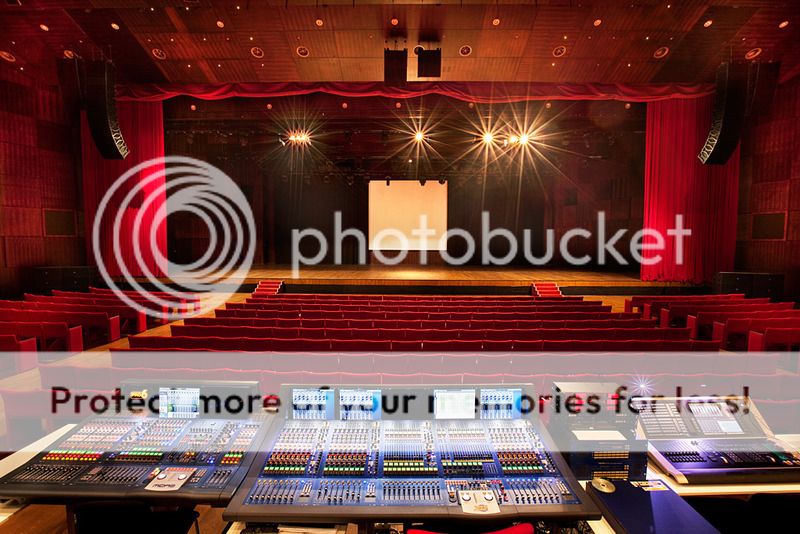
 photo icec_rumeli109.jpg

PHOTOGRAPHS ALBUM

The Istanbul Convention & Exhibition Centre (ICEC) has everything you need to organize memorable and successful congresses and exhibitions in the imperial city of Istanbul. The only place in Istanbul where 3,500 delegates can sit down together for a five-star gala dinner, ICEC offers you an outstanding combination of state-of-the-art facilities and superior service.

Istanbul's Largest Ballroom and Auditorium
ICEC's brand new Rumeli Fair & Exhibition Hall features Istanbul's largest Ballroom measuring 2,100 square meters, which includes simultaneous translation in eleven languages, full audio-visual support and more. The ballroom also divides easily into two smaller ballrooms using sound-proof separators. For large receptions, the Ballroom can be combined with Rumeli's 1,100 square meter and 900 square meter foyers or the foyers can be used staging and registration areas.

Break - out rooms, session rooms and satellite conferences
No matter how complicated your event is, ICEC has the infrastructure to meet your needs and ensure that your conference or trade fair runs smoothly. The main ICEC building features a total of 21 meeting rooms with capacities ranging from 600 to 60. The Rumeli Fair & Exhibition Hall offers a further 5 boardrooms and 6 VIP suites as well as a 45 sq.m. (485 sq.ft.) business centre. Plus, on the lower level of the Rumeli Hall, there is enough stand space to accommodate a full-size trade fair in conjunction with your event.

An Integrated facility in the heart of a unique Conference Valley
ICEC and its new Rumeli Fair & Exhibition Hall, which hosted the International Telecommunications Union's World Radio communications Conference 2000, are the centerpiece of a complete Conference Valley. Offering more than 6.000 guest rooms within easy walking distance of ICEC, including 6 five-star hotels, the Conference Valley offers meeting planners unrivalled convenience and flexibility. The ICEC Complex was also designed to be flexible, and can accommodate events large and small, giving organizers the option of using the ICEC facility and the Rumeli Hall separately or together.

RUMELI FAIR & EXHIBITION CENTRE
The Rumeli Fair and Exhibition Centre is located in the Istanbul Lütfi Kırdar International Istanbul Convention and Exhibition Centre and has all the advantages of being in the city centre. The Rumeli Fair and Exhibition Centre is dispersed over the ground and lower levels. It is an extremely modern building. The centre can accommodate international conventions and trade fairs at the same time.

The Rumeli Fair and Exhibition Centre is connected to the main building. The main entrance is opposite Cemil Topuzlu open-air theatre. The Rumeli Fair and Exhibition Centre is an ideal venue for various activities such as trade fairs, seminars, weddings and film premieres. The ceiling height of the hall is 7 m and its foyer is 3 m.

LOWER LEVEL
The Rumeli lower level has a 3,000 m2 floor area and is 4 m high. It can accommodate 2,500 people in a reception layout and 1,750 in a banquet layout. This level can be used for various activities such as fairs, exhibitions and banquets. In addition, it has a storage area and loading bay measuring 400 m2.
 
Room Sizes & Capacities
Lower Level : Cocktail 2500, Banquet 1750, Height 4 m, Area 3000 m2

GROUND LEVEL

Rumeli A and B (Ballroom)
The Ballroom has a floor area totalling 2,100 m2 and is 7 m high. It can be divided into two soundproof rooms by dividers allowing the ballroom to be used for two different events at the same time. The ballroom can provide seating for up to 2,500 people in a theatre layout, 1,500 in a classroom layout, 3,500 in a reception layout, and 2,000 in a banquet layout . When divided, Rumeli A and Rumeli B halls can both provide seating for 1,250 people in a theatre layout, 750 in a classroom layout, 1,750 in a reception layout and 1,000 in a banquet layout.

It is an ideal hall for seminars, conferences, film premieres, weddings and other large events. When the dividers separating Rumeli Fair and Exhibition Centre from the main foyer and the side foyer are opened, it becomes a large space of 4,000 m2. In this area activities such as trade fairs and large seminars can be held.

Room Sizes & Capacities
Rumeli Fair & Exhibition Hall : Cocktail 6000, Banquet 4750, Height 7-4 m, Area 7000 m2
Main Level (Ballroom & Foyers) : Theatre 3000, Classroom 1750, Cocktail 3500, Banquet 3000, Height 7 m, Area 4000
Rumeli A : Theatre 1250, Classroom 750, Cocktail 1750, Banquet 1000, Height 7 m, Area 1050 m2
Rumeli B : Theatre 1250, Classroom 750, Cocktail 1750, Banquet 1000, Height 7 m, Area 1050 m2

Foyer
The main foyer has a floor area of 1,000 m2 and is 6 m high. The side foyer has a floor area of 900 m2 and is 4 m high. Together they constitute a foyer with a floor area of 1,900 m2. The foyers can be used as registration areas for fairs, conferences and seminars. For larger trade fairs they are joined with the ballroom and used as an exhibition area.

VIP Lounge
This VIP lounge has a 90 m2 floor area and is 2.85 m high. It can be used to host VIP's for events that take place in the Rumeli Fair and Exhibition Centre. It is also possible to use the lounge as a pressroom.

Executive Boardrooms
There are 5 executive boardrooms and each has 40 m2 of floor area and is 2.40 m high. These rooms can be used for workshops or as secretarial office rooms or as meeting rooms when the Rumeli ground and lower levels are hired.

RUMELİ GARDEN
With its breath taking Bosphorus view and unique landscape design, the Rumeli Garden can accommodate 5,000 people on its 3,000 m2 grounds.
It is an ideal place on a summer's night, for receptions and has hosted weddings and opening ceremonies.

Loft Restaurant & Bar
Loft Restaurant & Bar a restaurant for summer& for winter, is located in the Rumeli Fair & Exhibition Centre in Lütfi Kırdar Convention and Exhibition Centre. It serves a wide variety of delightful international cuisine. The decoration of Loft Restaurant & Bar is inspired by Loft's in New York. With its 130 person capacity Loft Restaurant & Bar serves between 12:00 - 24:00 everyday and the DJ music starts at evenings..

LOCATION SATELLITE MAP


WEB SITE : The Istanbul Convention and Exhibition Centre / Rumeli Centre

MORE INFO & CONTACT
Phone : +90 212 373 1100
Fax : +90 212 224 0878

These scripts and photographs are registered under © Copyright 2017, respected writers and photographers from the internet. All Rights Reserved. 

İSTANBUL CONVENTION AND EXHIBITION CENTER / MAIN BUILDING

Harbiye, Şişli - Istanbul - Turkey

GPS : 41°02'51.0"N 28°59'24.0"E / 41.047500, 28.990000

 photo icc_congress115.jpg

PHOTOGRAPHS ALBUM

The Istanbul Convention & Exhibition Centre (ICEC) has everything you need to organize memorable and successful congresses and exhibitions in the imperial city of Istanbul. The only place in Istanbul where 3,500 delegates can sit down together for a five-star gala dinner, ICEC offers you an outstanding combination of state-of-the-art facilities and superior service.

Istanbul's Largest Ballroom and Auditorium
ICEC's brand new Rumeli Fair & Exhibition Hall features Istanbul's largest Ballroom measuring 2,100 square meters, which includes simultaneous translation in eleven languages, full audio-visual support and more. The ballroom also divides easily into two smaller ballrooms using sound-proof separators. For large receptions, the Ballroom can be combined with Rumeli's 1,100 square meter and 900 square meter foyers or the foyers can be used staging and registration areas.

The Anadolu Auditorium seats 2,000 in arm-chair comfort and offers complete technical facilities for even the most elaborate performances. From full 16 mm and 35 mm projection facilities to professionally tuned acoustics, the Anadolu Auditorium is a world-class event venue. It was here that world leaders, including Bill Clinton and Jacques Chirac, enjoyed a performance of the epic "Lyrical History of Anatolia", a stage extravaganza featuring a cast of more than 500 and sophisticated lighting, set changes and more. The Anadolu Auditorium was also the site of the Turkish launch of Windows 2000, featuring an address by Bill Gates, broadcast live by satellite up-link.

Break - out rooms, session rooms and satellite conferences
No matter how complicated your event is, ICEC has the infrastructure to meet your needs and ensure that your conference or trade fair runs smoothly. The main ICEC building features a total of 21 meeting rooms with capacities ranging from 600 to 60. The Rumeli Fair & Exhibition Hall offers a further 5 boardrooms and 6 VIP suites as well as a 45 sq.m. (485 sq.ft.) business centre. Plus, on the lower level of the Rumeli Hall, there is enough stand space to accommodate a full-size trade fair in conjunction with your event.

An Integrated facility in the heart of a unique Conference Valley
ICEC and its new Rumeli Fair & Exhibition Hall, which hosted the International Telecommunications Union's World Radio communications Conference 2000, are the centerpiece of a complete Conference Valley. Offering more than 6.000 guest rooms within easy walking distance of ICEC, including 6 five-star hotels, the Conference Valley offers meeting planners unrivalled convenience and flexibility. The ICEC Complex was also designed to be flexible, and can accommodate events large and small, giving organizers the option of using the ICEC facility and the Rumeli Hall separately or together.

MEETING ROOMS
The newest jewel on fabled Istanbul horizon is the Istanbul Lütfi Kırdar Convention & Exhibition Centre, ideally located in the heart of the city's business, cultural and commercial districts and in walking distance of 16 hotels, 3,400 guest rooms. Whether it's a meeting for ten or a conference with 2,000 delegates, Istanbul Lütfi Kırdar Convention & Exhibition Centre has the facilities, professional management and highly trained staff to make your meeting successful and enjoyable.

"The Center" houses 26 meeting rooms including a 2,000-armchair auditorium, equipped with the latest technology for compliance with your total convention and production requirements, including a simultaneous translation facility in 12 languages and electronic voting system. A 3000 square-meter foyer space for product and service exhibitions complements the meeting facilities, as does the fully equipped business center and the underground car park. The top quality five-star in-house food service is equipped to cater to every type of event, from a proper business lunch to an elegant cocktail reception or buffet dinner. The Boğaziçi Borsa Restaurant, specializing in the Turkish cuisine, seats up to 500 people and the adjoining summer terrace 1,500.

A. Lower Level
Borsa catering, with its serving capacity of 7,000, has been established in Lütfi Kırdar Convention and Exhibition centre since 1996. Borsa catering's comprehensive service, from banquets to buffets, make it the ideal choice for international Congresses and meetings as well as other small-scale events.

Haliç
Haliç hall has a 600 m2 floor area and a ceiling height of 3.30 m. It can accommodate 400 people in a theatre layout, 600 in a conference layout, 350 in a classroom layout, 700 in a reception layout and 600 in a banquet layout. The spacious foyer makes the hall an ideal venue for banquets in addition it can accommodate other activities such as seminars and training sessions.

Room Sizes & Capacities
Haliç : Theatre 650, Classroom 350, Cocktail 700, Banquet 600, Height 3.10, Area 600 m2
Haliç Foyer : Cocktail 500, Banquet 400, Height 2.10, Area 415 m2

Topkapı Hall A and B
Topkapı hall has a floor area of 410 m2 and a ceiling height of 3.40 m. In total, the hall can provide seating for 450 people in a theatre layout, 240 in a classroom layout, 500 in a reception layout and 450 in a banquet layout. The spacious foyer enables the hall to be used for various activities such as seminars and trainings sessions.

The most important special feature of the hall is that, it can be divided into two separate soundproof rooms using dividers. This feature allows two separate activities to take place at the same time. When divided Topkapı A has an area of 240 m2 and seating for 250 people in a theatre layout, 150 in a classroom layout, 300 in a cocktail layout and 200 in a banquet layout. Topkapı B has an area of 170 m2 and provides seating for 200 in a theatre layout, 120 in a classroom layout, 250 in a reception layout and 160 in a banquet layout.
 
Room Sizes & Capacities
Topkapı : Theatre 450, Classroom 240, Cocktail 500, Banquet 450, Height 3.40, Area 410 m2
Topkapı Foyer : Cocktail 250, Height 2.30, Area 240 m2
Topkapı A : Theatre 250, Classroom 150, Cocktail 300, Banquet 200, Height 3.40, Area 230 m2
Topkapı B : Theatre 200, Classroom 120, Cocktail 250, Banquet 160, Height 3.40, Area 170 m2

B. Ground Level
Lütfi Kırdar's staff of experienced hosts and hostesses are at your service. Their level of expertise in a wide variety of events and their knowledge of foreign languages ensure that all guests are cared for the second they walk in the door.

Anadolu Auditorium
Anadolu Auditorium is a conference venue with a floor area of 2,842 m2 it can accommodate 2,000 people. The auditorium has three levels; ground, first and second with a total of 12 entrances on these levels. It is equipped with the latest technology including a mobile stage and it features a direct entry onto the stage from outside the auditorium, which is helpful for users. Thanks to the Anadolu Auditorium, Lütfi Kırdar has been able to accommodate numerous large events such as international conventions, concerts, beauty contests and film premieres. The foyer of this hall has a total floor area of 2,980 m2 on three levels; these can be used as reception or banqueting space before and after each event.

The Stage  
Backstage : Scenery entrance 3.00 m x 2.80 m, Three dressing rooms
Stage : Depth 9 m, Total area 300 m2, Goods lift with access to stage: Height 1.10 m, Maximum load 20 t.
Orchestra pit at stage level, Build-in and adjustable telescopic spotlights in ceiling and walls, Mobile podiums on different elevation (20 to 100 cm), 6 wood mobile acoustic walls, measuring h:8.20 m, l: 4.20 m, w:1.60 m (concert shell), Hydraulic forestage platform, subdivided and continuously variable.

Foyer
The Anadolu Auditorium has a foyer with a floor area of 2,980 m2 dispersed on the ground, first and second levels. Haliç and Topkapı hall foyers occupy a floor area of 655 m2 on the lower level. In total there is 3,635 m2 of foyer space. These foyer areas can be used for coffee breaks and receptions for all kinds of activities as well as during opening ceremonies of conventions, concerts and beauty contests. The main entrance foyer at ground level is ideally suited as a registration or exhibition area especially for large conferences.

Back Stage Rooms
There are 3 back stage rooms on ground level behind the Auditorium. These can provide preparation rooms for speakers, chairpersons and exhibition staff; however, these rooms can be used only when the Anadolu Auditorium is hired.

Room Sizes & Capacities
Anadolu Auditorium : Theatre 2000, Area 2.482 m2
Foyer :  Cocktail 2000, Banquet 1.500, Area 2.980 m2

C. First Level
There is a first aid room with all kinds of medical equipment in Istanbul Lütfi Kırdar Convention and Exhibition Centre. Doctors, nurses, and ambulance services can be obtained during event, if needed.

Dolmabahçe A, B, C
The Dolmabahçe Hall has a 440 m2 floor area and is 2.50 m high. It can be separated into three soundproof rooms using dividers. The hall can provide seating for 350 people in a theatre layout, 175 in a classroom layout, 500 in a reception layout and 400 in a banquet layout. When divided Dolmabahçe A can provide seating for 160 in a theatre layout, 100 in a classroom layout, 160 in a reception layout and 160 in a banquet layout. Dolmabahçe B can provide seating for 130 people in a theatre layout, 80 in a class layout, 140 in a reception layout and 140 in a banquet layout. Dolmabahçe C can provide seating for 150 in a theatre layout, 90 in a class layout and 150 in a reception layout. The rooms are modern, attractive and well-decorated with automatic curtains, veneer walls and floor and a wonderful Bosphorus view.

Fatih 1 - 5
Fatih rooms are fully furnished VIP rooms complete with bathroom and shower facilities. They can be used when all the building or just the Anadolu Auditorium is hired. Celebrities and VIP guests can make use these rooms.

D. Second Level
There is a first aid room with all kinds of medical equipment in Istanbul Lütfi Kırdar Convention and Exhibition Centre. Doctors, nurses, and ambulance services can be obtained during event, if needed.
 
Marmara
The Marmara Hall has a 385 m2 floor area and is 4.00 m high. It can provide space for 500 people in a theatre layout style, 300 in a class layout, 500 in a reception layout, and 420 in a banquet layout. This meeting room has a panoramic Bosphorus view. It is suitable for various functions such as seminars, company meetings or receptions.

Marmara : Theatre 500, Classroom 300, Cocktail 500, Banquet 420, Height 4.00 m, Area 385 m2

Sultan 1 - 4
Sultan 1 and Sultan 4 rooms both have 50 m2 of floor area and can provide seating for 50 people in a theatre layout. Sultan 2 and 3 both have 27 m2 of floor area and are 3.00 m high, they can provide seating for 25 people in a theatre layout. These rooms have daylight and can be used for training seminars or workshop rooms. There is a connecting door between the Sultan rooms.

Sultan 1 : Theatre 50, Classroom 35, Cocktail 40, Banquet 40, Height 4.00 m, Area 50 m2
Sultan 2 : Theatre 15, Classroom 10, Cocktail 15, Banquet 15, Height 4.00 m, Area 27 m2
Sultan 3 : Theatre 15, Classroom 10, Cocktail 15, Banquet 15, Height 4.00 m, Area 27 m2
Sultan 4 : Theatre 50, Classroom 35, Cocktail 40, Banquet 40, Height 4.00 m, Area 58 m2
 
Barbaros 1 - 5
Barbaros rooms each have a 17 m2 of floor area and are 3.00 m high. They can provide seating for 25 people in a theatre layout. These rooms have daylight and they can be used as workshops or secretarial office rooms.

Barbaros 1 : Theatre 25, Classroom 20, Cocktail 25, Banquet 15, Height 3.00 m, Area 17 m2
Barbaros 2 : Theatre 25, Classroom 20, Cocktail 25, Banquet 15, Height 3.00 m, Area 17 m2
Barbaros 3 : Theatre 25, Classroom 20, Cocktail 25, Banquet 15, Height 3.00 m, Area 17 m2
Barbaros 4 : Theatre 25, Classroom 20, Cocktail 25, Banquet 15, Height 3.00 m, Area 17 m2
Barbaros 5 : Theatre 25, Classroom 20, Cocktail 25, Banquet 15, Height 3.00 m, Area 17 m2
 
Levent 1 - 5
Levent rooms each have 17 m2 of floor area and are 3.00 m high. They can provide seating for 25 people in a theatre layout. These rooms have daylight and they can be used as workshops or secretarial office rooms.

Levent 1 : Theatre 25, Classroom 20, Cocktail 25, Banquet 15, Height 3.00 m, Area 17 m2
Levent 2 : Theatre 25, Classroom 20, Cocktail 25, Banquet 15, Height 3.00 m, Area 17 m2
Levent 3 : Theatre 25, Classroom 20, Cocktail 25, Banquet 15, Height 3.00 m, Area 17 m2
Levent 4 : Theatre 25, Classroom 20, Cocktail 25, Banquet 15, Height 3.00 m, Area 17 m2
Levent 5 : Theatre 25, Classroom 20, Cocktail 25, Banquet 15, Height 3.00 m, Area 17 m2

BUSINESS CENTER
The Business Centre provides for the document requirements of participants, organizers and visitors in the Istanbul Convention and Exhibition Centre. The centre is equipped with the latest technology. Facilities include document services such as photocopying, printing (black/white and colour), scanning and fax. All the participants, organizers and visitors can obtain all kinds of printed materials on paper or acetate from the centre.

PRESS ROOM
The Press Room is located in the ground level on the right side of cloakroom. It is used by members of the media to prepare news stories in a silent work-friendly environment. Telephone, fax and Internet lines are provided on request.

VIP ROOMS
Fatih rooms are fully furnished VIP rooms with bathroom and shower facilities. They can be used when all the building or just the Anadolu Auditorium is hired. They are available to celebrities and other VIP guests.
 
BOĞAZİÇİ BORSA RESTAURANT
Boğaziçi Borsa Restaurant in the Istanbul Convention and Exhibition Centre has a stunning panoramic Bosphorus view. In winter it can serve to 140 people inside and in summer can serve up to 300 in it's outdoor dining area. The restaurant is open between 12:00-16:00 and 20:00-24:00 everyday. Its menu includes various wines, meat-chicken and fish dishes, a selection of hot and cold starters and a dessert menu. Classical Turkish cuisine is served along with a mixture of international cuisine. It is open 7 days a week and can cater for groups up to 30 people.

INTERNET
Istanbul Lütfi Kırdar Convention & Exhibition Centre and Koçnet have agreed to expend all activities at Lütfi Kırdar into Internet. Koçnet set up fiber optic high speed, high capacity link to Lütfi Kırdar. Lütfi Kırdar now has high speed Internet connection. Video Conference over IP or ISDN-BRI, M Video recording, Streaming and wireless 802.11b Internet connections as standard services first time in Lütfi Kırdar. Wireless 802.11b Internet service at closed public location is first time application in Turkey at Istanbul Lütfi Kırdar Convention & Exhibition Centre.

TRANSLATION
At Istanbul Lütfi Kırdar Convention & Exhibition Centre you can find also multilingual simultaneous translation equipment (up to 12 languages)

TECHNICAL INFORMATION
Standard Services : 64 Kbs to 2 Mbs Internet connections (XDSL, Leased Line, Frame Relay, ATM), 802.11b wireless Internet connections, Video Conference over IP and ISND-BRI, Video recording and VCD or DVD production, Streaming (live or recorded).

TECHNICAL EQUIPMENT
Comprehensive list of vision, sound, simultaneous and lighting available for hire in Istanbul Lütfi Kırdar Convention & Exhibition Centre.

Video and data large screen projection (9 m x 6 m), 13 m. X 6 m. Large screen, 1024 x 768 solubility video projection for presentations, 700 seats for classroom style and sound system with delegate, Microphone, Acoustic hall walls, Sound, lighting, stage control rooms, video pre-wiring, High-performance Electronic overhead and 575 W overhead projection, 750 W, 36 mm xenon slide projector, Simultaneous interpreting facilities for 12 languages (permanently installed or using infrared transmission as required), Infrared receiver and headphones, Video projection Betacam VHS, U-matic, CDI, LPD, 40 ch soundcraft Europa and 40 ch. Soundcraft broadway sound mixer.

SERVICES

Catering Service
Borsa catering, with its serving capacity of 7,000, has been established in Lütfi Kırdar Convention and Exhibition Centre since 1996. Borsa catering's comprehensive service, from banquets to buffets, make it the ideal choice for international congresses and meetings as well as other small-scale events.

Hostess Service
Lütfi Kırdar's staff of experienced hosts and hostesses is at your service. Their level of expertise in a wide variety of events and their knowledge of foreign languages ensure that all guests are cared for the second they walk in the door.

First Aid
There is a first aid room with all kinds of medical equipment in Istanbul Lütfi Kırdar Convention and Exhibition Centre. Doctors, nurses, and ambulance services can be obtained during event, if needed.

LOCATION SATELLITE MAP


WEB SITE : The Istanbul Convention and Exhibition Centre / Main Building

MORE INFO & CONTACT
Phone : +90 212 373 1100
Fax : +90 212 224 0878

These scripts and photographs are registered under © Copyright 2017, respected writers and photographers from the internet. All Rights Reserved.