Showing posts with label mevlevihane. Show all posts

Sunday, June 25, 2017

DEDE EFENDİ HOUSE MUSEUM

Kumkapı, Fatih - İstanbul - Turkey

GPS : 41°00'11.3"N 28°58'47.0"E / 41.003139, 28.979722

Hamamizade Ismail Dede Efendi Museum photo dedeefendi_museum111.jpg

PHOTOGRAPHS ALBUM

Hammamizade İsmail Dede Efendi (1778-1846) was born in Istanbul, lived in Eyüp and studied the "ney", a type of flute. He wrote hundreds of songs and composed music for the Mevlevi dervishes and is considered one of Turkey’s best composers of classical music. Sultan Selim III was very fond of his work and had Dede perform for him on many occasions. Whilst on a pilgrimage to Saudi Arabia in 1846 he unfortunately caught Cholera and died and was buried at Mecca.

Some of his songs still remain popular today. Dede Efendi ​​is one of the biggest names in classical Turkish music. Influence of his works today as fresh as the first day. Inspired by the climate of the Mevlevi nice to hear his compositions, is not that difficult at all. Dede Efendi, one of the greatest representatives of Turkish classical music, in 1846 passed away.

Hammamizade İsmail Dede Efendi was a composer of Turkish classical music. He was born on 9 January 1778, in İstanbul, Şehzadebaşı. He started studying music with Mehmed Emin Efendi, at the age of eight. He attended rituals at Yenikapı Mevlevihanesi, a place of Mevlevi gathering. He studied with Ali Nutki Dede and learned to play ney, in Yenikapı Mevlevihanesi. He became "Dede" in 1799.

Dede Efendi gave lessons in Turkish music to Hamparsum Limonciyan who developed the Hamparsum notation, the dominant notation for Turkish music. One of the greatest Turkish composers, he has created masterpieces in all forms and modes of Turkish music. He has also developed the composite musical modes of "sultanî yegâh", "nev-eser", "saba-buselik", "hicaz-buselik" and "araban kürdî". His greatest works are the seven Mevlevi pieces for Samah. More than two hundred of his compositions are available today.

Dede Efendi Museum is in a lovely old wooden mansion that was once Dede’s home and after he died, for a time it was used as a local police station, after which it fell into total disrepair.  It became a small museum for musical instruments after being fully restored in the 1980s. When visiting here you are given a glimpse of what the neighbouring houses once looked like that have now, unfortunately, been left to rot away.

There are occasional concert’s held at the museum and located next to it is an ornate fountain dating from 1734 and was commissioned by the mother of the Grand Vizier Hekimoğlu Ali Paşa. His house and music salon in the Istanbul neighborhood of Kumkapı has been preserved and is now a museum.

LOCATION SATELLITE MAP


WEB SITE : Türkiye Tarihi Evleri Koruma Derneği 

MORE INFO & CONTACT
E-Mail : info@turk-ev.org.tr
Phone : +90 212 516 4314
Fax : +90 212 516 4314

These scripts and photographs are registered under © Copyright 2017, respected writers and photographers from the internet. All Rights Reserved.

Wednesday, March 22, 2017

BAHARİYE MEVLEVİ TEKKESİ

Bahariye, Eyüp - İstanbul - Turkey

GPS : 41°03'21.3"N 28°56'22.5"E / 41.055917, 28.939583

 photo bahariye_lodge125.jpg

PHOTOGRAPHS ALBUM

The Beşiktaş Mevlevi Lodge (the Beşiktaş Mevlevihanesi) is the third Mevlevi lodge established in Istanbul. Another peculiarity of this lodge is that it is the last Mevlevi lodge to be allocated by government officials. Other Mevlevi lodges established in Istanbul were allocated by Mevlevi Dedes (Kasımpaşa, Üsküdar and Bahariye).

The Beşiktaş Mevlevi lodge was the third establishment after Galata and Yenikapı Mevlevi houses and established in 1613 by the Ottoman Grand Vizier Ohrili Hüseyin Pasha for Ağazade Mehmed Dede in Beşiktaş, Istanbul. The Beşiktaş Mevlevihane was a building that suffered a number of misfortunes; first of all it was demolished to make way for the Çırağan Palace and rebuilt next to the graveyard in Maçka.

The founder of this Mevlevi lodge was one of the leading government officials of XVII, Ohrili Hüseyin Pasha. (Died in May 1622). The Mevlevi lodge had functioned until 1284/1867 in Besiktaş, in that year it was deconstructed by Sultan Abdulaziz in order to build Çırağan Palace in its stead; firstly it was moved to Karacehennem Ibrahim Pasha Mansion in Fındıklı and then moved to its own place in Maçka after it was completed in 1288/1871.

It was again demolished to make way for the new barracks being built on the orders of Sultan Abdülaziz, and rebuilt yet again on a site beside the Golden Horn in the Bahariye neighbourhood, which is on the road leading from Eyüp to Alibeyköy, thus gaining a new lease of life. This moving took place in 1873. Bahariye Mevlevihane was left unattended and neglected just like the other places after the closing down of lodges and was destroyed in the course of time.

But when this lodge was demolished in 1291/1874 for construction of military barracks, it was moved to Hatap Emin Mustafa and Huseyin Efendi Mansions in Eyüp, and after its construction was completed in 1294/1877, it was moved to new building in Eyüp Bahariyesi and it functioned as Bahariye Mevlevi lodge until 1925.

The first sheikh of Beşiktas Mevlevî lodge was Ağazade Mehmed Hakiki Dede who was the sheikh of Gelibolu Mevlevi lodge at the same time. (1063/1652). While Kaptan-ı Derya (literally the Captain of all seas) Ohrili Huseyin Pasha was returning from his Mediterranean Sea expedition, he took hand from Ağazade Mehmed Dede and got the good news that he would soon be given the seal of the Grand Vizier.

In March 1030/1621 Grand Vizier Huseyin Pasha constructed the Beşiktaş Mevlevi lodge and asked Mehmed Dede to be the first postnishin (sheikh) here, Mehmed Dede accepted it and the his mission as a sheikh started in the Gelibolu and Beşiktaş Mevlevi lodges and continued until Hüseyin Pasha’s murder in the same year. After Ağazade Mehmed Dede, chronologically, Sheikh Süleyman Dede (died in. 1065/1654), Hasan Dede (died in. 1071/1660), Nâcî Ahmed Dede (died in.1122/1710), Çengî Yusuf Dede (died in.1080/1669), Eyyûbî Mehmed Memiş Dede (died in. 1136/1723) Memiş Dede’s son Ahmed Dede (died in. 1177/1763) Memiş Dede’s son Mehmed Sâdık Dede (died in. 1178/1764), Abdülahad Dede (died in. 1180/1766), and Trabluslu Ahmed Dede (died in. 1185/1771) served in the Besiktas Mevlevi lodge.

Hüseyin Fahreddin Dede, the last Sheikh of the Beşiktaş/Bahâriye Mevlevî lodge, was a composer, ney player, poet and was well known with his poetry and music love around mystic and art circles. Hüseyin Fahreddin Dede was a distinguished gentle character of his era, his proficiency with his performances of ney and his compositions were thought to be matchless.

Hüseyin Fahreddin Dede’s musical success made Bahariye Mevlevi lodge one of the best musical centers of Istanbul through the end of XIX century and they performed music with Celaleddin Dede, the sheikh of the Yenikapı Mevlevî Lodge, Ataullah Dede, the sheikh of the Galata Lodge and all the famous musician masters of that period such as Hafız Şevki Bey, Medenî Azîz Efendi, Tanbûrî Kemal Bey, Yeniköylü Hasan Efendi, Bolahenk Nuri Bey, Dr. Suphi Ezgi and Rauf Yekta. With those who are accepted as the most important composers and musicians of the 20th century; Udî Mehmed Sabri Efendi (died in 1914), Mehmed Raûf Yektâ Bey (ö. 1935), Ahmed Avnî Konuk (died. 1938), Şeyh Rıza Efendi, Kazım Uz, Şeyh Osman Dede, they performed music.

They brought up Zekâizâde Ahmed Nureddin, Râşid Efendi (an officer in Telgraf Nezareti, like PTT today), Doktor Subhî Bey and Arif Bey, Münir Kökden, Sabri Efendi, Nurullah Kılıç and Cemal Dede.(Neyzen-in-chief) The characteristic of the Beşiktaş/Bahariye Mevlevi lodge in the last century was that there were many Mevlevis here who were in a manner of Bektaşi. The Mevlevî lodge was left alone in 1925, it became ruined as the times passed, and in 1986 all the remains of the lodge vanished in the scope of the Golden Horn project.

The Bahariye Mevlevihane, which consisted of a number of timber buildings resembling mansions, added a further dimension of beauty to this part of the Golden Horn. However, after the closure of the dervish convents these buildings were either destroyed by fire or demolished and nothing survives to indicate where it once stood. Today only the mescid section of the lodge is intact. The restoration of Bahariye Lodge that started in 2007 was completed in 2011. It is used for civil purposes of culture and art.

Bahariye Mevlevihanesi, last dervish lodge of Istanbul, raised many artists up. Zekai Dede Efendi, his son Ahmet Irsoy, Rauf Yekta, Suphi Ezgi are couple of important musicians who grown up in here. Abdülbaki Gökpınarlı who is known as the last important figure of Sufi literature, was also grown up in the same dervish lodge.

Bahariye Mevlevihanesi (lodge used by Mevlevi dervishes) was in a very bad situation, but Eyüp Municipality restorated there paying large sum of money and turned it into a very nice cultural centre by Eyüp Belediyesi Kültür ve Sosyal İşler Müdürlüğü.

LOCATION SATELLITE MAP


WEB SITE : Human And Civilization Movement

MORE INFO & CONTACT
E-Mail : bilgi@imh.org.tr
Phone : +90 212 501 3171
Fax: +90 212 501 3105

These scripts and photographs are registered under © Copyright 2017, respected writers and photographers from the internet. All Rights Reserved.

Thursday, March 16, 2017

ÜSKÜDAR MEVLEVİ TEKKESİ

Üsküdar - İstanbul - Turkey

GPS : 41°01'21.6"N 29°00'38.9"E / 41.022657, 29.010817

 photo uskudar_lodge112.jpg

PHOTOGRAPHS ALBUM

The Üsküdar Mevlevî Lodge was the last of Mevlevi lodges established in Istanbul. Though other four Mevlevi lodges in Istanbul were constructed on European side, Üsküdar Mevlevi lodge was constructed on Anatolian side. It is located on the western side of Doğancılar Avenue in Ayazma neighborhood of Imrahor district in Üsküdar. The mosque, in use by a association marks the spot of the Üsküdar Mevlevihane. It was the housing of a derwish.

Located to the west of Doğancılar Street, this convent was founded in 1792 by Sultanzade Halil Numan Dede Bey from the Galata convent of the Mevlevî dervishes. He decided to convert his own house in Üsküdar into a lodge. Unlike similiar convents, it was designed to accomadate dervishes coming from Anatolia to İstanbul or those setting out for Anatolia.

He was Numan Halil, the son of sheikh of the Galata Mevlevihane. His father was the cousin of Ali Pasha, the Secon Man in the Ottoman Empire. This well-to-do derwish had first his house rebuild into a semahane. Whirling was quite popular and in 1794 the first Mevlevihane was build in the garden, together with a matbah (kitchen), selamlık, harem and derwisj cells. When the founder died in 1798, his tomb became a place of great spritual power to the Ottoman emperors.

The ancestor of all succeeding Sultans, Mahmud II, had the Mevlevihane rebuild in 1834-1835. His mother was a cousin of Napoleon's wife Josephine. Among Sultan Mahmud II's most notable achievements, the Janissary corps was abolished in 1826, permitting the establishment of a modern Ottoman Army. By the early 17th century, the Janissary corps had ceased to function as an elite military unit. Any sultan who attempted to modernize the Ottoman military structure and replace the Janissaries was either immediately killed or deposed.

In the books written especially about the poets, the numbers of Mevlevîs are not low and the distinguished names of the classical Ottoman Poetry were all Mevlevis, such as Şeyhulislam Bahaî, Cevrî, Şeyhulislam Yahya, Fasîh Ahmed Dede, Neşâtî Ahmed Dede, Müneccimbaşı Ahmed Dede, Nâyî Osman Dede, Receb Enîs Dede, Nef’î, Nâilî, Nâbî, Nedîm, Sâkıb Mustafa Dede, İlhâmî (Selim III) and finally poets like Şeyh Gâlib. And this is well known by all literature circles and authors of tezkire (biography books written for certain groups of people).

These lodges did not just trained proficient composers and writers; they also secured the trainings of other Mevlevi artists who were prolific in other sorts of fine arts as calligraphy, drawing and gilding. Even more remarkable is that, these Mevlevis did not just confine themselves to these classical arts, they also dealt with bookbinding, paper craving, and produced clock, knife and pencil sharpener; the Mevlevi dervishes connected to the Mevlevi lodges of Istanbul have contributed to Turkish culture and art greatly by the means of their works of poetry and literature and all those art activities.

The fact that the mausoleum is located under the auditorium for the whirling dervishes symbolizes the existing intimacy between the sufi masters and their dervishes. This architectual feature can also be observed in the early Turkish-Islamic cupolas. It was restored by Ahmed Fevzi Paşa, the chief commander of Sultan Mahmud II. A part of the building still serves as a convent for whirling Mevlevî dervishes.

Today the word "derwish" may suggest 'poor' but not in this case. He was Numan Halil, the son of sheikh of the Galata Mevlevihane. His father was the cousin of Ali Pasha, the Secon Man in the Ottoman Empire. This well-to-do derwish had first his house rebuild into a semahane. Whirling was quite popular and in 1794 the first Mevlevihane was build in the garden, together with a matbah (kitchen), selamlık, harem and derwish cells.

When the founder died in 1798, his tomb became a place of great spritual power to the Ottoman emperors. The ancestor of all succeeding Sultan Mahmud II, had the Mevlevihane rebuild in 1834-1835.

His son Sultan Abdülmecid (1839-1861) repaired all other parts of the Üsküdar Mevlevihane structures and proclaimed in November 1839 the Tanzimat edict, consolidating and enforcing reforms. Sultan Abdülmecid wanted to encourage Ottomanism among the secessionist subject nations and stop the rise of nationalist movements within the empire, but failed to succeed despite trying to integrate non-Muslims and non-Turks more thoroughly into the Ottoman society with new laws and reforms.

After a law against spiritual organisations the monasterie lost all its functions. Part of it was rebuild into a mosque. Beside the grave of the founder you find the graves of the eminent Ali Seyda Khan (1799), Mehmet Hüsameddin Çelebi (1801), Sheikh Haci Ali Khan (1802), Ismail Hulusi Khan (1808), Abdullah Necip Khan (1836), Abdulkadir Kadri Khan (1850 ) and Ahmet Vesim Pasha (1910).

LOCATION SATELLITE MAP


WEB SITE : Klasik Türk Sanatları Vakfı

MORE INFO & CONTACT
E-Mail : sanat@ktsv.com.tr
Phone : +90 216 391 1122
Fax : +90 216 391 1120

These scripts and photographs are registered under © Copyright 2017, respected writers and photographers from the internet. All Rights Reserved.

YENİKAPI MEVLEVİ TEKKESİ

Merkez Efendi, Zeytinburnu - İstanbul - Turkey

GPS : 41°00'52.9"N 28°55'02.6"E / 41.014694, 28.917389
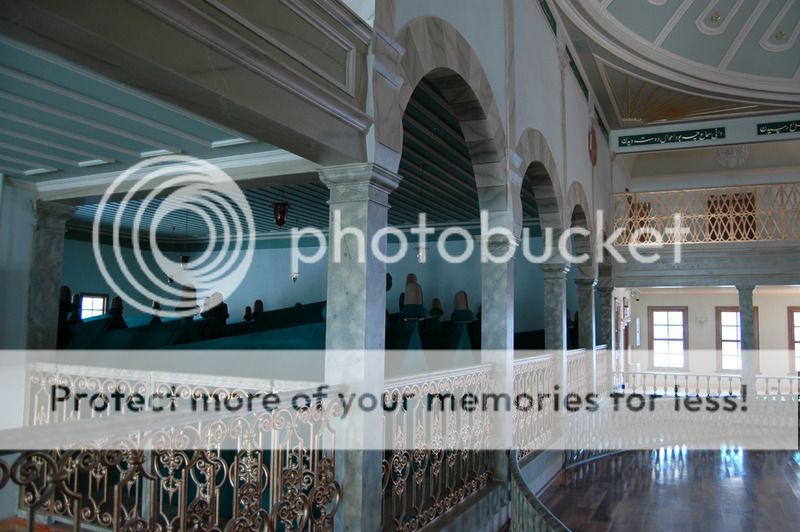
 photo yenikapi_lodge108.jpg

PHOTOGRAPHS ALBUM

Today it is located on the Mevlevihane Avenue of the Merkez Efendi Neighborhood in Zeytinburnu. Being the second Mevlevi lodge founded in Istanbul, the Yenikapı lodge was established by Malkoç Mehmed Efendi (d.1056/1646), who was a janissary clerk, in 1006/1597. The constructor of the lodge was one of the distinguished dignitaries of the Ottoman Empire, just like of the Galata lodge. This situation shows that the tradition of constructing the Mevlevi lodges by the dignitaries of the state continued in the 16th century.

Yenikapı Mevlevihanesi, is the second dervish lodge the Mevlevi Tariqat brought into existence to follow the Galata Mevlevîhanesi in Istanbul. This Mevlevîhane located in the Merkezefendi Mahallesi area, leads those large scaled complexes the tariqat acknowledges as “Âsitâne”. Both for the vastness of the land it rests and for the diversity of the buildings in its body, it is accepted to be the most comprehensive Mevlevî complex in Istanbul. This Yenikapı Mevlevîhanesi was built about a hundred years after the Galata Mevlevîhanesi in 1598 by Janissary Chief Khalif Malkoç Mehmet Efendi.

This lodge expanded and developed in the course of time and became the biggest and greatest center of the path in Istanbul. It was considered as “Asitane” by the Mevlevis because it grew into a complex having all the elements. In accordance with the structure of the path, the Yenikapı lodge was constructed on the outside of the city like the other Mevlevi lodges. This region leading from Marmara to the Golden Horn became an attraction place for the dervishes in Istanbul because it was far away from the dense habitation areas.

The first postnişin of the lodge was Kemal Ahmed Dede (d.1010/1601). In the beginning, this lodge was the center of the Melami Mevlevi dervishes. Among the sheikhs well known for this feature, the Melami attitude I mean, were Sabuhi Ahmed Dede, Câmî Ahmed Dede, Peçevî ahmed Dede and Ebu Bekir Dede. Later it became the center of the austere Mevlevis. Beginning from the 19th century, Ali Nutkî Dede (d.1219/1804), Abdülbâkî Nâsır Dede (1236/1821), Abdurrahim Künhî Dede (1247/1831), Osman Selahaddin Dede (d. 1304/1887), and Mehmed Celâleddin Dede (ö. 1326/ 1908) were the sheikhs of the lodge.

In this lodge, twenty sheikhs has serviced from its foundation to the last sheikh, Abdülbaki (Baykara) Dede. It has contributed to the training of the many distinguished persons who marked with seal on the history of the Mevlevi Tradition, such as Mustafa Itrî Efendi, Şeyh Galib and Hammamizade İsmail Dede Efendi. When it comes to the history of the lodge, it is evident that particularly the sultans, and then the dignitaries and the rich persons have helped and looked after the lodge all the time. It is significant in order to understand the closeness of the Mevlevi Order to the state and administrators.

Some of them are as followed: Sultan Murad IV, the Grand Vizier Hekimoğlu Ali Pasha (d.1689/1758), the Grand Vizier Nâilî Abdullah Pasha (d.1698-1758), the Grand Vizier Safranbolulu İzzet Mehmet Paşa (d.1745-1812), Şeyhulislam Mekkî Efendi (d.1714-1797), Mihrişah Valide Sultan (the mother of Sultan Selim III, d. 1220/1805). Moreover, among those who supported and embraced the lodge were Sultan Mahmut II, Sultan Abdülmecid, Abdurrahman Nâfiz Pasha (the Minister of Finance then), Hâlet Efendi, Mustafa Hıfzî Dede Pasha (the governor of Konya), Adile Sultanthe daughter of Sultan Mahmud (d.1826-1899), her husband Kaptan-ı Derya Mehmed Ali Pasha (d. 1813-1868), The Grand Vizier Yusuf Kâmil Pasha ( d. 1808-1886), Behiye Hanım-the wife of Keçecizade Fuad Pasha (d.1814-1868), Memduha Hanım-the daughter of the Grand Vizier Midhat Pasha (d.1822-1884).

The Yenikapı Mevlevihane, a convent founded by the same order outside the city walls on the inner side of the city, is known for the musicians, composers and poets it produced throughout its history. One of the last sultans, Mehmed Reşad V (1909-1918), himself belonged to the Mevlevi order and he had certain additions to this important convent built, including a circular mosque in the Turkish neo-classical style.

Especially in the 19th century, in the Mevlevi lodges of Istanbul, a great deal of composers was trained, particularly Hammamizade İsmail Dede Efendi, and they became famous by the means of the recites and hymns they composed. Ali Nutkî Dede, one of the sheikhs of the Yenikapı lodge and passed away at the beginning of the 19th century, was among those composers. During his mission as a sheikh, he contributed to the training of many distinguished persons who has made their make in the fields of music and literature throughout the history of Mevlevi Tradition.

Their names are as followed: Hammamizade İsmail Dede Efendi, Vakanüvis Pertev Efendi, Mehmed Said Hâlet Efendi, among the poets Hayret Efendi, Süleyman Neşâti and Musahib Seyid Ahmet Ağa. Hafız Mehmed Zekaî Dede who became very famous at the end of the 19th century was also a Mevlevi dervish and composer. Dede Efendi whose masterpieces were again his students had trained many students such as his son Hafız Ahmed Efendi (Irsoy) (d.1943), Beylikçizade Ali Aşki Bey, Hüseyin Fahreddin dede, Şevki Bey, Ahmed Avni Konuk, Dr. Suphi Ezgi, Muallim Kazım Uz, Dr. Arif Ata and Rauf Yekta.

In early 20th century anti-Sultan Abdülhamid II freedom thoughts were speedily spread among the dervishes. As a result of this the lodge suffered a major damage by a suspected fire in its stables in 1906. After having remained so for five years, they began to restore the lodge by the enthroning of Sultan Reşad, who was a Mevlevî himself.

New settlements appeared on the area when small mosques and dervish lodges started to be built outside the city walls at the beginning of 16th century.  16-18th centuries appears as the ages in which historical structure of Zeytinburnu (Turkish-Islam) created. During those ages, these areas were liked by the dervishes in Istanbul since there were far from settlement areas, and Zeytinburnu and its vicinity became field of activity of Yenikapı Dervish Lodge and Mevlevi's.

This large complex of buildings, which should have been carefully preserved, was subjected to ignorant misuse by persons who did not appreciate its value and finally on 3 September 1961 the beautiful and ornate semahane, in which the rituals took place, was burnt down and the most important part of the complex destroyed. The semahâne (where Mevlevî dervishes perform their whirling dances), the şerbethane (sherbet) and the tomb (turbeh) of the Mevlevîhane which was turned into a student hostel in the first years of the Republic, were completely lost by a fire in 1961.

The timber complex, which was caused to be built by Sultan Reşad and consisting of a masjit, matbah, selamlık (men’s section in a building, opposite for hareem) and dervish cells also suffered from a fire in 1997. Yenikapı Mevlevihanesi is now almost completely rebuilt. It once again has a large semahane for whirling performances.

FATİH SULTAN MEHMET WAQF UNIVERSITY

Fatih Sultan Mehmet Waqf University (FSMWU) is a newly established i 2010 higher education institute whose goal is to be at the forefront of Turkish higher education and research. Its supporting waqf, Fatih Sultan Mehmet Waqf was however, established in 1470 and has been providing such facilities for over five centuries.

The name Fatih Sultan Mehmet comes from the conqueror of Istanbul. Fatih Sultan Mehmet (Mehmet II) was Sultan of the Ottoman Empire from 1444 to 1446 and from 1451 to 1481. At the age of 21, he conquered Constantinople in 1453 and opened a new era in history. He found many "Vakifs" ( foundations) to establish schools, hostels, other facilities and to offer social services. His own foundation along with four other historical foundations have been allocated by General Directorate of Foundations in 2009 to establish FSMV University.

FSMWU emerged from the historical waqf tradition which played an influential role in the scientific, civic, and cultural life throughout Ottoman history. Being priviledged to have its origins in the centuries old civic and academic heritage, FSMWU strives to carry on this tradition by combining traditional education with contemporary knowledge.

FSMWU is located on the historical peninsula of Istanbul’s European side. Therefore, FSMWU has a unique mission for the Turkish Higher Education system in the heart of Istanbul where daily life intertwines with culture, history, and art. Located in the cradle of civilization, FSMWU is the academic face of the United Nations Alliance of Civilizations, reflected in the diversity of languages that make up our curriculum. FSMWU hosts all members of the higher education community, from faculty members and researchers, to graduate and undergraduate students.

Faculties, Schools and Institute
FSMW University is made up of 10 principal academic units - 5 faculties, 4 institutes and 2 vocational schools.

Faculties
Faculty of Letters and Humanities, Turkish Language and Literature, History, Psychology, History of Science,
Faculty of Engineering, Computer Engineering, Civil Engineering, Biomedical Engineering,
Faculty of Architecture and Design, Architecture, Interior-Architecture,
Faculty of Islamic Sciences, Islamic Sciences, Faculty of Fine Arts, Traditional Turkish Arts, Graphic Design
Faculty of Law

Real Estate Holdings
Rectorate Building, Fatih, Campus at Haliç, Campus at Kandilli, Campus at Topkapı, Campus at Küçük Çamlıca, Campus at Valide-i Atik Complex

Campus at Topkapi (Institutes)
Topkapı Campus is composed of the buildings of Yenikapı Mevlevihanesi Külliyesi. Yenikapi Mevlevihanesi was built by Janissary Scribe Malkoc Mehmet Effendi, who was initiated into the Mevlevi order through Sunbul Effendi, and it was opened for service in 1597. Yenikapı Mevlevihanesi is one of the best example of a type of Tekke Architecture called “Asitane”. It is the second mevlevihane in Istanbul after “Galata Mevlevihanesi”.

According to historical records, Yenikapı Mevlevihanesi was initially composed of a masjid, a semahane, harem, fountain, tomb and 18 dervish cells. Yenikapı Mevlevihanesi served the Mawlawi order for 328 years until it was closed down in 1925 with all the other lodges and institutions of religious education. The building was renovated from 2005 to 2009. After the renovation it was allocated for the use of FSMVU.

This Campus hosts: Faculty of Islamic Studies, Alliance of Civilizations Institute, Institute for Social Sciences, the Institute for Engineering and Sciences, Institute of Fine Arts, Prof. Dr. Fuat Sezgin Institute of History of Science in Islam, FSMVU Turkish Airlines central library.

LOCATION SATELLITE MAP


WEB SITE : Fatih Sultan Mehmet Waqf University - Topkapı Campus

MORE INFO & CONTACT
E-Mail : fsm@fsm.edu.tr
Phone : +90 212 521 8100
Fax : +90 212 582 8110

These scripts and photographs are registered under © Copyright 2017, respected writers and photographers from the internet. All Rights Reserved.