Beyazıt, Fatih - İstanbul - Turkey
GPS : 41°00'35.4"N 28°58'07.0"E / 41.009838, 28.968609
PHOTOGRAPHS ALBUM
M E N U
KEBAPLAR / KEBABS
Mardin Kebap
Adana Kebap
Urfa Kebap
Kuzu Şiş
Patlıcanlı Kebap
Domatesli Kebap
Sarma Beyti
Kanat
Tavuk Şiş
Karışık Izgara
Çöp Şiş
PİDELER / PITAS
Lahmacun
Sembusek
Etli Ekmek
Kaşarlı Pide
Kıymalı Pide
Sucuklu Pide
Cıvıklı
Karışık Pide
GÜVEÇ / CASSEROLES
Kiremit Et Sote
Kiremit Tavuk Sote
ÇORBA / SOUPS
Süzme Mercimek
Ezogelin
TATLI / DESSERTS
Cevizli Kadayıf
LOCATION SATELLITE MAP
WEB SITE : Mardin Et ve Kebap Salonu
MORE INFO & CONTACT
E-Mail : info@mardinkebap.com
Phone : +90 212 511 9708 / +90 212 511 9709
Mobile : +90 532 371 6098
These scripts and photographs are registered under © Copyright 2019, respected writers and photographers from the internet. All Rights Reserved.
Istanbul is Turkey's most populous city, and its cultural and financial center. It is located on the Bosphorus Strait, and encompasses the natural harbor known as the Golden Horn, in the northwest of the country. It extends both on the European (Thrace) and on the Asian (Anatolia) side of the Bosphorus, and is thereby the only metropolis in the world which is situated on two continents.
Showing posts with label beyazit. Show all posts
Wednesday, September 25, 2019
Sunday, April 22, 2018
SERASKER GATE
Beyazıt, Fatih - İstanbul - Turkey
GPS : 41°00'39.6"N 28°57'51.1"E / 41.011000, 28.964194

PHOTOGRAPHS ALBUM
The most famous section of the main campus is the main entrance gate. This monumental door is not only the symbol of the Istanbul University, but also the symbol of “the concept of university” in Turkey. Entering the university also means entering this door with dreams.
Previously, there was a very different building on the current place of this main entrance gate. This initial gate that was constructed in 1827 was very similar to the huge gate of the Sublime Port (Bab-ı Ali) on its Soğukçeşme - Alay Pavillion side. While the Sublime Port (Bab-ı Ali) represented the power of the state in the Ottoman State, the Serasker Gate represented the military force.
The construction of the current gate was started in 1864. In the widening work that was started in Beyazıt Square in 1869, the new Serasker Gate and the pavilions on each side of the gate were used as the main elements of the square. This monumental gate is not only the symbol of the Istanbul University in Turkey but also the symbol of the "concept of university". Actually being a student is in the dreams to enter through this gate.
Today it is the main entrance to one of the oldest universities of the world; Istanbul University was established as a center for theological studies in Ottoman Empire period. Madrasah (School of theological and environmental sciences), was founded immediately after the conquest of Istanbul by Sultan Mehmed II, the conquerer, in 1453. The Madrasah is regarded as the precursor to the "Darülfünun". "Darülfünun" was founded as an institution of higher education on 23 July 1846 and it evolved into Istanbul University in 1923, after the Republic revolution.
The university building is the work of the French architect Bourgeois and there are controversies about the gates architect. Although some say it is the work of the same architect some believe that the plans of Bekir Pasha, an engineer studying architecture in London were used. The gate is the witness of many student riots and political demonstrations of the Turkish political life.
The gate designed as a triumphal arch con-sists of two towers and an entrance area. It has the arrangement of an entrance gate confined by low built towers on both sides, and a wide tripartite arch opening in the middle. The middle section of the entrance is designed for vehicles and the side sections are designed for pedestrians. The castle shaped towers are designed for guards. On the sections of the towers facing the square, there are two large clocks.
Nizamiye Gate, facing Beyazıt Square, gained a symbolic value with its curvilinear fringes on four sides and its curled, segmented dome. The exterior of the gate : The gate is registered as "the District of Süleymaniye, Beyazıt Square No:1", and on top of its facade facing the Beyazıt Square, there is a marble stone displaying the letters TC. Below the oval marble stone, the phrase "Istanbul University" is written in bronze letters and the date MCDLIII is written in Roman numerals. Below the date is a tripartite design and a celî-sülüs inscription by Şefik Bey.
In the middle section of the inscription, there is "Daire-i Umur-i Askeriye", on the right is the first verse of Fetih Sura, and on the left is its third verse. This golden foiled inscription on a green background is signed by Şefik Bey. Below the verse on the left, there is the date 1282 (1865-66). The interior of the gate : On the oval medallion on the interior wall of the gate, there is the emblem of Istanbul University featuring snakes. This emblem was designed by Ord. Prof. Dr. Süheyl Ünver.
Below the emblem is a sentence from Atatürk’s Address to Turkish Youth : "Turkish Youth! Your prime duty is to pre-serve and defend forever the Turkish independence and the Turkish Republic. You will find the strength you need in your noble blood." - Gazi Mustafa Kemal
At the bottom there lies the inscription in 3 sections written by scribe Kazasker Mustafa İzzet Efendi with the following verses. The last line also carries the date 1282 (1865 - 66). Muttali’-i envar-ı şevket şems-i evc-i saltanat / Asuman durdukça olsun muzaffer nasr-ı aziz / Askere nüzhet kulu tebşir eder tarihini / Lütf-i şah Abdülaziz açtı der-i nasr-ı aziz. On the main entrance gate adorned by ornamental writings and inscriptions, there are the signs of the most famous three calligraphers of the era.
The gate having traces of the neoclassically based empire style that began to be used at the beginning of the 19th century was constructed with an orientalist understanding that stands out also in other buildings at Beyazıt Square. Due to the developing relations with Europe and the personal attitude of Sultan Abdülaziz, the orientalist style was frequently used in İstanbul in the 1860s. The resource of the orientalist style extends back t Magrip.
Lacy network decorations on wide areas on the front, and segmented, pointed and horseshoe arches resemble the Alhambra Palace. With the modifications made in the 19th century, Beyazıt Square became an important urban venue representing İstanbul. In the unfinished project, the monumental gate of Istanbul University is located so as to overlook and rule Beyazıt Square.
LOCATION SATELLITE MAP
WEB SITE : Istanbul University Main Campus
MORE INFO & CONTACT
E-Mail : iubilgi@istanbul.edu.tr
Phone : +90 212 440 00 00
These scripts and photographs are registered under © Copyright 2018, respected writers and photographers from the internet. All Rights Reserved.
GPS : 41°00'39.6"N 28°57'51.1"E / 41.011000, 28.964194
PHOTOGRAPHS ALBUM
The most famous section of the main campus is the main entrance gate. This monumental door is not only the symbol of the Istanbul University, but also the symbol of “the concept of university” in Turkey. Entering the university also means entering this door with dreams.
Previously, there was a very different building on the current place of this main entrance gate. This initial gate that was constructed in 1827 was very similar to the huge gate of the Sublime Port (Bab-ı Ali) on its Soğukçeşme - Alay Pavillion side. While the Sublime Port (Bab-ı Ali) represented the power of the state in the Ottoman State, the Serasker Gate represented the military force.
The construction of the current gate was started in 1864. In the widening work that was started in Beyazıt Square in 1869, the new Serasker Gate and the pavilions on each side of the gate were used as the main elements of the square. This monumental gate is not only the symbol of the Istanbul University in Turkey but also the symbol of the "concept of university". Actually being a student is in the dreams to enter through this gate.
Today it is the main entrance to one of the oldest universities of the world; Istanbul University was established as a center for theological studies in Ottoman Empire period. Madrasah (School of theological and environmental sciences), was founded immediately after the conquest of Istanbul by Sultan Mehmed II, the conquerer, in 1453. The Madrasah is regarded as the precursor to the "Darülfünun". "Darülfünun" was founded as an institution of higher education on 23 July 1846 and it evolved into Istanbul University in 1923, after the Republic revolution.
The university building is the work of the French architect Bourgeois and there are controversies about the gates architect. Although some say it is the work of the same architect some believe that the plans of Bekir Pasha, an engineer studying architecture in London were used. The gate is the witness of many student riots and political demonstrations of the Turkish political life.
The gate designed as a triumphal arch con-sists of two towers and an entrance area. It has the arrangement of an entrance gate confined by low built towers on both sides, and a wide tripartite arch opening in the middle. The middle section of the entrance is designed for vehicles and the side sections are designed for pedestrians. The castle shaped towers are designed for guards. On the sections of the towers facing the square, there are two large clocks.
Nizamiye Gate, facing Beyazıt Square, gained a symbolic value with its curvilinear fringes on four sides and its curled, segmented dome. The exterior of the gate : The gate is registered as "the District of Süleymaniye, Beyazıt Square No:1", and on top of its facade facing the Beyazıt Square, there is a marble stone displaying the letters TC. Below the oval marble stone, the phrase "Istanbul University" is written in bronze letters and the date MCDLIII is written in Roman numerals. Below the date is a tripartite design and a celî-sülüs inscription by Şefik Bey.
In the middle section of the inscription, there is "Daire-i Umur-i Askeriye", on the right is the first verse of Fetih Sura, and on the left is its third verse. This golden foiled inscription on a green background is signed by Şefik Bey. Below the verse on the left, there is the date 1282 (1865-66). The interior of the gate : On the oval medallion on the interior wall of the gate, there is the emblem of Istanbul University featuring snakes. This emblem was designed by Ord. Prof. Dr. Süheyl Ünver.
Below the emblem is a sentence from Atatürk’s Address to Turkish Youth : "Turkish Youth! Your prime duty is to pre-serve and defend forever the Turkish independence and the Turkish Republic. You will find the strength you need in your noble blood." - Gazi Mustafa Kemal
At the bottom there lies the inscription in 3 sections written by scribe Kazasker Mustafa İzzet Efendi with the following verses. The last line also carries the date 1282 (1865 - 66). Muttali’-i envar-ı şevket şems-i evc-i saltanat / Asuman durdukça olsun muzaffer nasr-ı aziz / Askere nüzhet kulu tebşir eder tarihini / Lütf-i şah Abdülaziz açtı der-i nasr-ı aziz. On the main entrance gate adorned by ornamental writings and inscriptions, there are the signs of the most famous three calligraphers of the era.
The gate having traces of the neoclassically based empire style that began to be used at the beginning of the 19th century was constructed with an orientalist understanding that stands out also in other buildings at Beyazıt Square. Due to the developing relations with Europe and the personal attitude of Sultan Abdülaziz, the orientalist style was frequently used in İstanbul in the 1860s. The resource of the orientalist style extends back t Magrip.
Lacy network decorations on wide areas on the front, and segmented, pointed and horseshoe arches resemble the Alhambra Palace. With the modifications made in the 19th century, Beyazıt Square became an important urban venue representing İstanbul. In the unfinished project, the monumental gate of Istanbul University is located so as to overlook and rule Beyazıt Square.
LOCATION SATELLITE MAP
WEB SITE : Istanbul University Main Campus
MORE INFO & CONTACT
E-Mail : iubilgi@istanbul.edu.tr
Phone : +90 212 440 00 00
These scripts and photographs are registered under © Copyright 2018, respected writers and photographers from the internet. All Rights Reserved.
Sunday, July 30, 2017
YAHYA KEMAL INSTITUTE AND MUSEUM
Beyazit, Fatih - İstanbul - Turkey
GPS : 41°00'31.5"N 28°58'03.5"E / 41.008739, 28.967636

PHOTOGRAPHS ALBUM
MERZİFONLU KARA MUSTAFA PASHA MADRASA
The grand vizier of Mehmet the fourth, Merzifonlu Kara Mustafa Pasha was executed after his failure in the second Vienna siege. His son commissioned architect Hamdi to finish the complex in 1690. The complex consists a madrasah, a mescit (small pray room), a primary school, a sebil (water dispenser), shops, a water reservoir and a graveyard. In 1957 the shops, the sebil and graveyard were displaced on the opposite side of the road.
Merzifonlu Kara Mustafa Pasha is the person that introduced coffee to the Europeans. He had 600 bags of coffee beans with him during the siege to be used by his men. After his defeat he left the bags in front of the gates of Vienna. A local entrepreneur started serving coffee in in his liquor shop and although the Pasha was unsuccessful in entering Vienna, his coffee was.
Merzifonlu Kara Mustafa Pasha Public Fountain protruding as if it were challenging the construction plan, the public fountain of Merzifonlu Kara Mustafa Pasha Social complex, built In Çarşıkapı in 1684, is one of the biggest, the most beautiful and the latest of the classical public fountains.
INSTITUTE AND MUSEUM
Merzifonlu Kara Mustafa Paşa Madrasa of the complex is a research institute, which was established on behalf of the famous poet, Yahya Kemal Beyatlı (1884 - 1958). There is a small cistern under the complex. The museum was opened to guests in 1961. In 2009, the Infant’s School of Merzifonlu Kara Mustafa Paşa Madrasa had been restored and become Yahya Kemal Museum of today.
The museum is a two-storey building. At the base floor, there are personal library of Yahya Kemal, some postcards and letters in his handwriting, his identity card, passports, bank documents, notebooks, shaving set and bottles of cologne and the first edition of all of his books.
At the top floor, you can see the suitcase he used when travelling, personal things like pen and glasses, photos from different times of his life, photographs signed by Atatürk, his family tree, his table and chair he used at Park Otel and golf equipments.
Yahya Kemal was born Ahmet Agah on December 2, 1884 in Skopje, then in the Kosovo Vilayet of the Ottoman Empire. He wrote under pen names such as Agah Kemal, Esrar, Mehmet Agah, and Süleyman Sadi. He came from a prominent family, whose roots could be traced back to the Ottoman court, and he was educated at various private schools.
As he was about to start his higher education, severe disagreements between his parents kept him away from school for some time. When he tried to return to school, he was turned away because it was too late into the semester. His absence from school coincided with the oppressive regime of Sultan Abdülhamit II (reigned 1876-1909), and Yahya Kemal got involved various anti-regime movements. To avoid getting arrested, he went to Paris in 1903.
During his time abroad, he met other exiled Turkish intellectuals, politicians and writers. He traveled extensively in Europe, and was exposed to various cultures. He developed a fondness for literature and was influenced by the French romantic movement. He eventually decided that he wanted to write poetry, and he first studied the historical works of the French Parnasse poets. Consequently, he sought out a way to revitalize Turkish Divan poetry in order to create smooth and pure poetic lines.
Yahya Kemal’s poetry is influenced by music, because he composed with concepts borrowed from Turkish music. While explaining the inner rhythm of the poetic language, he used musical terms such as Tınnet, which denoted the musical value of the sounds or words that pace a line of poetry. For Yahya Kemal this was the only method for creating internal harmony. He states, "Poetry is akın to music. Poetry is not made of couplets, but poetry is melody."
For the most part, he was consistent and practiced what he preached; in his poetry, music and meaning go hand-in-hand. The central thought that runs through Beyatlı’s poems and prose is that the Turkish nation is fashioned with the sweat and tears of the heartland. Even his love poems featured stylized historical and cultural values.
Another peculiarity that can be perceived in Beyatlı’s poetry is the almost feminine sensibility that he displayed towards Islam. His explanation for this is that his father spent very little time with him, and that his first lessons in religion came from long hours spent talking with his mother. Yahya Kemal grew up in a household where hymns and chants were sung, where values of the past were kept alive, hence in his poems he used religion and esthetics together.
When he returned to Istanbul in 1912, Yahya Kemal was already known as a master poet, and the change of regime in the country provided him with opportunities in various high level governmental positions. Beyatlı became a member of parliament for the Urfa (1923-1926), Yozgat (1934), Tekirdağ and Istanbul (1943) provinces. After the Surname Law came into effect in 1934, he adopted the surname "Beyatlı". In 1926, he was appointed ambassador to Poland, where he remained until 1929.
He was ambassador to Portugal between 1930 and 1932, also acting as Envoy Extraordinary and Minister Plenipotentiary in Madrid. In 1947, he was appointed as the first Turkish ambassador to Pakistan. After this assignment, his health got progressively worse, and he returned to Turkey in 1949. His medical condition was never properly diagnosed and his health was never fully restored. He died on November 1, 1958 in Istanbul, and was buried in the Aşiyan Asri Cemetery.
LOCATION SATELLITE MAP
WEB SITE : Yahya Kemal Institute And Museum
MORE INFO & CONTACT
E-Mail : istfetihcemiyeti@ttmail.com
Phone : +90 212 638 61 45
Fax : +90 212 517 4168
These scripts and photographs are registered under © Copyright 2017, respected writers and photographers from the internet. All Rights Reserved.
GPS : 41°00'31.5"N 28°58'03.5"E / 41.008739, 28.967636

PHOTOGRAPHS ALBUM
MERZİFONLU KARA MUSTAFA PASHA MADRASA
The grand vizier of Mehmet the fourth, Merzifonlu Kara Mustafa Pasha was executed after his failure in the second Vienna siege. His son commissioned architect Hamdi to finish the complex in 1690. The complex consists a madrasah, a mescit (small pray room), a primary school, a sebil (water dispenser), shops, a water reservoir and a graveyard. In 1957 the shops, the sebil and graveyard were displaced on the opposite side of the road.
Merzifonlu Kara Mustafa Pasha is the person that introduced coffee to the Europeans. He had 600 bags of coffee beans with him during the siege to be used by his men. After his defeat he left the bags in front of the gates of Vienna. A local entrepreneur started serving coffee in in his liquor shop and although the Pasha was unsuccessful in entering Vienna, his coffee was.
Merzifonlu Kara Mustafa Pasha Public Fountain protruding as if it were challenging the construction plan, the public fountain of Merzifonlu Kara Mustafa Pasha Social complex, built In Çarşıkapı in 1684, is one of the biggest, the most beautiful and the latest of the classical public fountains.
INSTITUTE AND MUSEUM
Merzifonlu Kara Mustafa Paşa Madrasa of the complex is a research institute, which was established on behalf of the famous poet, Yahya Kemal Beyatlı (1884 - 1958). There is a small cistern under the complex. The museum was opened to guests in 1961. In 2009, the Infant’s School of Merzifonlu Kara Mustafa Paşa Madrasa had been restored and become Yahya Kemal Museum of today.
The museum is a two-storey building. At the base floor, there are personal library of Yahya Kemal, some postcards and letters in his handwriting, his identity card, passports, bank documents, notebooks, shaving set and bottles of cologne and the first edition of all of his books.
At the top floor, you can see the suitcase he used when travelling, personal things like pen and glasses, photos from different times of his life, photographs signed by Atatürk, his family tree, his table and chair he used at Park Otel and golf equipments.
Yahya Kemal was born Ahmet Agah on December 2, 1884 in Skopje, then in the Kosovo Vilayet of the Ottoman Empire. He wrote under pen names such as Agah Kemal, Esrar, Mehmet Agah, and Süleyman Sadi. He came from a prominent family, whose roots could be traced back to the Ottoman court, and he was educated at various private schools.
As he was about to start his higher education, severe disagreements between his parents kept him away from school for some time. When he tried to return to school, he was turned away because it was too late into the semester. His absence from school coincided with the oppressive regime of Sultan Abdülhamit II (reigned 1876-1909), and Yahya Kemal got involved various anti-regime movements. To avoid getting arrested, he went to Paris in 1903.
During his time abroad, he met other exiled Turkish intellectuals, politicians and writers. He traveled extensively in Europe, and was exposed to various cultures. He developed a fondness for literature and was influenced by the French romantic movement. He eventually decided that he wanted to write poetry, and he first studied the historical works of the French Parnasse poets. Consequently, he sought out a way to revitalize Turkish Divan poetry in order to create smooth and pure poetic lines.
Yahya Kemal’s poetry is influenced by music, because he composed with concepts borrowed from Turkish music. While explaining the inner rhythm of the poetic language, he used musical terms such as Tınnet, which denoted the musical value of the sounds or words that pace a line of poetry. For Yahya Kemal this was the only method for creating internal harmony. He states, "Poetry is akın to music. Poetry is not made of couplets, but poetry is melody."
For the most part, he was consistent and practiced what he preached; in his poetry, music and meaning go hand-in-hand. The central thought that runs through Beyatlı’s poems and prose is that the Turkish nation is fashioned with the sweat and tears of the heartland. Even his love poems featured stylized historical and cultural values.
Another peculiarity that can be perceived in Beyatlı’s poetry is the almost feminine sensibility that he displayed towards Islam. His explanation for this is that his father spent very little time with him, and that his first lessons in religion came from long hours spent talking with his mother. Yahya Kemal grew up in a household where hymns and chants were sung, where values of the past were kept alive, hence in his poems he used religion and esthetics together.
When he returned to Istanbul in 1912, Yahya Kemal was already known as a master poet, and the change of regime in the country provided him with opportunities in various high level governmental positions. Beyatlı became a member of parliament for the Urfa (1923-1926), Yozgat (1934), Tekirdağ and Istanbul (1943) provinces. After the Surname Law came into effect in 1934, he adopted the surname "Beyatlı". In 1926, he was appointed ambassador to Poland, where he remained until 1929.
He was ambassador to Portugal between 1930 and 1932, also acting as Envoy Extraordinary and Minister Plenipotentiary in Madrid. In 1947, he was appointed as the first Turkish ambassador to Pakistan. After this assignment, his health got progressively worse, and he returned to Turkey in 1949. His medical condition was never properly diagnosed and his health was never fully restored. He died on November 1, 1958 in Istanbul, and was buried in the Aşiyan Asri Cemetery.
LOCATION SATELLITE MAP
WEB SITE : Yahya Kemal Institute And Museum
MORE INFO & CONTACT
E-Mail : istfetihcemiyeti@ttmail.com
Phone : +90 212 638 61 45
Fax : +90 212 517 4168
These scripts and photographs are registered under © Copyright 2017, respected writers and photographers from the internet. All Rights Reserved.
Tuesday, June 27, 2017
TURKISH CALLIGRAPHIC ARTS MUSEUM
Beyazit, Fatih - Istanbul - Turkey
GPS : 41°00'36.4"N 28°57'47.3"E / 41.010111, 28.963139

PHOTOGRAPHS ALBUM
Turkish Calligraphic Arts Museum, once a medrese of Beyazit Mosque in Beyazit Square, is the only museum of its kind. It contains a beautiful collection of calligraphy and illumination. There are also examples of calligraphy on stone and glass as well as the tools used in calligraphy. Now, calligraphy works of many famous calligraphers and calligrapher sultans, sheets, sultan monograms and Korans arranged according to type are on display.
The Beyazid Medresse, which was used as the municipality library since 1945 was evacuated, restored and reorganized as the Turkish Calligraphic Arts Museum. It has interesting and valuable examples of the Turkish art of the pen, Korans, imperial seals, diplomas, Hilye-i serif (descriptions of the Prophet), equipment and apparatus for calligraphic writing, samples of bookbinding, holy relics and miniatures, especially from Ottoman and Seljuk periods.
The Museum of Turkish Calligraphic Art is the first and only calligraphy museum in Turkey. The Museum was first opened in the madrasah of Sultan Selim located on Vatan Street in 1968. After the Bayezid Madrasah was restored by the Directorate of Religious Endowments, it was moved there and opened to visitors on October 28, 1984.
Restored in 2009, the museum is now located in what was originally the medrese (religious school) of the sixteenth century Beyazıt Mosque. Exhibits are housed in what were once the hücres, or cells, of the medrese. These hücres surround a peaceful courtyard featuring stone-carved calligraphy. The Dar'ül-Kurra, the section of the medrese where the reading of the Quran is taught, located in the courtyard, is accessible to visitors during the museum’s opening hours. It contains holy relics of the prophet Muhammad.
Within the collection of the Museum of Turkish Calligraphic Art, are Qur’ans written in of muhakkak, nesih, and küfi scripts. There are also handwritten manuscripts written in Indian and Moraccan scripts, as well as sheets, sultans’ signatures, symertic (aynali) manuscripts, madrasa diplomas, hilye-i sherifs "the attributes of the Prophet Muhammed(s.a.w.s)", and miniatures.
In the Holy Relics Section of the Museum, there are a Ka’bah cloth, the Prophet's (s.a.w.s.) beard (sakal-i sherif), a bottle in which some soil brought from the grave of the Prophet (s.a.w.s.), as well as miniatures depicting scenes from the cities of Madina, Mina, Muzdelife. Miscellaneous documents belonging to various religious orders, family trees, reedpens, which are historically and spiritually important works, enrich the collection of the museum.
Also on exhibit are examples of calligraphy by Sultan Abdülmecid (1823-1861), Ahmed III (1673-1736), and Mahmut II (1785-1839). There is a reading desk (rahle) made of rosewood and a walnut-tree, on which the Qur’an was read, owned by Sultan Abdulhamid II (1842-1918) which still continues to attract the attention of both foreign and domestic visitors. As such, the museum is one of the many historical places on the peninsula of Istanbul.
Calligraphy has always been recognized as a noble art, especially because it serves as a means of beautifying the text of the Quran. The Türk Vakıf Hat Sanatları Müzesi showcases the different types of calligraphy used during Ottoman times, with items like rare manuscripts and bookbindings on display. The museum also features beautiful tile art with a number of brilliantly illuminated Qurans that date back to the thirteenth century.
LOCATION SATELLITE MAP
WEB SITE : Türk Vakıf Hat Sanatları Müzesi
MORE INFO & CONTACT
E-Mail : istanbul@vgm.gov.tr
Phone : +90 212. 243 64 59
Fax : +90 212 243 64 59
These scripts and photographs are registered under © Copyright 2017, respected writers and photographers from the internet. All Rights Reserved.
GPS : 41°00'36.4"N 28°57'47.3"E / 41.010111, 28.963139

PHOTOGRAPHS ALBUM
Turkish Calligraphic Arts Museum, once a medrese of Beyazit Mosque in Beyazit Square, is the only museum of its kind. It contains a beautiful collection of calligraphy and illumination. There are also examples of calligraphy on stone and glass as well as the tools used in calligraphy. Now, calligraphy works of many famous calligraphers and calligrapher sultans, sheets, sultan monograms and Korans arranged according to type are on display.
The Beyazid Medresse, which was used as the municipality library since 1945 was evacuated, restored and reorganized as the Turkish Calligraphic Arts Museum. It has interesting and valuable examples of the Turkish art of the pen, Korans, imperial seals, diplomas, Hilye-i serif (descriptions of the Prophet), equipment and apparatus for calligraphic writing, samples of bookbinding, holy relics and miniatures, especially from Ottoman and Seljuk periods.
The Museum of Turkish Calligraphic Art is the first and only calligraphy museum in Turkey. The Museum was first opened in the madrasah of Sultan Selim located on Vatan Street in 1968. After the Bayezid Madrasah was restored by the Directorate of Religious Endowments, it was moved there and opened to visitors on October 28, 1984.
Restored in 2009, the museum is now located in what was originally the medrese (religious school) of the sixteenth century Beyazıt Mosque. Exhibits are housed in what were once the hücres, or cells, of the medrese. These hücres surround a peaceful courtyard featuring stone-carved calligraphy. The Dar'ül-Kurra, the section of the medrese where the reading of the Quran is taught, located in the courtyard, is accessible to visitors during the museum’s opening hours. It contains holy relics of the prophet Muhammad.
Within the collection of the Museum of Turkish Calligraphic Art, are Qur’ans written in of muhakkak, nesih, and küfi scripts. There are also handwritten manuscripts written in Indian and Moraccan scripts, as well as sheets, sultans’ signatures, symertic (aynali) manuscripts, madrasa diplomas, hilye-i sherifs "the attributes of the Prophet Muhammed(s.a.w.s)", and miniatures.
In the Holy Relics Section of the Museum, there are a Ka’bah cloth, the Prophet's (s.a.w.s.) beard (sakal-i sherif), a bottle in which some soil brought from the grave of the Prophet (s.a.w.s.), as well as miniatures depicting scenes from the cities of Madina, Mina, Muzdelife. Miscellaneous documents belonging to various religious orders, family trees, reedpens, which are historically and spiritually important works, enrich the collection of the museum.
Also on exhibit are examples of calligraphy by Sultan Abdülmecid (1823-1861), Ahmed III (1673-1736), and Mahmut II (1785-1839). There is a reading desk (rahle) made of rosewood and a walnut-tree, on which the Qur’an was read, owned by Sultan Abdulhamid II (1842-1918) which still continues to attract the attention of both foreign and domestic visitors. As such, the museum is one of the many historical places on the peninsula of Istanbul.
Calligraphy has always been recognized as a noble art, especially because it serves as a means of beautifying the text of the Quran. The Türk Vakıf Hat Sanatları Müzesi showcases the different types of calligraphy used during Ottoman times, with items like rare manuscripts and bookbindings on display. The museum also features beautiful tile art with a number of brilliantly illuminated Qurans that date back to the thirteenth century.
LOCATION SATELLITE MAP
WEB SITE : Türk Vakıf Hat Sanatları Müzesi
MORE INFO & CONTACT
E-Mail : istanbul@vgm.gov.tr
Phone : +90 212. 243 64 59
Fax : +90 212 243 64 59
These scripts and photographs are registered under © Copyright 2017, respected writers and photographers from the internet. All Rights Reserved.
Labels:
beyazid medresse,
beyazit,
calligraphy,
fatih,
illumination,
istanbul,
museum,
turkey
Monday, May 8, 2017
BEYAZIT HAMAM
Beyazit, Fatih - İstanbul - Turkey
GPS : 41°00'35.2"N 28°57'41.5"E / 41.009778, 28.961528

PHOTOGRAPHS ALBUM
The Bayezid II Hammam dates back to the 16th century, when Sultan Bayezid II commissioned it as part of the complex around the nearby Beyazit Mosque. In recent decades the hammam had fallen into disrepair, but it was restored as part of Istanbul University in 2015.
This hammam is also known as the place where rebel leader Patrona Halil worked as a bath attendant. His bloody uprising became the subject of several works by Orientalist painter Jean Baptiste Vanmour, and it is seen as marking the end of Sultan Ahmet III's Tulip Era.
The Beyazit Hamam is located in Istanbul's Beyazit district on Ordu Street. The structure has separate sections for both men and women. The entrance door of the women’s section is on Kimyager Derviş Paşa Street and the door of men’s section is on Ordu Street.
One enters the men’s section from the camekan, a court surrounded by small individual changing rooms roofed by a dome. From there, one passes into the ılıklık (lukewarm section), where four bathrooms covered by small domes and a cleaning room draw the attention of visitors.
There are sofas which are covered by a dome and presumably each one has three kurnas (marble basin) on both the left and right sides of the ılıklık. The harare (hot section) contains halvets roofed by domes. In addition to these, there was originally a marble plinth (göbek taşı) found in each of the four corners of the harare; however, these have not made it into our times.
The women’s section of the hamam is similar to men’s section that the water well that meeted of need of water. The water well responsible for meeting the water needs of the hamam is located near the women’s section behind the Central Library of Istanbul University.
MUSEUM OF TURKISH HAMAM CULTURE
As the Bayezid II Turkish Hammam Culture Museum it displays many items relevant to the Turkish bath, such as copper jugs, water bowls, towels, and bath shoes. Helpful texts in Turkish and English explain the origins and history of Turkish baths in Istanbul, as well as the spread of Turkish baths to Western European cities in the 19th century.
Some archaeological finds discovered during construction at Istanbul University are also displayed in the museum, including pieces from several Byzantine churches and a relief from the Forum of Theodosius.
LOCATION SATELLITE MAP
WEB SITE : Turkish Hammam Culture Museum
MORE INFO & CONTACT
E-Mail : hamammuzesi@istanbul.edu.tr
Phone : +90 212 444 0000
These scripts and photographs are registered under © Copyright 2017, respected writers and photographers from the internet. All Rights Reserved.
GPS : 41°00'35.2"N 28°57'41.5"E / 41.009778, 28.961528

PHOTOGRAPHS ALBUM
The Bayezid II Hammam dates back to the 16th century, when Sultan Bayezid II commissioned it as part of the complex around the nearby Beyazit Mosque. In recent decades the hammam had fallen into disrepair, but it was restored as part of Istanbul University in 2015.
This hammam is also known as the place where rebel leader Patrona Halil worked as a bath attendant. His bloody uprising became the subject of several works by Orientalist painter Jean Baptiste Vanmour, and it is seen as marking the end of Sultan Ahmet III's Tulip Era.
The Beyazit Hamam is located in Istanbul's Beyazit district on Ordu Street. The structure has separate sections for both men and women. The entrance door of the women’s section is on Kimyager Derviş Paşa Street and the door of men’s section is on Ordu Street.
One enters the men’s section from the camekan, a court surrounded by small individual changing rooms roofed by a dome. From there, one passes into the ılıklık (lukewarm section), where four bathrooms covered by small domes and a cleaning room draw the attention of visitors.
There are sofas which are covered by a dome and presumably each one has three kurnas (marble basin) on both the left and right sides of the ılıklık. The harare (hot section) contains halvets roofed by domes. In addition to these, there was originally a marble plinth (göbek taşı) found in each of the four corners of the harare; however, these have not made it into our times.
The women’s section of the hamam is similar to men’s section that the water well that meeted of need of water. The water well responsible for meeting the water needs of the hamam is located near the women’s section behind the Central Library of Istanbul University.
MUSEUM OF TURKISH HAMAM CULTURE
As the Bayezid II Turkish Hammam Culture Museum it displays many items relevant to the Turkish bath, such as copper jugs, water bowls, towels, and bath shoes. Helpful texts in Turkish and English explain the origins and history of Turkish baths in Istanbul, as well as the spread of Turkish baths to Western European cities in the 19th century.
Some archaeological finds discovered during construction at Istanbul University are also displayed in the museum, including pieces from several Byzantine churches and a relief from the Forum of Theodosius.
LOCATION SATELLITE MAP
WEB SITE : Turkish Hammam Culture Museum
MORE INFO & CONTACT
E-Mail : hamammuzesi@istanbul.edu.tr
Phone : +90 212 444 0000
These scripts and photographs are registered under © Copyright 2017, respected writers and photographers from the internet. All Rights Reserved.
Labels:
beyazit,
fatih,
halvet,
hammam,
Hammam Culture Museum,
istanbul,
marble basin,
marble plinth,
turkey
Monday, May 1, 2017
BEYAZIT TOWER
Beyazıt, Fatih - Istanbul - Turkey
GPS : 41°00'45.7"N 28°57'53.1"E / 41.012692, 28.964749

PHOTOGRAPHS ALBUM
Beyazıt Tower is an 85 meter tall fire-watch tower located in the courtyard of Istanbul University's main campus on Beyazıt Square (known as the Forum Tauri in the Roman period) in Istanbul, Turkey, on top of one of the "seven hills" which Constantine the Great had built the city, following the model of Rome.
The first fire-watch tower in Beyazıt was built of timber in 1749, but it was burnt down during the 1756 Great Fire of Cibali. It was replaced by another timber tower on the same location, which was destroyed following the riots stirred by Sultan Mahmud II's decision to dissolve the Janissary Corps in 1826. The same year, another wooden tower was erected on the plot, designed and built by the palace architect Krikor Balyan, which was again set on fire by adherents of the Janissaries.
Beyazıt Tower was ordered by the Ottoman Sultan Mahmud II (1808-1839), and designed by Senekerim Balyan who built it of stone in 1828 on the place of the original wooden Beyazıt Tower which was destroyed in a fire and was constructed earlier by the architect's brother, Krikor Balyan.
The stone tower originally had a single floor of around 50 m2 at the top for fire watching, which was reached through a wooden staircase of 180 steps. This watch room has 13 round arched windows. Initially, the tower had a timber roof in the form of a cone. In 1849, three floors in octagonal plan with round windows were added on the top section: one for signaling, one for signal baskets and the last one for flags.
The smaller diameter of the highest three floors makes space for a terrace at the second floor. In 1889, an iron pole of 13 meters was erected on the roof. The tower was partly damaged by the earthquake of 1889 and was subsequently restored. At present, the tower has a stone roof and a wooden staircase of 256 steps.
Fire was an important threat for Istanbul and caused numerous wide scale disasters, largely because most houses in the Old City's historic quarters were made of timber. Beyazıt Tower, Galata Tower and İcadiye Fire Tower (on Vaniköy Hill) were used for spotting fire threats, as they commanded long distance views of the city from above.
The entire Old City (Yedikule, Topkapı, Kocamustafapaşa, Fatih, Beyazıt), the cross-section of the Golden Horn districts (Fener, Balat, Eminönü) and those of the Bosphorus (Tophane, Beşiktaş, Ortaköy), the entrance of the Sea of Marmara (Üsküdar, Kadıköy) and even the Princes' Islands towards the southeast of the city were within the range of watch sight from Beyazıt Tower.
Fire was signaled at daytime by lowering baskets and at night by lighting colored lamps. The number of the baskets or the number and the color of the lamps indicated the location, i.e. in which district of Istanbul the fire out broke. As a response, the Watch Tower of İcadiye on the Anatolian side of the Bosphorus then fired 7 volleys to inform the citizens of the fire. 20 fire fighters were stationed in the Beyazıt Tower until 1923. In 1997, the structure underwent a thorough restoration.
Beyazıt Tower is still in use today as a watch-tower as well as for signaling weather forecast and maritime navigation information to the ships on the Golden Horn at night. The tower lost its importance with the development of advanced communications technology. Recently, two fire fighters in three shifts are stationed in the tower for guarding purposes only. Since 1972, special permission is required to enter the tower.
LOCATION SATELLITE MAP
These scripts and photographs are registered under © Copyright 2017, respected writers and photographers from the internet. All Rights Reserved.
GPS : 41°00'45.7"N 28°57'53.1"E / 41.012692, 28.964749

PHOTOGRAPHS ALBUM
Beyazıt Tower is an 85 meter tall fire-watch tower located in the courtyard of Istanbul University's main campus on Beyazıt Square (known as the Forum Tauri in the Roman period) in Istanbul, Turkey, on top of one of the "seven hills" which Constantine the Great had built the city, following the model of Rome.
The first fire-watch tower in Beyazıt was built of timber in 1749, but it was burnt down during the 1756 Great Fire of Cibali. It was replaced by another timber tower on the same location, which was destroyed following the riots stirred by Sultan Mahmud II's decision to dissolve the Janissary Corps in 1826. The same year, another wooden tower was erected on the plot, designed and built by the palace architect Krikor Balyan, which was again set on fire by adherents of the Janissaries.
Beyazıt Tower was ordered by the Ottoman Sultan Mahmud II (1808-1839), and designed by Senekerim Balyan who built it of stone in 1828 on the place of the original wooden Beyazıt Tower which was destroyed in a fire and was constructed earlier by the architect's brother, Krikor Balyan.
The stone tower originally had a single floor of around 50 m2 at the top for fire watching, which was reached through a wooden staircase of 180 steps. This watch room has 13 round arched windows. Initially, the tower had a timber roof in the form of a cone. In 1849, three floors in octagonal plan with round windows were added on the top section: one for signaling, one for signal baskets and the last one for flags.
The smaller diameter of the highest three floors makes space for a terrace at the second floor. In 1889, an iron pole of 13 meters was erected on the roof. The tower was partly damaged by the earthquake of 1889 and was subsequently restored. At present, the tower has a stone roof and a wooden staircase of 256 steps.
Fire was an important threat for Istanbul and caused numerous wide scale disasters, largely because most houses in the Old City's historic quarters were made of timber. Beyazıt Tower, Galata Tower and İcadiye Fire Tower (on Vaniköy Hill) were used for spotting fire threats, as they commanded long distance views of the city from above.
The entire Old City (Yedikule, Topkapı, Kocamustafapaşa, Fatih, Beyazıt), the cross-section of the Golden Horn districts (Fener, Balat, Eminönü) and those of the Bosphorus (Tophane, Beşiktaş, Ortaköy), the entrance of the Sea of Marmara (Üsküdar, Kadıköy) and even the Princes' Islands towards the southeast of the city were within the range of watch sight from Beyazıt Tower.
Fire was signaled at daytime by lowering baskets and at night by lighting colored lamps. The number of the baskets or the number and the color of the lamps indicated the location, i.e. in which district of Istanbul the fire out broke. As a response, the Watch Tower of İcadiye on the Anatolian side of the Bosphorus then fired 7 volleys to inform the citizens of the fire. 20 fire fighters were stationed in the Beyazıt Tower until 1923. In 1997, the structure underwent a thorough restoration.
Beyazıt Tower is still in use today as a watch-tower as well as for signaling weather forecast and maritime navigation information to the ships on the Golden Horn at night. The tower lost its importance with the development of advanced communications technology. Recently, two fire fighters in three shifts are stationed in the tower for guarding purposes only. Since 1972, special permission is required to enter the tower.
LOCATION SATELLITE MAP
These scripts and photographs are registered under © Copyright 2017, respected writers and photographers from the internet. All Rights Reserved.
Labels:
beyazit,
fatih,
fire watching,
golden horn,
istanbul,
istanbul university,
ottoman,
tower,
turkey
Wednesday, April 26, 2017
KOCA SİNAN PAŞA MADRASA
Beyazit, Fatih - Istanbul - Turkey
GPS : 41°00'31.7"N 28°58'07.3"E / 41.008806, 28.968694

PHOTOGRAPHS ALBUM
The building close to Atik Ali Pasha Mosque and on Yeniçeriler Street was built by Architect Davut Ağa in 1593 for Grand Vizier Sinan Pasha. The complex was constructed of cut stone, and it is regarded as one of the best works of classical Ottoman architecture. A large area of the complex was converted into a graveyard in the 18th century.
The madrasah consisted of 16 rooms on three sides of the square planned and porched courtyard. It was restored first in 1869. The hand - carved works inside the classroom remain from the 19th century. This cut stone tomb with 16 corners, which was built for Sinan Pasha, is spectacular. Moreover, the fountain’s inscription with 16 lines, gives us a great deal of information including the name of the architect and the date of the complex.
The domed classroom, used also for prayer (mescit), has a square plan extended with a northern iwan. Passing through its portico, we enter off-center into the madrasa courtyard, which is enveloped by a domed arcade on all sides.
The arcade gives access to sixteen madrasa rooms on three sides of the courtyard and has a plain wall with windows to the west. Each room is equipped with shelving niches and a furnace, and has windows looking onto the courtyard and the exterior.
An octagonal marble fountain, protected by a pitched roof raised on eight columns, occupies the center of the courtyard, which also has a well and a marble trough. The madrasa extends most of the way to Yeniçeriler Street to the south where more tombstones are placed between the madrasa and precinct walls.
Today the madrassah is used by Hizmet Vakfi, a charity publishing copies of the Qur’an as well as books related to Islam.
LOCATION SATELLITE MAP
WEB SITE : Hizmet Vakfı
MORE INFO & CONTACT
E-Mail : info@hizmetvakfi.org
Phone : +90 212 514 4444
Fax : +90 212 517 7758
These scripts and photographs are registered under © Copyright 2017, respected writers and photographers from the internet. All Rights Reserved.
GPS : 41°00'31.7"N 28°58'07.3"E / 41.008806, 28.968694

PHOTOGRAPHS ALBUM
The building close to Atik Ali Pasha Mosque and on Yeniçeriler Street was built by Architect Davut Ağa in 1593 for Grand Vizier Sinan Pasha. The complex was constructed of cut stone, and it is regarded as one of the best works of classical Ottoman architecture. A large area of the complex was converted into a graveyard in the 18th century.
The madrasah consisted of 16 rooms on three sides of the square planned and porched courtyard. It was restored first in 1869. The hand - carved works inside the classroom remain from the 19th century. This cut stone tomb with 16 corners, which was built for Sinan Pasha, is spectacular. Moreover, the fountain’s inscription with 16 lines, gives us a great deal of information including the name of the architect and the date of the complex.
The domed classroom, used also for prayer (mescit), has a square plan extended with a northern iwan. Passing through its portico, we enter off-center into the madrasa courtyard, which is enveloped by a domed arcade on all sides.
The arcade gives access to sixteen madrasa rooms on three sides of the courtyard and has a plain wall with windows to the west. Each room is equipped with shelving niches and a furnace, and has windows looking onto the courtyard and the exterior.
An octagonal marble fountain, protected by a pitched roof raised on eight columns, occupies the center of the courtyard, which also has a well and a marble trough. The madrasa extends most of the way to Yeniçeriler Street to the south where more tombstones are placed between the madrasa and precinct walls.
Today the madrassah is used by Hizmet Vakfi, a charity publishing copies of the Qur’an as well as books related to Islam.
LOCATION SATELLITE MAP
WEB SITE : Hizmet Vakfı
MORE INFO & CONTACT
E-Mail : info@hizmetvakfi.org
Phone : +90 212 514 4444
Fax : +90 212 517 7758
These scripts and photographs are registered under © Copyright 2017, respected writers and photographers from the internet. All Rights Reserved.
Sunday, April 23, 2017
SEYYİT HASAN PAŞA MADRASA
Beyazit, Fatih - Istanbul - Turkey
GPS : 41°00'37.0"N 28°57'41.2"E / 41.010278, 28.961444
PHOTOGRAPHS ALBUM
Slight slope on a plot of a madrasa greatest taken as well as stone, braided in two alternating rows of brick walls, the material has been built. Rectangular windows with pointed arches open to the outside facades of brick and cut stone pediments shoveled. The top two rows of brick building surrounded by spiked fringe. Gained ground floor west-facing front elevation, slope, covered with cut stone. Round-arched door opening from the axis has shifted to the right.
That the date 1158 on the door of the poet Nimet’e Seyyid Ahmed Hocazade marble inscription was written by nine coupleted suspend a line. Starting barrel-vaulted hallway stairs to the courtyard of the madrasa greatest reached. Arches on the gate opens onto the courtyard area and sitting in front of the two columns that have been evaluated as an iwan of the madrasa floor of this unit over other units is kept high, there is the mirror.
Wool to the front of the two original windows in the south west of the classroom, this unit / mosque venue is necessary to round arched door. There is an inscription in two lines on the door. The square shaped classroom / mosque above the transition squinches provided internally threaded, externally covered with an octagonal dome. Two windows in three directions, with the window open to the outside space of three fronts in the western direction of cut stone consoles were slightly forward.
Placed on the altar in the corner, tromplarda, the dome is stenciled decorations. Purity dome in the heart of Surat, Surat an-Nur base of the dome, the pendentives formed at the corners of squinches filled with God, Muhammed, the Four Caliphs, Hassan and Hussein are writing. Squinches filled with consoles that make up the elegant arches are filled six vegetative form. Although renovated, reflecting the transfer of works of art style of the pen. Classroom / mosque prayer times of the past are known to be open to the outside community.
Classroom / space is a small mosque minarets on either side close to the southern front corner and a bird in an elegant mansion, which was placed two steps out of consoles. Grooved on three sides except the south courtyard titled openings with pointed arches made of brick with marble columns, sits surrounded by porches. East and west direction, mirrored vault above the porticos, the north direction, provided the transition pendantives covered with domes.
Porticos behind the east, west and north direction has been ranked in the madrasa rooms. These rooms are covered with domes on pendentives northern and Eastern peoples. Two rooms at the west front of the mirror in front vault. Round-arched niches rooms with lockers and stove inside a rectangular aperture door and a window opens with a courtyard. Pointed arches, pediments over doors and windows, most of this is called the glass decorated underwear.
The rooms have windows opening outwards. And the Northeast corner of the rectangular unit, which is regulated as a latrine in northern and eastern direction with two square openings called windows and mirrors above the vault covered with elephant eyes. That are known to have a fountain in the courtyard now survive. In 1914, repaired in 1892 saw the madrasa, a fountain, laundry, the toilet and abdesthane needed repair, the inspection report of the delegation determined.
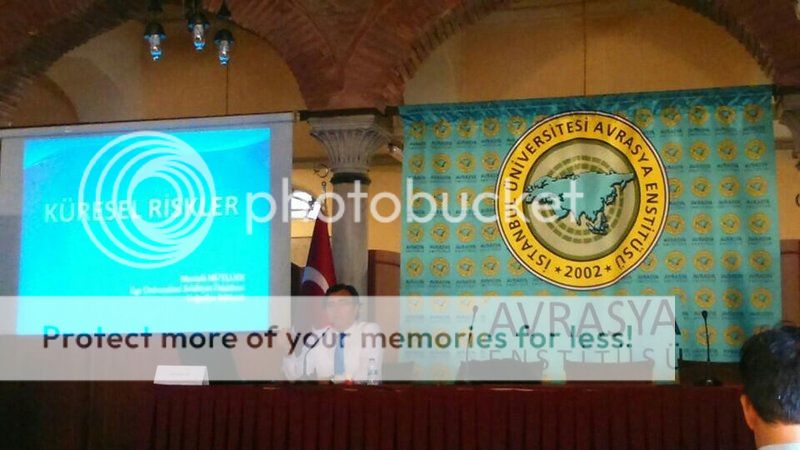
Undergoing a thorough repair in 1949 three windows that opened to the south of the courtyard building. Then again repaired in 1990 and now sees the structure of Istanbul University, Institute for Eurasian Studies, the activity continues.
ISTANBUL UNIVERSITY, INSTITUTE FOR EURASIAN STUDIES
Since the Eurasian region, which is closely related with the past history of our country, cultural, economic and political characteristics and potential of the study and carry out in this way the different relations of our country needs today can display information about the region and the production staff is the primary objective of our institute.
The region is extremely important historical and cultural ties, not only for our country, in the last twenty years as a result of dramatic transformations in the political-military exchanges and many new independent states, especially in today’s chaotic structure of its energy and natural gas resources, and also for the world balance of has a strategic importance.
The chaotic structure, history and diplomatic resources needed to solve the problems of the region born in the past, the region is active and decisive role played by inter-communal relations, especially in the Ottoman Archives presence in Turkey, today brings Turkey to have a say in the region. In particular, both geographically and politically active in Eurasia in a position the geographic area extending from Turkey and the Balkans and the Caucasus in the Middle East, starting from the date on which the state has a cultural and political ties.
For this reason, both experts familiar with the languages of the Eurasian region and to provide for education and academic staff, graduate programs for this purpose and carry out open in the region, creating the infrastructure required to produce a solution to issues of interest to Turkey and to this end, and academic publications of our institute aims to organize activities.
The Institute is an interdisciplinary perspective to follow developments closely with the geography of the region, aims to further investigations and research. Black Sea, the Caucasus and the Middle East, Eastern Mediterranean and the Aegean, the Balkans and Eastern Europe, and finally the Central Asian countries such as the different geographies, political, historical, social and cultural aspects and problems of Turkey and links with and understanding of these problems is investigated in a sufficient manner perspectives is to produce solutions.
Thus in Turkey, especially in the academic field, doing research on this region and to provide guidance to researchers seeking to build knowledge in the formation of cadres and publications will be provided. In addition, the Institute for Eurasian region, including national and international congresses, conferences, colloquia, symposia, panel discussions, seminars, talks, courses, exhibitions, scientific meetings and publication activities, such as memorial days alone, as the performing or contribute to the achievement in bilateral and multilateral targeted the development of mutual knowledge and opinion are consulted.
LOCATION SATELLITE MAP
WEB SITE : Istanbul University, Institute for Eurasian Studies
MORE INFO & CONTACT
E-Mail : avrasya@istanbul.edu.tr
Phone : +90 212 455 5859 / +90 212 455 5700
Fax : +90 212 455 5762
These scripts and photographs are registered under © Copyright 2017, respected writers and photographers from the internet. All Rights Reserved.
GPS : 41°00'37.0"N 28°57'41.2"E / 41.010278, 28.961444

PHOTOGRAPHS ALBUM
Slight slope on a plot of a madrasa greatest taken as well as stone, braided in two alternating rows of brick walls, the material has been built. Rectangular windows with pointed arches open to the outside facades of brick and cut stone pediments shoveled. The top two rows of brick building surrounded by spiked fringe. Gained ground floor west-facing front elevation, slope, covered with cut stone. Round-arched door opening from the axis has shifted to the right.
That the date 1158 on the door of the poet Nimet’e Seyyid Ahmed Hocazade marble inscription was written by nine coupleted suspend a line. Starting barrel-vaulted hallway stairs to the courtyard of the madrasa greatest reached. Arches on the gate opens onto the courtyard area and sitting in front of the two columns that have been evaluated as an iwan of the madrasa floor of this unit over other units is kept high, there is the mirror.
Wool to the front of the two original windows in the south west of the classroom, this unit / mosque venue is necessary to round arched door. There is an inscription in two lines on the door. The square shaped classroom / mosque above the transition squinches provided internally threaded, externally covered with an octagonal dome. Two windows in three directions, with the window open to the outside space of three fronts in the western direction of cut stone consoles were slightly forward.
Placed on the altar in the corner, tromplarda, the dome is stenciled decorations. Purity dome in the heart of Surat, Surat an-Nur base of the dome, the pendentives formed at the corners of squinches filled with God, Muhammed, the Four Caliphs, Hassan and Hussein are writing. Squinches filled with consoles that make up the elegant arches are filled six vegetative form. Although renovated, reflecting the transfer of works of art style of the pen. Classroom / mosque prayer times of the past are known to be open to the outside community.
Classroom / space is a small mosque minarets on either side close to the southern front corner and a bird in an elegant mansion, which was placed two steps out of consoles. Grooved on three sides except the south courtyard titled openings with pointed arches made of brick with marble columns, sits surrounded by porches. East and west direction, mirrored vault above the porticos, the north direction, provided the transition pendantives covered with domes.
Porticos behind the east, west and north direction has been ranked in the madrasa rooms. These rooms are covered with domes on pendentives northern and Eastern peoples. Two rooms at the west front of the mirror in front vault. Round-arched niches rooms with lockers and stove inside a rectangular aperture door and a window opens with a courtyard. Pointed arches, pediments over doors and windows, most of this is called the glass decorated underwear.
The rooms have windows opening outwards. And the Northeast corner of the rectangular unit, which is regulated as a latrine in northern and eastern direction with two square openings called windows and mirrors above the vault covered with elephant eyes. That are known to have a fountain in the courtyard now survive. In 1914, repaired in 1892 saw the madrasa, a fountain, laundry, the toilet and abdesthane needed repair, the inspection report of the delegation determined.
Undergoing a thorough repair in 1949 three windows that opened to the south of the courtyard building. Then again repaired in 1990 and now sees the structure of Istanbul University, Institute for Eurasian Studies, the activity continues.
ISTANBUL UNIVERSITY, INSTITUTE FOR EURASIAN STUDIES
Since the Eurasian region, which is closely related with the past history of our country, cultural, economic and political characteristics and potential of the study and carry out in this way the different relations of our country needs today can display information about the region and the production staff is the primary objective of our institute.
The region is extremely important historical and cultural ties, not only for our country, in the last twenty years as a result of dramatic transformations in the political-military exchanges and many new independent states, especially in today’s chaotic structure of its energy and natural gas resources, and also for the world balance of has a strategic importance.
The chaotic structure, history and diplomatic resources needed to solve the problems of the region born in the past, the region is active and decisive role played by inter-communal relations, especially in the Ottoman Archives presence in Turkey, today brings Turkey to have a say in the region. In particular, both geographically and politically active in Eurasia in a position the geographic area extending from Turkey and the Balkans and the Caucasus in the Middle East, starting from the date on which the state has a cultural and political ties.
For this reason, both experts familiar with the languages of the Eurasian region and to provide for education and academic staff, graduate programs for this purpose and carry out open in the region, creating the infrastructure required to produce a solution to issues of interest to Turkey and to this end, and academic publications of our institute aims to organize activities.
The Institute is an interdisciplinary perspective to follow developments closely with the geography of the region, aims to further investigations and research. Black Sea, the Caucasus and the Middle East, Eastern Mediterranean and the Aegean, the Balkans and Eastern Europe, and finally the Central Asian countries such as the different geographies, political, historical, social and cultural aspects and problems of Turkey and links with and understanding of these problems is investigated in a sufficient manner perspectives is to produce solutions.
Thus in Turkey, especially in the academic field, doing research on this region and to provide guidance to researchers seeking to build knowledge in the formation of cadres and publications will be provided. In addition, the Institute for Eurasian region, including national and international congresses, conferences, colloquia, symposia, panel discussions, seminars, talks, courses, exhibitions, scientific meetings and publication activities, such as memorial days alone, as the performing or contribute to the achievement in bilateral and multilateral targeted the development of mutual knowledge and opinion are consulted.
LOCATION SATELLITE MAP
WEB SITE : Istanbul University, Institute for Eurasian Studies
MORE INFO & CONTACT
E-Mail : avrasya@istanbul.edu.tr
Phone : +90 212 455 5859 / +90 212 455 5700
Fax : +90 212 455 5762
These scripts and photographs are registered under © Copyright 2017, respected writers and photographers from the internet. All Rights Reserved.
Labels:
beyazit,
eurasian institue,
fatih,
istanbul,
istanbul university,
madrasah,
ottoman,
turkey
Wednesday, April 19, 2017
ÇORLULU ALİ PASHA MADRASA
Beyazıt, Fatih - İstanbul - Turkey
GPS : 41°00'32.1"N 28°58'04.5"E / 41.008917, 28.967917

PHOTOGRAPHS ALBUM
Çorlulu Ali Paşa Medresi is a historic location in the university neighborhood of Beyazit and is popular with students who still come to hang out here from the nearby universities. The 300-year-old Medrese was a religious school and dervish lodge during the Ottoman times, before becoming a bustling bazaar area in the mid-20th century. The complex, resembles the classical style, and is one of the important examples of the transition period to the Baroque style.
Today it is an oasis for locals and tourists alike who are seeking relaxing refuge from the hustle and bustle of the nearby Grand Bazaar area. There are wooden tables and chairs in the shaded courtyard area, Iznik-tiled table tops, mosaic lamps dangling from the ceiling and carpets hanging on the walls.
The lodge (Tekke) was called ‘Evvel’ and the madrasah was named ‘Sani’ when the lodge, inside the complex, was converted into a madrasah in the 18th century. Çorlulu Ali Pasha Madrasah complex in Istanbul's historic Çemberlitaş district, said the madrasah, built in 1711 but were damaged during the earthquake of 1894 as other complex buildings. The priority for restoration was given to the mosque. The madrasah was used for some time to house people who had lost their houses during the fire of 1918.
The madrasah, which was used as a dormitory for a short time after its restoration in 1964, was later transformed into shops selling tourist souvenirs. It is a favorite hang-out spot for many university students, who come here to pass the time over a glass of Turkish tea or an aromatic cup of Turkish coffee whilst enjoying the fragrant smoke of a hookah (also called nargile or water pipe). Apple and mint or rose and mint are recommended tobacco flavors for the hookah and in winter the warming and comforting winter drink of sahlep is also much loved.
It has also become a popular tourist location to sample this tradition of Turkey and the Middle East and is rich in atmosphere with the light haze of hookah tobacco and the musical tinkling of teaspoons in Turkish tea glasses. It is a favorite hang-out spot for many university students, who come here to pass the time over a glass of Turkish tea or an aromatic cup of Turkish coffee whilst enjoying the fragrant smoke of a hookah (also called nargile or water pipe).
Apple and mint or rose and mint are recommended tobacco flavors for the hookah and in winter the warming and comforting winter drink of sahlep is also much loved. It has also become a popular tourist location to sample this tradition of Turkey and the Middle East and is rich in atmosphere with the light haze of hookah tobacco and the musical tinkling of teaspoons in Turkish tea glasses.
LOCATION SATELLITE MAP
These scripts and photographs are registered under © Copyright 2017, respected writers and photographers from the internet. All Rights Reserved.
GPS : 41°00'32.1"N 28°58'04.5"E / 41.008917, 28.967917

PHOTOGRAPHS ALBUM
Çorlulu Ali Paşa Medresi is a historic location in the university neighborhood of Beyazit and is popular with students who still come to hang out here from the nearby universities. The 300-year-old Medrese was a religious school and dervish lodge during the Ottoman times, before becoming a bustling bazaar area in the mid-20th century. The complex, resembles the classical style, and is one of the important examples of the transition period to the Baroque style.
Today it is an oasis for locals and tourists alike who are seeking relaxing refuge from the hustle and bustle of the nearby Grand Bazaar area. There are wooden tables and chairs in the shaded courtyard area, Iznik-tiled table tops, mosaic lamps dangling from the ceiling and carpets hanging on the walls.
The lodge (Tekke) was called ‘Evvel’ and the madrasah was named ‘Sani’ when the lodge, inside the complex, was converted into a madrasah in the 18th century. Çorlulu Ali Pasha Madrasah complex in Istanbul's historic Çemberlitaş district, said the madrasah, built in 1711 but were damaged during the earthquake of 1894 as other complex buildings. The priority for restoration was given to the mosque. The madrasah was used for some time to house people who had lost their houses during the fire of 1918.
The madrasah, which was used as a dormitory for a short time after its restoration in 1964, was later transformed into shops selling tourist souvenirs. It is a favorite hang-out spot for many university students, who come here to pass the time over a glass of Turkish tea or an aromatic cup of Turkish coffee whilst enjoying the fragrant smoke of a hookah (also called nargile or water pipe). Apple and mint or rose and mint are recommended tobacco flavors for the hookah and in winter the warming and comforting winter drink of sahlep is also much loved.
It has also become a popular tourist location to sample this tradition of Turkey and the Middle East and is rich in atmosphere with the light haze of hookah tobacco and the musical tinkling of teaspoons in Turkish tea glasses. It is a favorite hang-out spot for many university students, who come here to pass the time over a glass of Turkish tea or an aromatic cup of Turkish coffee whilst enjoying the fragrant smoke of a hookah (also called nargile or water pipe).
Apple and mint or rose and mint are recommended tobacco flavors for the hookah and in winter the warming and comforting winter drink of sahlep is also much loved. It has also become a popular tourist location to sample this tradition of Turkey and the Middle East and is rich in atmosphere with the light haze of hookah tobacco and the musical tinkling of teaspoons in Turkish tea glasses.
LOCATION SATELLITE MAP
These scripts and photographs are registered under © Copyright 2017, respected writers and photographers from the internet. All Rights Reserved.
Wednesday, January 18, 2017
ANTİK CISTERN
Beyazit, Fatih - İstanbul - Turkey
GPS : 41°00'31.7"N 28°57'46.5"E / 41.008806, 28.962917

PHOTOGRAPHS ALBUM
In 1984, during the foundation diggings of Antik Hotel, historical ruins have been found around 12 meters deep. Construction stopped immediately and a new digging started to save the ruins. Studies have been made by historians and experts of the istanbul Archaeological Museum. The results stated that the ruins were from Late Rome and Early Bizantines, further studies showed that it was the ruins of a “Cistern”.
After this discovery construction plans have been changed my engineers in order to build Antik Cisterna in such a way that kept the historical ruins untouched in the heart of Istanbul. All historical remains are displayed in the entrance of Antik Hotel.
According to the historians; During the 5th and 6th centuries, there were very important buildings that stood on the Mese Road (Divan Road) which starts from Hagia Sophia to Çemberlitaş, and pasing through Beyazıt to Aksaray. Antiochos and Lausos Palaces in Sultanahmet and Myrelaion Palace in Laleli are some examples to these buildings. Antik Cisterna is also one of these buildings from 4th and 5th century.
Another Ottoman era structure had been built over the original cistern. Following restoration work, the historical cistern was brought back to life and transformed into the Antik Cisterna a facility that combines culture, art and history. The City of Istanbul has got many names in the past centuries and nowadays: Byzantion, Constantinopolis, Constantinople, Estambul, Stamboul, Islambol.
ANTİK HOTEL 4*
Consept & Floor Details
Floor 4 - Istanbul Floor
This floor represents ''Istanbul'' period, the latest civilization that still continues in the 21th century. This floor carries small details of Istanbul and new Turkish Republic and is dedicated to Atatürk, the founder and the first president of the Turkish Republic. He drew new routes for his country with his sweeping reforms in legal system, social status of women, introduction of the Latin alphabet and the educational policy.
Floor 3 - Konstantiniyye Floor
This floor represents ''Konstantiniyye'' period, a 700 years old civilization: the Ottoman Empire. This floor carries small details of the Ottoman period and is dedicated to the 7th sultan, Fatih Mehmet. He conquered the city of Constantinople in 1453 and was given the title of ''The Conqueror''. He was not only a great commander but also a great poet.
Floor 2 - Constantinopolis Floor
This floor represents "Constantinopolis" period of the Roman Empire. This floor carries small details of the Roman period in Istanbul and is dedicated to Constantinius I. He re-established the city as the capital of the Empire so the city was named after him. He was the first Roman Emperor to accept Christianity and the founder of Haghia Irene and Holy Apostles churches.
Floor 1 - Byzantion Floor
This floor represents "Byzantion" period in Istanbul. This first floor of the hotel carries small details of Byzantion period and is dedicated to Byzas. He and the Greek colonists led by him, established the city. The legend is that Delphic Oracle, advised Byzas to settle across the land of the blinds. Byzas chose Seraglio Point (Sarayburnu) across Chalcedeon (Kadıköy) whose inhabitants he considered to be blind to have missed such a favourable location
ACCOMMODATION
Standard Rooms, Family Rooms, Istanbul Suite, Junior Suite, Marmara Suite, Disabled Room
FOOD AND BEVERAGE
Marmarion Terace Restaurant
Marmarion Terace Restaurant offers assortments of Turkish and the World cuisine accompanied by a view of the Marmara Sea, Prince’s Islands, Beyazit Tower, minarets of the Blue Mosque, old and new Istanbul. Delicatessen assortments, salads accompanied by special sauces, snacks, daily menu, open buffet or a-la carte options are prepared by our experienced cooks, our genial service is waiting for a blissful break. If you like fish, you can prefer the Byzantine Menu; if you like traditional food, ask for an Ottoman Menu; if you insist on mixed, you can have the Istanbul menu.
Antik Cisterna Restaurant
Our Marmarion Terace Restaurant consisting of two sections - one being for 200 and the other for 50 people - offers the assortments of Turkish and the World cuisine. Named after the water backs and columns dating back to the late Roman and early Byzantine period have been restored remaining faithful to its historical original and is at your service as one of the most distinguished hot spots of Istanbul.
Antik Cisterna Exhibition Hall is included among places housing Istanbul’s art world. The hall, in which works of photographers, painters and sculptures are displayed, is an ideal place for special occasions and receptions. We are looking forward to see you for a comfortable break by the historical divan road.
Not only a restaurant and hotel but Antik Cisterna can also serve as exhibition center-gallery which brings the past to us. Antik Cisterna is a meeting point for art-history and tourism with it’s mystic atmosphere and it can be an alternative for concerts,parties,promotions and presentations.
SAUNA AND MASSAGE
Our sauna and massage service is ready to serve you with its expert personnel for guests willing to spend some time and relieve their tiredness at Antik Hote'l. You can sweat off in our sauna and feel yourself renewed and refreshed with the massage to be applied by our expert personnel afterwards. You can choose one of body massage, food & leg massage, head and neck massage for as long as you like.
MEETING AND BANQUET
You can carry out many organizations such as congresses, meetings, seminars, parties, wedding ceremonies, graduation ceremonies, exhibitions, receptions, launches etc.
LOCATION SATELLITE MAP
WEB SITE : Antik Hotel
MORE INFO & CONTACT
E-Mail : info@antikhotel.com / info@antikcisterna.com
Phone : +90 212 638 5858
Fax : +90 212 638 5865
These scripts and photographs are registered under © Copyright 2017, respected writers and photographers from the internet. All Rights Reserved.
GPS : 41°00'31.7"N 28°57'46.5"E / 41.008806, 28.962917

PHOTOGRAPHS ALBUM
In 1984, during the foundation diggings of Antik Hotel, historical ruins have been found around 12 meters deep. Construction stopped immediately and a new digging started to save the ruins. Studies have been made by historians and experts of the istanbul Archaeological Museum. The results stated that the ruins were from Late Rome and Early Bizantines, further studies showed that it was the ruins of a “Cistern”.
After this discovery construction plans have been changed my engineers in order to build Antik Cisterna in such a way that kept the historical ruins untouched in the heart of Istanbul. All historical remains are displayed in the entrance of Antik Hotel.
According to the historians; During the 5th and 6th centuries, there were very important buildings that stood on the Mese Road (Divan Road) which starts from Hagia Sophia to Çemberlitaş, and pasing through Beyazıt to Aksaray. Antiochos and Lausos Palaces in Sultanahmet and Myrelaion Palace in Laleli are some examples to these buildings. Antik Cisterna is also one of these buildings from 4th and 5th century.
Another Ottoman era structure had been built over the original cistern. Following restoration work, the historical cistern was brought back to life and transformed into the Antik Cisterna a facility that combines culture, art and history. The City of Istanbul has got many names in the past centuries and nowadays: Byzantion, Constantinopolis, Constantinople, Estambul, Stamboul, Islambol.
ANTİK HOTEL 4*
Consept & Floor Details
Floor 4 - Istanbul Floor
This floor represents ''Istanbul'' period, the latest civilization that still continues in the 21th century. This floor carries small details of Istanbul and new Turkish Republic and is dedicated to Atatürk, the founder and the first president of the Turkish Republic. He drew new routes for his country with his sweeping reforms in legal system, social status of women, introduction of the Latin alphabet and the educational policy.
Floor 3 - Konstantiniyye Floor
This floor represents ''Konstantiniyye'' period, a 700 years old civilization: the Ottoman Empire. This floor carries small details of the Ottoman period and is dedicated to the 7th sultan, Fatih Mehmet. He conquered the city of Constantinople in 1453 and was given the title of ''The Conqueror''. He was not only a great commander but also a great poet.
Floor 2 - Constantinopolis Floor
This floor represents "Constantinopolis" period of the Roman Empire. This floor carries small details of the Roman period in Istanbul and is dedicated to Constantinius I. He re-established the city as the capital of the Empire so the city was named after him. He was the first Roman Emperor to accept Christianity and the founder of Haghia Irene and Holy Apostles churches.
Floor 1 - Byzantion Floor
This floor represents "Byzantion" period in Istanbul. This first floor of the hotel carries small details of Byzantion period and is dedicated to Byzas. He and the Greek colonists led by him, established the city. The legend is that Delphic Oracle, advised Byzas to settle across the land of the blinds. Byzas chose Seraglio Point (Sarayburnu) across Chalcedeon (Kadıköy) whose inhabitants he considered to be blind to have missed such a favourable location
ACCOMMODATION
Standard Rooms, Family Rooms, Istanbul Suite, Junior Suite, Marmara Suite, Disabled Room
FOOD AND BEVERAGE
Marmarion Terace Restaurant
Marmarion Terace Restaurant offers assortments of Turkish and the World cuisine accompanied by a view of the Marmara Sea, Prince’s Islands, Beyazit Tower, minarets of the Blue Mosque, old and new Istanbul. Delicatessen assortments, salads accompanied by special sauces, snacks, daily menu, open buffet or a-la carte options are prepared by our experienced cooks, our genial service is waiting for a blissful break. If you like fish, you can prefer the Byzantine Menu; if you like traditional food, ask for an Ottoman Menu; if you insist on mixed, you can have the Istanbul menu.
Antik Cisterna Restaurant
Our Marmarion Terace Restaurant consisting of two sections - one being for 200 and the other for 50 people - offers the assortments of Turkish and the World cuisine. Named after the water backs and columns dating back to the late Roman and early Byzantine period have been restored remaining faithful to its historical original and is at your service as one of the most distinguished hot spots of Istanbul.
Antik Cisterna Exhibition Hall is included among places housing Istanbul’s art world. The hall, in which works of photographers, painters and sculptures are displayed, is an ideal place for special occasions and receptions. We are looking forward to see you for a comfortable break by the historical divan road.
Not only a restaurant and hotel but Antik Cisterna can also serve as exhibition center-gallery which brings the past to us. Antik Cisterna is a meeting point for art-history and tourism with it’s mystic atmosphere and it can be an alternative for concerts,parties,promotions and presentations.
SAUNA AND MASSAGE
Our sauna and massage service is ready to serve you with its expert personnel for guests willing to spend some time and relieve their tiredness at Antik Hote'l. You can sweat off in our sauna and feel yourself renewed and refreshed with the massage to be applied by our expert personnel afterwards. You can choose one of body massage, food & leg massage, head and neck massage for as long as you like.
MEETING AND BANQUET
You can carry out many organizations such as congresses, meetings, seminars, parties, wedding ceremonies, graduation ceremonies, exhibitions, receptions, launches etc.
LOCATION SATELLITE MAP
WEB SITE : Antik Hotel
MORE INFO & CONTACT
E-Mail : info@antikhotel.com / info@antikcisterna.com
Phone : +90 212 638 5858
Fax : +90 212 638 5865
These scripts and photographs are registered under © Copyright 2017, respected writers and photographers from the internet. All Rights Reserved.
Labels:
accommodation,
antik cistern,
antik hotel,
beverage,
beyazit,
byzantine,
constantinople,
fatih,
food,
istanbul,
ottoman,
restaurant,
turkey
Tuesday, December 20, 2016
SAHAFLAR BAZAAR
Beyazıt, Fatih - İstanbul - Turkey
GPS : 41°00'37.0"N 28°57'57.9"E / 41.010278, 28.966083

PHOTOGRAPHS ALBUM
Sahaflar Çarşısı, the second hand book bazaar, is located between the Beyazıt Mosque and the Grand Bazaar, on the same site as the old Byzantine book and paper market and is the oldest book bazaar of Istanbul which stands today from Ottoman ear. Its history dates back to the 15th century. The Sahaflar Book Market has a long history dating back to the 15th century. It is located between a stony place on the left-hand side of the Beyazit Mosque and the Sedefçiler Gate of the Covered Bazaar.
During the early Ottoman period, printed books were seen as a corrupting European influence and were banned in Turkey. As a result the bazaar only sold manuscripts. Then İbrahim Müteferrika, the first Ottoman printer, produce the first printed book in Turkish language, an Arabic dictionary in 18th century. In the same century, the market remained the main point for book sale and distribution of Ottoman Empire and a meeting point for some intellectuals.
Sadly, the market lost its importance in the last half century due to rise of the modern bookstores and internet. Today, all sorts of books, from tourist guides to academic tomes can be found as well as some old books, new ones, and examples of Ottoman miniature pages. There is also a bust of İbrahim Müteferrika in the market.
In olden times, book stores used to supply the needs of madrasah students and were therefore located around the madrasahs. After the Covered Bazaar was built in 1460, these book stores were grouped together in a common area. The stores that had operated in the Covered Bazaar until the earthquakes in 1460 and 1894 moved to their present locationg which was already known as Hakkaklar Çarşısı.
Tradesmen of the Sahaflar Book Market belonged to Antiquarian Book Stores Trade Guild. They could not open a store without obtaining degree and rank of mastership following a period of apprenticeship. They used to open and close their shops according to the times of prayer. The spiritual guide of the Bookseller Trade Guild was Basralı Abdullah Yetimi Efendi, who is also known as one of the first booksellers of the Sahaflar Book Market.
Evliya Çelebi, the famous Ottoman traveler of the 17th century, wrote in his book of travels “Seyahatname,” that there were 50 bookstores and 300 antiquarian booksellers serving scholars at the time.
The Sahaflar Book Market, including its thousands of calligraphy manuscripts, was completely destroyed in a fire during 1950. The Istanbul Metropolitan Municipality confiscated the unburned part of the Sahaflar Book Market and began restoration. The wooden shops have been made into reinforced concrete shops and it has been turned into the present Book Market. In addition, there is a fixed bust of İbrahim Müteferrika (1674-1745), the first Ottoman publisher and printer in the middle of the market.
The wooden shops have been made into reinforced concrete shops and it has been turned into the present Book Market. In addition, there is a fixed bust of İbrahim Müteferrika (1674-1745), the first Ottoman publisher and printer in the middle of the market. Today, there are 23 bookstores in the Market, 17 of which are two-story shops.
LOCATION SATELLITE MAP
These scripts and photographs are registered under © Copyright 2016, respected writers and photographers from the internet. All Rights Reserved.
GPS : 41°00'37.0"N 28°57'57.9"E / 41.010278, 28.966083

PHOTOGRAPHS ALBUM
Sahaflar Çarşısı, the second hand book bazaar, is located between the Beyazıt Mosque and the Grand Bazaar, on the same site as the old Byzantine book and paper market and is the oldest book bazaar of Istanbul which stands today from Ottoman ear. Its history dates back to the 15th century. The Sahaflar Book Market has a long history dating back to the 15th century. It is located between a stony place on the left-hand side of the Beyazit Mosque and the Sedefçiler Gate of the Covered Bazaar.
During the early Ottoman period, printed books were seen as a corrupting European influence and were banned in Turkey. As a result the bazaar only sold manuscripts. Then İbrahim Müteferrika, the first Ottoman printer, produce the first printed book in Turkish language, an Arabic dictionary in 18th century. In the same century, the market remained the main point for book sale and distribution of Ottoman Empire and a meeting point for some intellectuals.
Sadly, the market lost its importance in the last half century due to rise of the modern bookstores and internet. Today, all sorts of books, from tourist guides to academic tomes can be found as well as some old books, new ones, and examples of Ottoman miniature pages. There is also a bust of İbrahim Müteferrika in the market.
In olden times, book stores used to supply the needs of madrasah students and were therefore located around the madrasahs. After the Covered Bazaar was built in 1460, these book stores were grouped together in a common area. The stores that had operated in the Covered Bazaar until the earthquakes in 1460 and 1894 moved to their present locationg which was already known as Hakkaklar Çarşısı.
Tradesmen of the Sahaflar Book Market belonged to Antiquarian Book Stores Trade Guild. They could not open a store without obtaining degree and rank of mastership following a period of apprenticeship. They used to open and close their shops according to the times of prayer. The spiritual guide of the Bookseller Trade Guild was Basralı Abdullah Yetimi Efendi, who is also known as one of the first booksellers of the Sahaflar Book Market.
Evliya Çelebi, the famous Ottoman traveler of the 17th century, wrote in his book of travels “Seyahatname,” that there were 50 bookstores and 300 antiquarian booksellers serving scholars at the time.
The Sahaflar Book Market, including its thousands of calligraphy manuscripts, was completely destroyed in a fire during 1950. The Istanbul Metropolitan Municipality confiscated the unburned part of the Sahaflar Book Market and began restoration. The wooden shops have been made into reinforced concrete shops and it has been turned into the present Book Market. In addition, there is a fixed bust of İbrahim Müteferrika (1674-1745), the first Ottoman publisher and printer in the middle of the market.
The wooden shops have been made into reinforced concrete shops and it has been turned into the present Book Market. In addition, there is a fixed bust of İbrahim Müteferrika (1674-1745), the first Ottoman publisher and printer in the middle of the market. Today, there are 23 bookstores in the Market, 17 of which are two-story shops.
LOCATION SATELLITE MAP
These scripts and photographs are registered under © Copyright 2016, respected writers and photographers from the internet. All Rights Reserved.
Subscribe to:
Posts (Atom)
