Mahmutpaşa, Fatih - İstanbul - Turkey
GPS : 41°00'43.5"N 28°58'12.0"E / 41.012083, 28.970000
About 250 metres down Mahmut Paşa Yokuşu, we come to a turning on the left where we see an imposing domed building. The hamam, built in 1466 (871 A.H.), is located on the Mahmud Paşa highway leading up to the mosque. This was originally part of the Mahmut Paşa Complex, and, as always in these interdependent pious foundations, its revenues went to the support of the other institutions in the complex.
It consists of an entrance hall with latrines, a cold-room (soğukluk) and a hot-room (sıcaklık). The soğukluk is a truly monumental room covered by a dome with spiral ribs and a huge semidome in the form of a scallop shell; on each side are two square cubicles with elaborate vaulting.
The hararet is octagonal with five shallow oblong niches, and in the crossaxis there are two domed eyvans, each of which leads to two more private bathing cubicles in the corners.
The entry to the baths is adorned with a grand muqarnas portal beyond which the entrance hall looms large with its tall dome measuring 27 meters in diameter. Entering the smaller cold-room under a demi-dome, the square space with two eyvans and private bathing cells (halvet) is covered with a whorl dome.
Like most of the great hamams, it was originally double, but the women’s section was torn down to make room for the neighbouring han. We enter through a large central hall (17 metres square) with a high dome on stalactited pendentives; the impressive size of the camekân is hardly spoiled by the addition of a modern wooden balcony.
The following hot room has an octagonal navel stone (göbektaşı) at its center under a dome pierced with lights that sits on eight piers. It has five eyvans with taps and basins between the piers and two other eyvans give access to private cells at the four corners of the chamber.
Like all of Mahmut Paşa’s buildings, his hamam is a very handsome and well-built structure. For a time it fell into disuse and then served as a storage depot, but it has been restored and now serves as a market hall.
A han stands today on the site of the women's section that was demolished. The remaining men's section survived damage by fire in 1755 and was restored in 1955.
LOCATION SATELLITE MAP
These scripts and photographs are registered under © Copyright 2017, respected writers and photographers from the internet. All Rights Reserved.
Showing posts with label marble plinth. Show all posts
Showing posts with label marble plinth. Show all posts
Friday, May 12, 2017

Monday, May 8, 2017
ŞİFA HAMAMI
Doğancılar, Üsküdar - İstanbul - Turkey
GPS : 41°01'28.1"N 29°00'43.8"E / 41.024472, 29.012167
PHOTOGRAPHS ALBUM
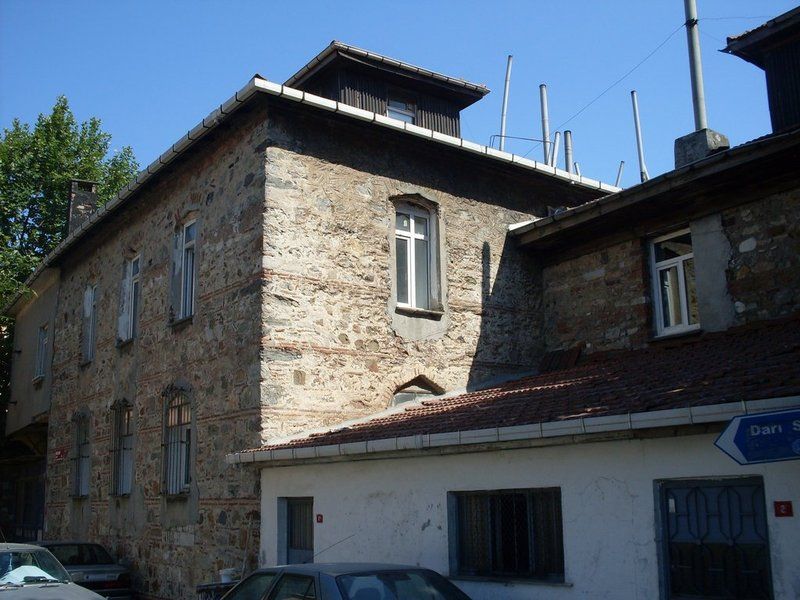
The Old Hamam was built towards the end of the 15th century for the purpose of generating revenue in order to support the Rum Mehmet Paşa Mosque in Üsküdar. The men’s section is located on Doğancılar Street and the women’s section is located next to the Hüsrev Ağa Mosque.
It has also been known as the Historical Şifa Hamamı (Historical Cure Bath) and is a remarkable structure whose original shape has been protected through the ages.
One enters into the men’s section of the historical bath through a hall covered with marble pavement. The hall leads to the Camekan, a court made of wood surrounded by small individual changing rooms.
In addition to the changing rooms located on the left side, there are changing rooms upstairs. In the entry of the Halvet, a very hot bathing cubicle within the bathing complex, there are two water vessels made of marbel.
On the oppside side of the halvet are seven shower baths, three of which are open and are internally covered by a half-domed vault, and four of which are covered with a full-domed vault. Furthermore, the bath is covered by a large dome as well as a modest navel stone (göbek taşı) which draws the attention of visitors under the dome of the Old Hamam.
We have learned from an advertisement published in a newspaper in September 12, 1860 that the Historical bath was transfered to a single owner, and from another source, it we learn that it was also renovated.
This bath is not in contradiction with Ottoman Architectural style. In particular, it has been serving for visitors, the great majority of whom are Turkish citizens.
LOCATION SATELLITE MAP
These scripts and photographs are registered under © Copyright 2017, respected writers and photographers from the internet. All Rights Reserved.
GPS : 41°01'28.1"N 29°00'43.8"E / 41.024472, 29.012167

PHOTOGRAPHS ALBUM
The Old Hamam was built towards the end of the 15th century for the purpose of generating revenue in order to support the Rum Mehmet Paşa Mosque in Üsküdar. The men’s section is located on Doğancılar Street and the women’s section is located next to the Hüsrev Ağa Mosque.
It has also been known as the Historical Şifa Hamamı (Historical Cure Bath) and is a remarkable structure whose original shape has been protected through the ages.
One enters into the men’s section of the historical bath through a hall covered with marble pavement. The hall leads to the Camekan, a court made of wood surrounded by small individual changing rooms.
In addition to the changing rooms located on the left side, there are changing rooms upstairs. In the entry of the Halvet, a very hot bathing cubicle within the bathing complex, there are two water vessels made of marbel.
On the oppside side of the halvet are seven shower baths, three of which are open and are internally covered by a half-domed vault, and four of which are covered with a full-domed vault. Furthermore, the bath is covered by a large dome as well as a modest navel stone (göbek taşı) which draws the attention of visitors under the dome of the Old Hamam.
We have learned from an advertisement published in a newspaper in September 12, 1860 that the Historical bath was transfered to a single owner, and from another source, it we learn that it was also renovated.
This bath is not in contradiction with Ottoman Architectural style. In particular, it has been serving for visitors, the great majority of whom are Turkish citizens.
LOCATION SATELLITE MAP
These scripts and photographs are registered under © Copyright 2017, respected writers and photographers from the internet. All Rights Reserved.
BEYAZIT HAMAM
Beyazit, Fatih - İstanbul - Turkey
GPS : 41°00'35.2"N 28°57'41.5"E / 41.009778, 28.961528
PHOTOGRAPHS ALBUM
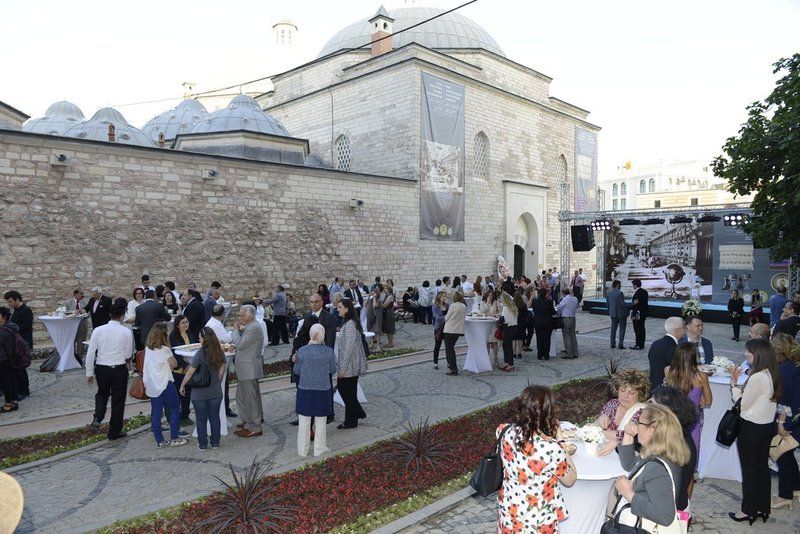
The Bayezid II Hammam dates back to the 16th century, when Sultan Bayezid II commissioned it as part of the complex around the nearby Beyazit Mosque. In recent decades the hammam had fallen into disrepair, but it was restored as part of Istanbul University in 2015.
This hammam is also known as the place where rebel leader Patrona Halil worked as a bath attendant. His bloody uprising became the subject of several works by Orientalist painter Jean Baptiste Vanmour, and it is seen as marking the end of Sultan Ahmet III's Tulip Era.
The Beyazit Hamam is located in Istanbul's Beyazit district on Ordu Street. The structure has separate sections for both men and women. The entrance door of the women’s section is on Kimyager Derviş Paşa Street and the door of men’s section is on Ordu Street.
One enters the men’s section from the camekan, a court surrounded by small individual changing rooms roofed by a dome. From there, one passes into the ılıklık (lukewarm section), where four bathrooms covered by small domes and a cleaning room draw the attention of visitors.
There are sofas which are covered by a dome and presumably each one has three kurnas (marble basin) on both the left and right sides of the ılıklık. The harare (hot section) contains halvets roofed by domes. In addition to these, there was originally a marble plinth (göbek taşı) found in each of the four corners of the harare; however, these have not made it into our times.
The women’s section of the hamam is similar to men’s section that the water well that meeted of need of water. The water well responsible for meeting the water needs of the hamam is located near the women’s section behind the Central Library of Istanbul University.
MUSEUM OF TURKISH HAMAM CULTURE
As the Bayezid II Turkish Hammam Culture Museum it displays many items relevant to the Turkish bath, such as copper jugs, water bowls, towels, and bath shoes. Helpful texts in Turkish and English explain the origins and history of Turkish baths in Istanbul, as well as the spread of Turkish baths to Western European cities in the 19th century.
Some archaeological finds discovered during construction at Istanbul University are also displayed in the museum, including pieces from several Byzantine churches and a relief from the Forum of Theodosius.
LOCATION SATELLITE MAP
WEB SITE : Turkish Hammam Culture Museum
MORE INFO & CONTACT
E-Mail : hamammuzesi@istanbul.edu.tr
Phone : +90 212 444 0000
These scripts and photographs are registered under © Copyright 2017, respected writers and photographers from the internet. All Rights Reserved.
GPS : 41°00'35.2"N 28°57'41.5"E / 41.009778, 28.961528

PHOTOGRAPHS ALBUM
The Bayezid II Hammam dates back to the 16th century, when Sultan Bayezid II commissioned it as part of the complex around the nearby Beyazit Mosque. In recent decades the hammam had fallen into disrepair, but it was restored as part of Istanbul University in 2015.
This hammam is also known as the place where rebel leader Patrona Halil worked as a bath attendant. His bloody uprising became the subject of several works by Orientalist painter Jean Baptiste Vanmour, and it is seen as marking the end of Sultan Ahmet III's Tulip Era.
The Beyazit Hamam is located in Istanbul's Beyazit district on Ordu Street. The structure has separate sections for both men and women. The entrance door of the women’s section is on Kimyager Derviş Paşa Street and the door of men’s section is on Ordu Street.
One enters the men’s section from the camekan, a court surrounded by small individual changing rooms roofed by a dome. From there, one passes into the ılıklık (lukewarm section), where four bathrooms covered by small domes and a cleaning room draw the attention of visitors.
There are sofas which are covered by a dome and presumably each one has three kurnas (marble basin) on both the left and right sides of the ılıklık. The harare (hot section) contains halvets roofed by domes. In addition to these, there was originally a marble plinth (göbek taşı) found in each of the four corners of the harare; however, these have not made it into our times.
The women’s section of the hamam is similar to men’s section that the water well that meeted of need of water. The water well responsible for meeting the water needs of the hamam is located near the women’s section behind the Central Library of Istanbul University.
MUSEUM OF TURKISH HAMAM CULTURE
As the Bayezid II Turkish Hammam Culture Museum it displays many items relevant to the Turkish bath, such as copper jugs, water bowls, towels, and bath shoes. Helpful texts in Turkish and English explain the origins and history of Turkish baths in Istanbul, as well as the spread of Turkish baths to Western European cities in the 19th century.
Some archaeological finds discovered during construction at Istanbul University are also displayed in the museum, including pieces from several Byzantine churches and a relief from the Forum of Theodosius.
LOCATION SATELLITE MAP
WEB SITE : Turkish Hammam Culture Museum
MORE INFO & CONTACT
E-Mail : hamammuzesi@istanbul.edu.tr
Phone : +90 212 444 0000
These scripts and photographs are registered under © Copyright 2017, respected writers and photographers from the internet. All Rights Reserved.
ZEYREK ÇİNİLİ HAMAM since 1545
Zeyrek, Fatih - İstanbul - Turkey
GPS : 41°01'05.2"N 28°57'22.8"E / 41.018111, 28.956333
The Çinili Hamam is the most eminent hamam located on Itfaiye Street in Istanbul's Fatih district. It was built by Mimar Sinan during the second quarter of the 16th century to generate revenue for the Hayrettin Paşa Madrasah and its tomb. The Hamam is also called “The Zeyrek Çinili Hamam” and “The Hayrettin Paşa Hamam.” It took its present name from the İznik tiles covering its walls which have not made it to the present day. After two large fires in 1782 and 1833, it was repaired and transfered to an individual owner.
The camekan of the double-bath styled Çinili Bath is not in contradiction with Classical Ottoman architecture; it is covered by a large dome. There is a pool with a fountain in the middle of the camekan, which is thought to have been a gift by the Shah of Iran. A court surrounded by small individual changing rooms and covered by a dome has been established in the middle of the hamam.
The changing rooms of the hamam are located upstairs and they passfrom the camekan into the ılıklık (lukewarm section) which is covered by an arched roof. Later, four keseliks, a type of bathing cabin used for exfoliating the skin, have been added to the ılıklık. From the ılıklık, one continues to the harare (hot section) through a passageway.
While walking through the passageway, a bathroom covered by five domes draws the attention of visitors.There are four halvets (a very hot bathing cubicle within the bath), three sofas (halls), and a marble plinth (göbek taşı). There are also two verses, each written in Persian, on the doors of halvet.
For Charles White, writing in the early 1840s, the “Tchinelly Hammam” was “one of the neatest and most picturesque in the city”. Zeyrek, close to the imperial Fatih Mosque and the Valencian Aqueduct, was a fashionable quarter with handsome wooden houses and views to the Golden Horn.
Today it is a rough-and-tumble area, whose houses are home to poor immigrants from the east, and the baths are shabby, if picturesque. Gone is the portico that shaded the entrances to the men’s and women’s baths. In its place butchers hang goats’ carcases. But, inside, Sinan’s domes and geometry still work their magic.
Sinan built the baths in the 1540s for Barbaros Hayrettin Pasha, known to the West as Barbarossa, a former corsair who became the first naval commander to be honoured by the Sultan with the title of Grand Admiral and Governor-General of the Islands. The navy was close to Sinan’s heart: in winter, while the Janissaries rested, it was the skilled galley slaves who did his building work - many earned their freedom when projects were completed.
In the “hot room”, a few of the tiles that gave the hammam its name can still be seen: panels of hexagonal Iznik tiles, their glaze encrusted with lime from dripping whitewash, and a row of tiles inscribed with lines of sensual Persian verse comparing the “beauties” therein to those of paradise.
The Çinili is a classic double hammam, for men and women. Leading back from the street is a sequence of domed halls, side by side: first the disrobing halls, then a wide, warm anteroom, and finally a hot room, marvellously austere but for the delicate pie-crust arches that support the dome and vaults.
Nearby there was a deep well, filled in long ago, from which the water for the hammam was drawn by horses. But behind the baths you will still find the chambers of the külhanbey, the legendary league of stokers.
LOCATION SATELLITE MAP
These scripts and photographs are registered under © Copyright 2017, respected writers and photographers from the internet. All Rights Reserved.
GPS : 41°01'05.2"N 28°57'22.8"E / 41.018111, 28.956333
The Çinili Hamam is the most eminent hamam located on Itfaiye Street in Istanbul's Fatih district. It was built by Mimar Sinan during the second quarter of the 16th century to generate revenue for the Hayrettin Paşa Madrasah and its tomb. The Hamam is also called “The Zeyrek Çinili Hamam” and “The Hayrettin Paşa Hamam.” It took its present name from the İznik tiles covering its walls which have not made it to the present day. After two large fires in 1782 and 1833, it was repaired and transfered to an individual owner.
The camekan of the double-bath styled Çinili Bath is not in contradiction with Classical Ottoman architecture; it is covered by a large dome. There is a pool with a fountain in the middle of the camekan, which is thought to have been a gift by the Shah of Iran. A court surrounded by small individual changing rooms and covered by a dome has been established in the middle of the hamam.
The changing rooms of the hamam are located upstairs and they passfrom the camekan into the ılıklık (lukewarm section) which is covered by an arched roof. Later, four keseliks, a type of bathing cabin used for exfoliating the skin, have been added to the ılıklık. From the ılıklık, one continues to the harare (hot section) through a passageway.
While walking through the passageway, a bathroom covered by five domes draws the attention of visitors.There are four halvets (a very hot bathing cubicle within the bath), three sofas (halls), and a marble plinth (göbek taşı). There are also two verses, each written in Persian, on the doors of halvet.
For Charles White, writing in the early 1840s, the “Tchinelly Hammam” was “one of the neatest and most picturesque in the city”. Zeyrek, close to the imperial Fatih Mosque and the Valencian Aqueduct, was a fashionable quarter with handsome wooden houses and views to the Golden Horn.
Today it is a rough-and-tumble area, whose houses are home to poor immigrants from the east, and the baths are shabby, if picturesque. Gone is the portico that shaded the entrances to the men’s and women’s baths. In its place butchers hang goats’ carcases. But, inside, Sinan’s domes and geometry still work their magic.
Sinan built the baths in the 1540s for Barbaros Hayrettin Pasha, known to the West as Barbarossa, a former corsair who became the first naval commander to be honoured by the Sultan with the title of Grand Admiral and Governor-General of the Islands. The navy was close to Sinan’s heart: in winter, while the Janissaries rested, it was the skilled galley slaves who did his building work - many earned their freedom when projects were completed.
In the “hot room”, a few of the tiles that gave the hammam its name can still be seen: panels of hexagonal Iznik tiles, their glaze encrusted with lime from dripping whitewash, and a row of tiles inscribed with lines of sensual Persian verse comparing the “beauties” therein to those of paradise.
The Çinili is a classic double hammam, for men and women. Leading back from the street is a sequence of domed halls, side by side: first the disrobing halls, then a wide, warm anteroom, and finally a hot room, marvellously austere but for the delicate pie-crust arches that support the dome and vaults.
Nearby there was a deep well, filled in long ago, from which the water for the hammam was drawn by horses. But behind the baths you will still find the chambers of the külhanbey, the legendary league of stokers.
LOCATION SATELLITE MAP
These scripts and photographs are registered under © Copyright 2017, respected writers and photographers from the internet. All Rights Reserved.
Subscribe to:
Posts (Atom)